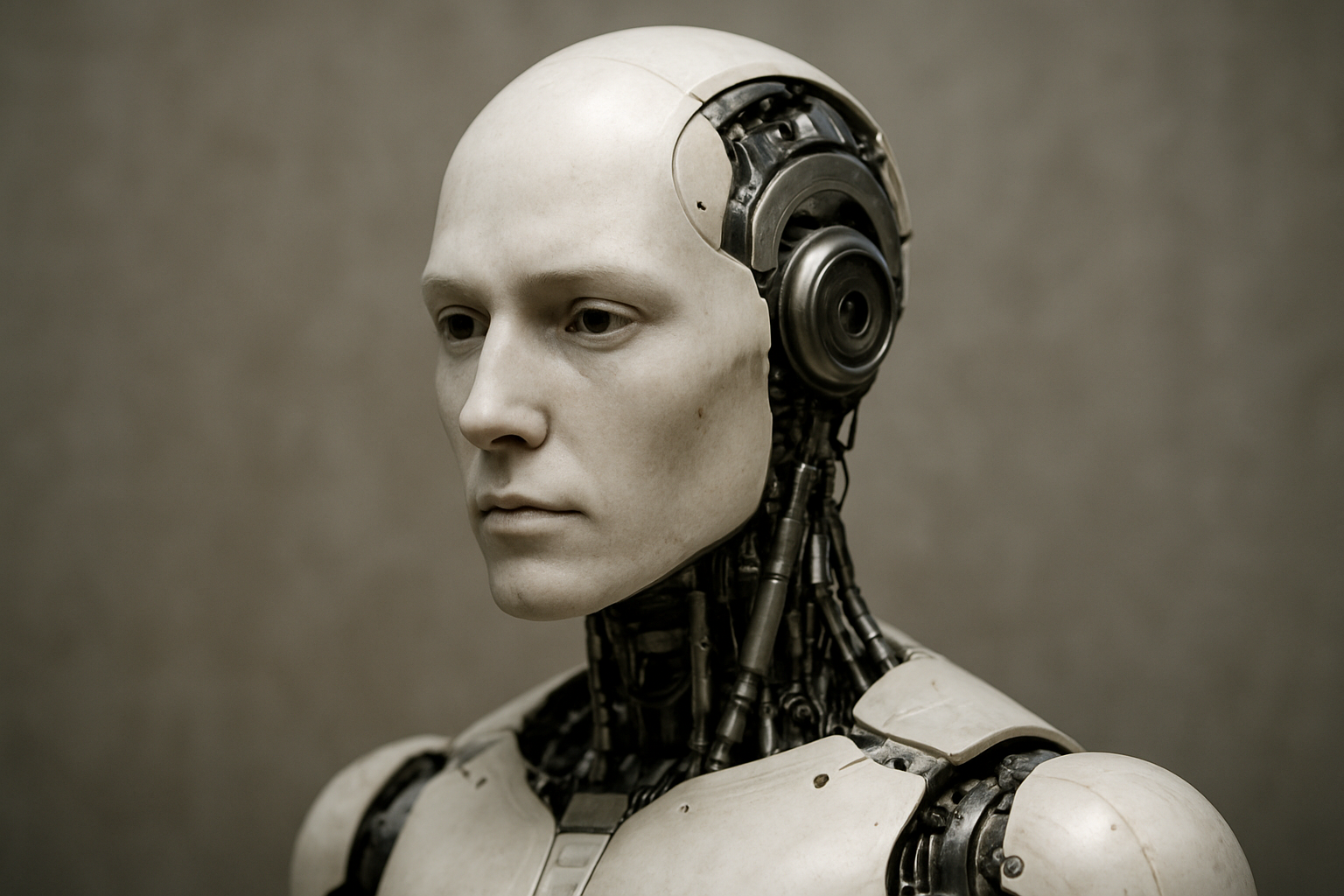
In recent years, artificial intelligence (AI) has been hailed as a groundbreaking technological frontier. However, as the hype around AI continues to grow, a counter-narrative is emerging—one that suggests AI, for all its capabilities, feels hollow or devoid of real substance. Why is this sentiment gaining traction, and how might it reflect broader technological and societal dynamics?
The Hype vs. Reality
AI is often presented as a magical solution to numerous problems, from improving healthcare to automating mundane tasks. Yet, the effects of AI in reality often fall short of these grand promises. AI’s functional prowess is generally limited to data-driven prediction and pattern recognition, and even the most advanced models, such as GPT-3 or ChatGPT by OpenAI, simulate understanding without actual comprehension.
- Overpromised Capabilities: The narrative surrounding AI is sometimes oversold. Companies and sensationalist media depictions contribute to a perception that AI can surpass human abilities in areas like creativity and emotional intelligence, which is far from true.
- Functional Limitations: AI technologies excel in narrow, well-defined tasks but struggle with broader, more abstract forms of reasoning. Current AI lacks true understanding, operating by drawing upon statistical correlations rather than sentient thought.
AI’s Dependence on Data
The core of AI functionality lies in data. Algorithms learn from vast datasets, drawing inferences applicable within the confines of their training. However, this data-centric approach introduces several limitations:
- Data Quality Issues: For AI to provide valuable insights, it requires high-quality, unbiased datasets. Unfortunately, datasets can be incomplete, outdated, or biased, leading to flawed AI outcomes. As highlighted by Dr. Ijeoma E. Eze, “AI systems replicate and, in some cases, enhance the biases present in their training data.”
- Lack of Original Thought: AI does not generate new ideas. It synthesizes input data, recognizing patterns to mimic human-like outputs. Thus, its engagement with the world remains derivative, lacking the originality that characterizes human intelligence.
The Illusion of Understanding
AI’s ability to generate human-like responses provides an illusion of understanding. When an AI responds coherently, it gives the impression of possessing comprehension. Renowned cognitive scientist Herbert A. Simon famously noted, “What computer is to thinking, a subroutine is to consciousness: a program without a self that simulates thought superficially but lacks depth.”
“AI simulates understanding through complex algorithms but does not possess genuine understanding or consciousness.” – Herbert A. Simon
This discrepancy between appearance and reality contributes to the perception of AI as hollow. Its outputs can be exceptionally fluent and contextually appropriate, yet lack the experiential sincerity of human cognition.
The Human Element — Emotion, Morality, and Context
AI lacks emotional intelligence, a component of thought that is deeply embedded in human interaction. While it can mimic sentiment through analysis and pattern recognition, it remains inherently devoid of emotions.
- Emotion: Human understanding is enriched by emotional context, empathy, and personal experiences, aspects absent in AI.
- Morality: Ethical decision-making requires more than cold logic; it demands contextual sensitivity and societal values, debunking the image of AI as an infallible arbiter.
Many experts echo the sentiment that AI’s limits as an “empathic entity” are particularly striking in fields that require a fine-tuned understanding of human nuances, such as mental health support.
“Machines can only superficially replicate empathy; real empathy connects fundamentally with the unique human condition.” – Dr. Rosalind Picard, MIT Media Lab
Skepticism and The Quest for Authentic Intelligence
As skepticism grows, so does the quest for genuinely intelligent machines. To move beyond surface-level gimmicks, AI needs evolution toward mental faculties closer in spirit to human intelligence. This quest revolves around creating machines capable of:
- Adaptability: Emulating human-like learning and adaptability, allowing AI to operate beyond rigid programming limitations.
- General Intelligence: Achieving Artificial General Intelligence (AGI), where AI can perform any intellectual task that a human being can.
However, achieving such milestones requires tremendous advances in current machine learning practices, ethical guidelines, and a fundamental understanding of consciousness.
Bridging the Gap
For AI to transcend its current limitations and shed its “hollow” reputation, it must become more than a tool—it must embody elements of authentic intelligence. Therefore, industries and researchers are urged to:
- Encourage Interdisciplinary Research: Bridging AI with fields like neuroscience, psychology, and sociology to inform more robust, adaptable AI systems.
- Invest in Ethical Guidelines: Establishing strong ethical guidelines to ensure that AI growth aligns with humanistic values and minimizes risks.
- Focus on True Collaboration: Enhancing partnerships between AI and human intelligence, emphasizing systems that augment human capabilities rather than replace them.
The future of AI holds the promise of innovation, discovery, and immense global impact. However, the path forward must be navigated with care, recognizing that the technology, despite advancements, cannot yet replace or replicate the profound complexities of human intelligence and experience.