The arts of dance and photography, though seemingly disparate, share a profound affinity for improvisation. This creative flexibility not only enriches the experience for artists and audiences alike but also pushes the boundaries of both disciplines. In Freeing the Frame, we explore how the spontaneity inherent in these art forms fosters innovation and connection.
The Essence of Improvisation
Improvisation is an essential element that infuses vibrancy into both dance and photography. In dance, improvisation encourages performers to express their emotions and ideas directly through movement, without the constraints of pre-set choreography. Similarly, photographers who embrace spontaneity often capture candid moments that convey authentic stories and emotions.
Renowned dancer and choreographer, Merce Cunningham, once said, “The only way to do it is to do it.” His emphasis on experiential learning encapsulates the essence of improvisation. This approach is mirrored in photography, where sometimes the best shots are those captured in the fleeting, unscripted moments.
Improvisation in Dance
In dance, improvisation allows performers to connect with their emotions, their surroundings, and the audience. The use of improvisation breaks the traditional dance structures, enabling dancers to explore new movements and rhythms. This freedom often leads to a more genuine and personal expression, as dancers are not confined to a strict regimen or style.
- Unscripted Expression: Improvisation allows dancers to react to the moment, leading to performances that are unique and unrepeatable.
- Creative Dialogues: Through improvisation, dancers can engage in a ‘dialogue’ with each other, the music, and the space around them.
- Emotional Connection: The spontaneity of improvisation fosters a deep emotional connection with the audience, creating shared, memorable experiences.
A study published in Frontiers in Psychology highlights how improvisational dance can improve cognitive flexibility and creative thinking. This suggests that the benefits of dance improvisation extend beyond performance, impacting dancers’ mental and emotional well-being.
Spontaneity in Photography
In the realm of photography, capturing the decisive moment—the elusive split second when everything comes together in perfect synergy—is paramount. This concept was popularized by the famed photographer Henri Cartier-Bresson, who masterfully captured spontaneous instances that revealed profound truths about his subjects and their environment.
“To photograph is to hold one’s breath, when all faculties converge to capture fleeting reality. It’s at that precise moment that mastering an image becomes a great physical and intellectual joy.” – Henri Cartier-Bresson
Improvisation in photography is not limited to street photography but extends to various genres where unpredictability reigns supreme, such as photojournalism, wildlife photography, and even fashion photography.
- Candid Captures: Improvisational photography often yields images that are raw and unfiltered, capturing the essence of a moment in its truest form.
- Authentic Narratives: Spontaneous photos typically tell more authentic stories, as they represent real events and emotions rather than posed scenarios.
- Artistic Exploration: Photographers who embrace improvisation tend to experiment more with framing, lighting, and composition, pushing the boundaries of conventional photography.
Interplay and Influence
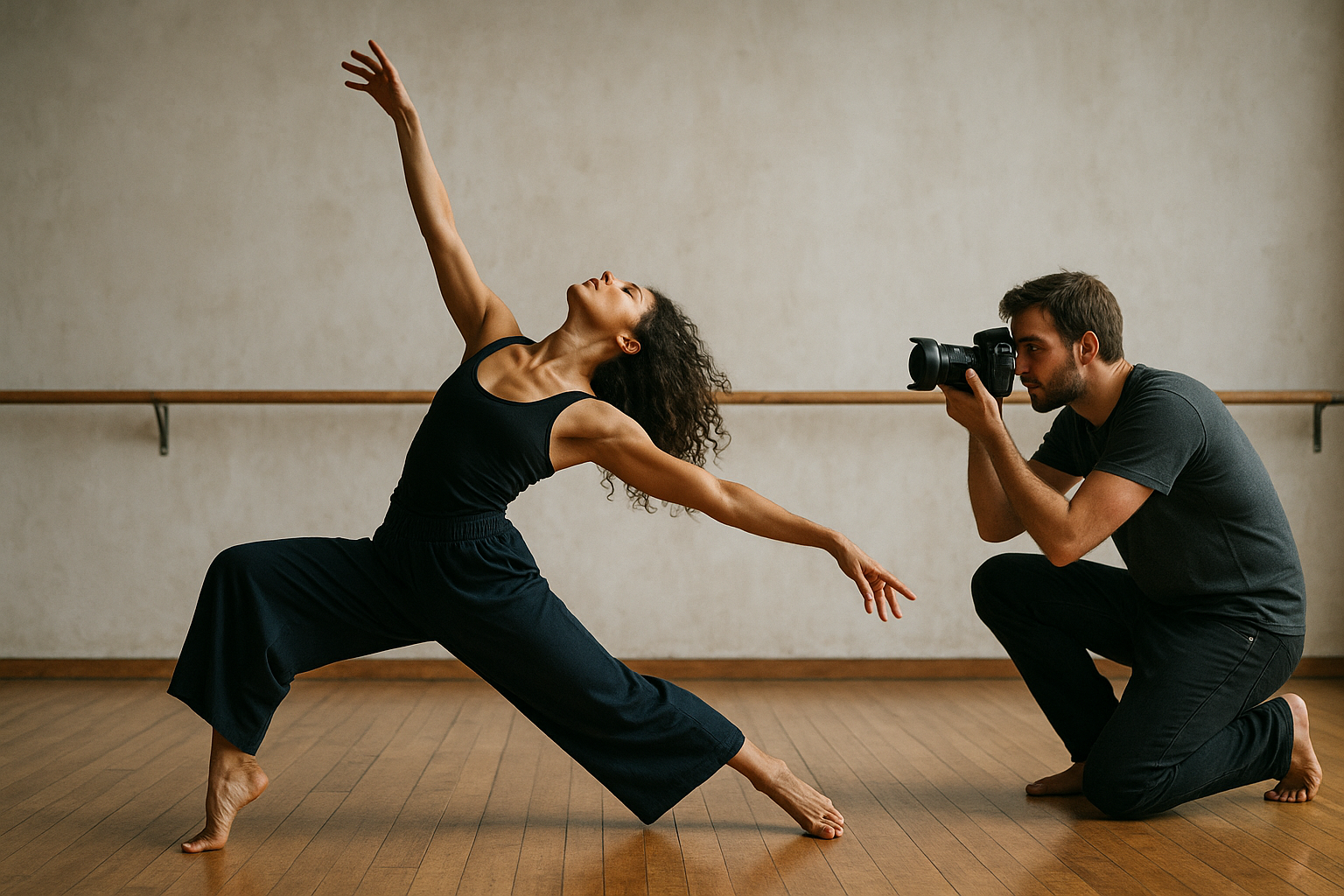
The intersection of dance and photography through improvisation is a fertile ground for creativity. Some collaborative projects meld these two art forms, where dancers respond to photographers’ cues, or photographers capture the art of movement in unpredictable environments. These collaborations often result in striking visual narratives that capture the dynamism of dance and the perceptiveness of photography.
Paul Evans, a photographer known for his work with dancers, notes, “When photographing dance, I look for that split second when the dancer is in mid-air or the light is just right, and everything aligns perfectly. It’s like capturing lightning in a bottle.”
The Future of Improvisation in Art
As both fields embrace technological advancements, the scope for improvisation in dance and photography broadens. Virtual reality, AI-driven motion capture, and sophisticated photographic equipment provide new tools for artists to expand their creative horizons.
The embrace of improvisation in these contexts highlights the continued evolution of art as a domain that thrives on spontaneity, expression, and the breaking of barriers. Freeing the frame is not merely a theme but a movement towards a more liberated and authentic form of artistic expression.
Dance and photography, in their embrace of the unpredictable, celebrate the beauty of the unscripted. At their intersection lies a celebration of life’s transient moments, forever captured through the raw energy of improvisation.