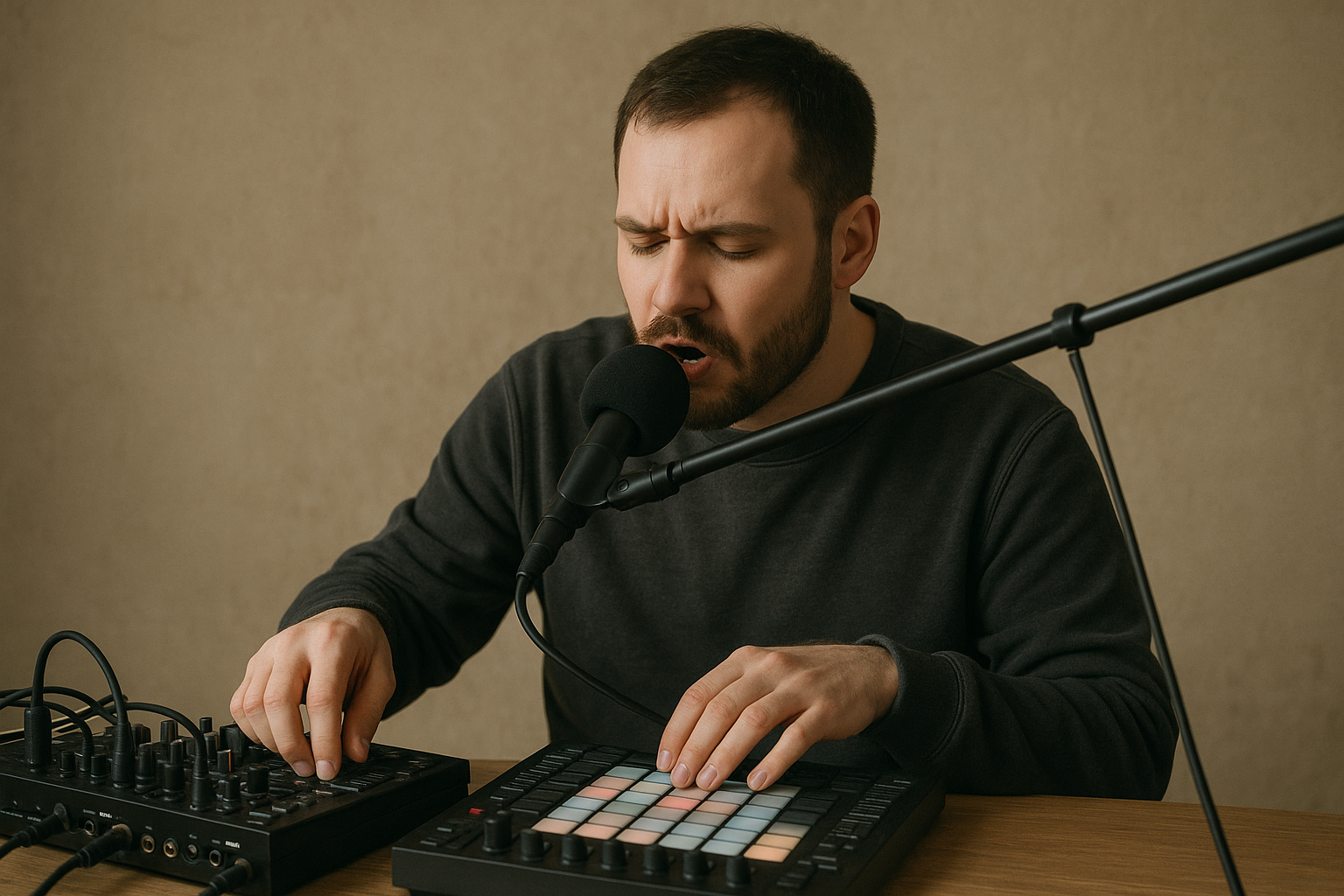
In the bustling landscape of electronic music, repetition acts as both a creative anchor and a spiritual journey for listeners. The entrancing cycles of sound found in electronic music create spaces for reflection, catharsis, and communal experience. The effective use of repetition and ritual, much like a sermon, transforms a dance floor into a secular ceremony.
The Power of Repetition
Repetition in music is far from a new phenomenon. From the chants of ancient rituals to the refrains in classical compositions, repeating patterns evoke emotional and psychological responses. As Philip Tagg, a musicologist, explains:
“Repetitive music equals participation music or anti-diva music. It encourages listeners to join in, whether by moving or vocalizing.”
— Philip Tagg, Music Studies
In electronic music, repetition is elevated to an art form, with loops and samples creating immersive soundscapes. These cyclical structures encourage listeners to lose themselves in the music, fostering a shared experience that is both intimate and expansive.
Ritual as Structure
Rituals, often characterized by their repetitive nature, create a sense of stability and predictability. According to Roy Rappaport, an anthropologist, “ritual is the performance of more or less invariant sequences of formal acts and utterances not entirely encoded by the performers.” These structures are evident in the setlists of DJs and producers who craft a carefully curated journey through sound.
- Beatmatching: DJs blend tracks by synchronizing beats, creating a seamless transition and maintaining rhythmic continuity.
- Track Cues: Predictable cues signal changes, fostering excitement and engagement.
- Elevation: Gradual build-ups in tracks mimic the energetic rise in rituals, culminating in euphoric release.
Such rituals within electronic music bring a congregation of listeners into an almost transcendental state.
The Role of the DJ
Regarded as both composer and curator, the DJ is akin to a ritual leader. Their role transcends mere performance—they facilitate a shared experience that connects individuals. Grandmaster Flash, a pioneer in turntablism, once stated:
“There’s something about being a DJ that is beyond crossing one way or two ways, it’s beyond all of that because it becomes a state of bringing people together.”
— Grandmaster Flash, Billboard
By leveraging repetition, a DJ ensures every set is unique yet familiar, with each show providing a new interpretation of beloved tracks.
Repetition’s Psychological Impact
Electronic music is not only a unifying force but also a psychological one. The repetitive nature of tracks can create a meditative state, often leading to altered perceptions. According to a study published in the Journal of Psychology & the Behavioral Sciences, repetitive music affects the brain’s reward circuits, stimulating sensations of pleasure and immersion.
The study states:
“The predictable structure inherent in repetitive music can activate pleasure responses in the brain, similar to those experienced during other rewarding activities.”
— Journal of Psychology & the Behavioral Sciences
This phenomenon underscores the hypnotic allure of electronic music, drawing listeners into a deep, often introspective engagement with the sound.
Community and Connection
The dance floor acts as an altar where individuals gather to share in the collective joy of music. This community is solidified through the shared experience of sound and movement. It is a testament to the power of electronic music to unite diverse audiences under the pulsating beat.
By creating environments where repetition and ritual are paramount, electronic music offers participants an egalitarian place to express themselves, freed from the confines of the ordinary world. It opens up a space where everyone, regardless of background, can experience the sublimity of sound.
Conclusion
Electronic music’s reliance on repetition and ritual transforms the listening experience from passive to participatory. Just as ancient ceremonies used repetition to connect individuals with the divine, modern-day electronic music mobilizes these tools to create a shared, almost spiritual experience. Through the meticulous work of DJs and producers, the repeatable elements of electronic music become vessels of connection, community, and catharsis, echoing the timeless human desire for unity.