“`html
Baba Yaga’s Hut: The Ambiguity of the Crone at the Edge of the Woods
In Slavic folklore, Baba Yaga is a powerful and enigmatic figure, often depicted as an old woman who lives in a hut at the edge of the woods. Known for her ambivalence towards both good and evil, she has been interpreted as everything from a symbol of death to a guardian of nature.
“Baba Yaga is not simply an old witch but rather a complex character who embodies the duality and uncertainty of existence,”
– Folklorist Linda Degh, as quoted in “Baba Yaga: The Wild Ride” by Svetlana Boym.
The Hut
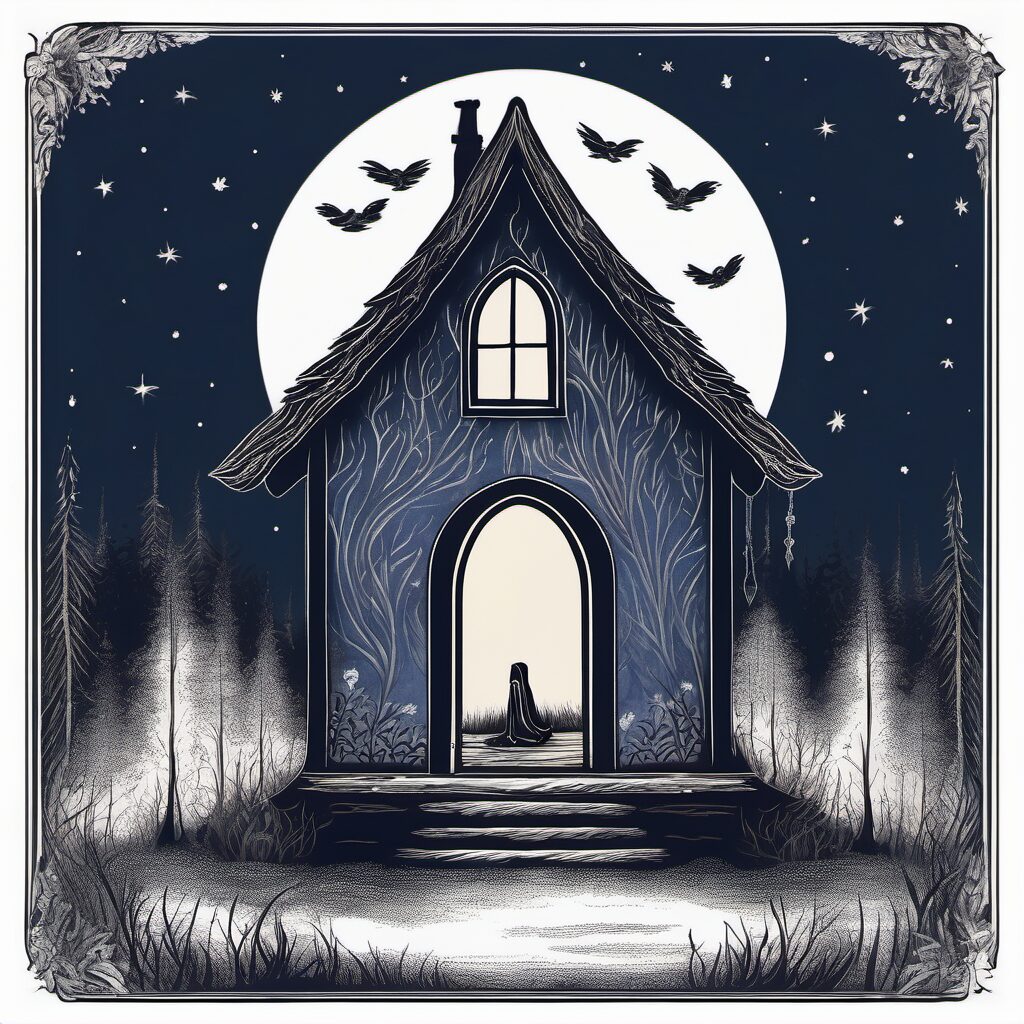
Baba Yaga’s hut is an iconic structure in Slavic mythology, characterized by its legs, a roof thatched with bones and nails sticking out everywhere. According to some stories, the hut moves around the woods on giant chicken legs, adding to its otherworldly nature.
Legendary Encounters
- The Tsar’s Son: In this story, the Tsar’s son seeks Baba Yaga’s help to find his father who had been captured by an evil sorcerer. Despite her initial hostility, she aids him and restores the family.
- Vasilisa the Beautiful: One of the most well-known stories featuring Baba Yaga is that of Vasilisa, a young girl who must retrieve fire from the crone to save her dying father. Through cunning and bravery, she overcomes Baba Yaga’s challenges and returns home with the fire.
Interpretations
Baba Yaga has been analyzed by scholars as a representation of both the dark aspects of nature and the fear of aging. Her hut, with its unsettling features, is seen as symbolizing the wild, untamed parts of the world that humanity must navigate.
“The Baba Yaga’s hut represents the dark, uncharted forests that people enter into during life-crisis events,”
– Mythologist Maria Tatar, as quoted in “Baba Yaga: The Wild Ride” by Svetlana Boym.
A Lasting Legacy
Baba Yaga’s influence extends beyond traditional Slavic folklore, with appearances in various works of literature, film, and television. Her enigmatic persona continues to captivate audiences, offering a complex and enduring exploration of humanity’s relationship with the unknown.
“`