In the past century, visual art has transcended the constraints of traditional media, such as painting and sculpture, evolving into a multifaceted form that embraces technological advancements. The contemporary arena of visual expression, largely fueled by new media, has surged beyond the brushstroke, offering artists innovative ways to express their creativity and engage audiences.
The Rise of Digital Art
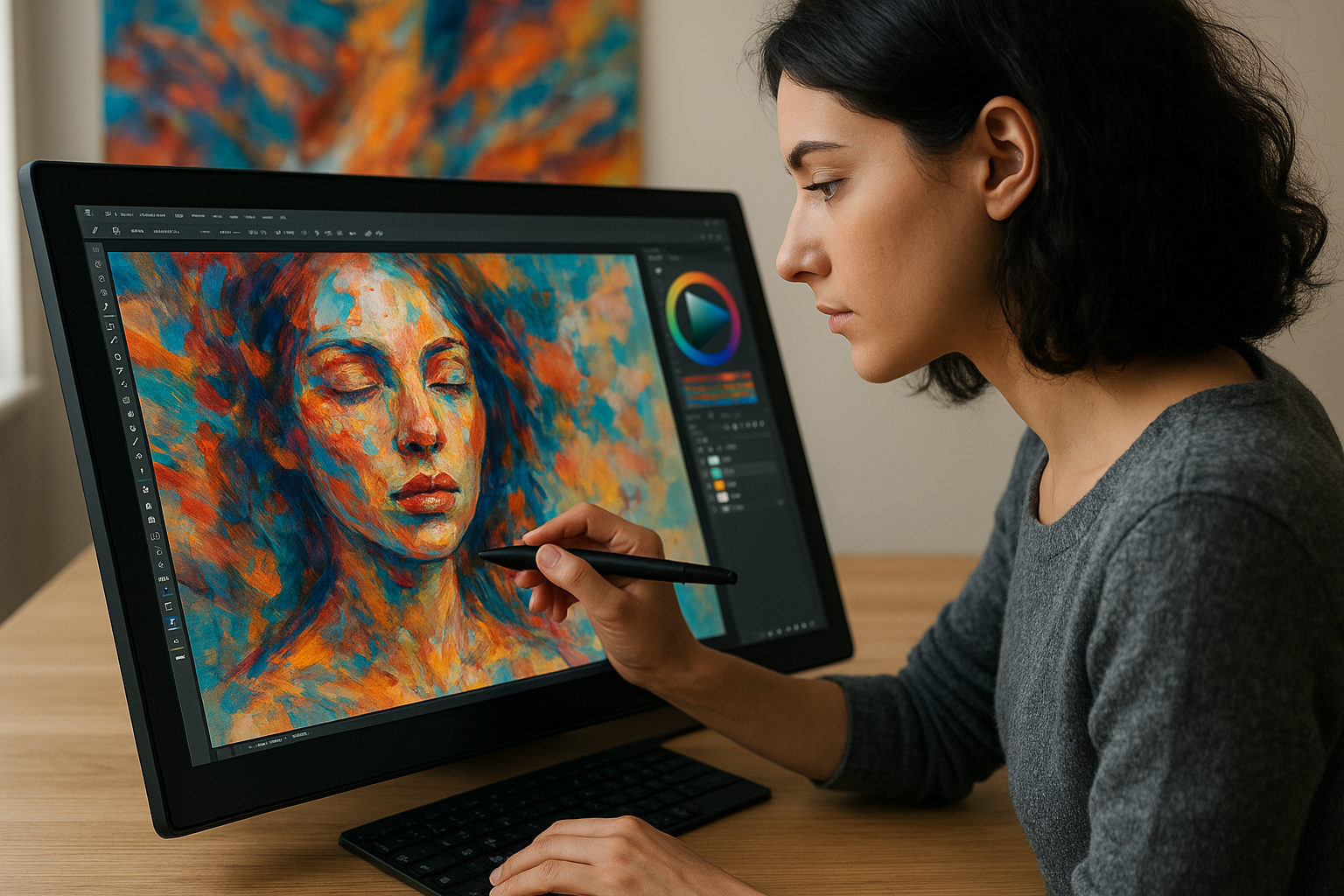
Digital art is perhaps the most revolutionary development in new media. What began as simple pixel graphics has transformed into a sophisticated realm including digital painting, 3D modeling, and interactive installations. Artists now have access to a plethora of tools that not only mimic physical media but enhance it. Software such as Adobe Photoshop and Blender have become staples for artists aiming to push the boundaries of visual art. As Art Radar Journal notes, “Digital technologies are now providing artists with new ways to produce, distribute, and experience art” (Art Radar Journal).
Exploring Virtual and Augmented Reality
Virtual reality (VR) and augmented reality (AR) are no longer futuristic concepts confined to science fiction. Artists are using these technologies to create immersive environments, inviting viewers to step inside the artwork. VR, with its ability to transport users into entirely constructed worlds, allows for an experience that transcends traditional viewing. Artists such as Marina Abramović, who has embraced VR to expand her performances, are at the forefront of this transformation. According to The Guardian, “her VR piece, Rising, is an embodiment of the potential for VR to evoke visceral emotional responses” (The Guardian).
Simultaneously, AR bridges the gap between the digital and physical worlds, enhancing our perception of the latter. Applications like ARKit and Snapchat filters allow artists to merge digital artworks with real-world environments, creating interactive experiences accessible through smartphones and tablets. The integration of AR in public art projects, such as those by JR in Paris, showcases its potential to transform urban landscapes into evolving galleries.
Interactive and Generative Art
Another exciting development in the realm of new media art is interactivity. Unlike traditional art forms that require passive observation, new media often encourages the audience to participate, altering the artwork in real time. This dynamism is seen in the works of Rafael Lozano-Hemmer, who creates intricate installations that depend on audience interaction.
Generative art, which employs algorithms to create artwork, is another frontier where technology and artistry meet. Emphasizing process over result, artists like Casey Reas, co-creator of the Processing programming language, use code to generate complex, evolving patterns that challenge traditional forms of expression. With each viewer potentially seeing a different iteration, generative art becomes a living entity.
“The beauty of generative art is that the artist can establish a framework in which the artwork evolves, a concept that invites endless possibilities,” Reas explains in an interview with Wired. (Wired)
The Influence of Artificial Intelligence
Artificial intelligence (AI) is another paradigm-shifting force in visual expression. AI art, created with machine learning models that analyze millions of images to create new, often surreal works, challenges preconceived notions about creativity and authorship. The controversial auction of Edmond de Belamy, an AI-produced work that sold for $432,500 at Christie’s, sparked significant debate about the role of AI in art and the definition of an artist.
AI developments are not mere imitations of human creativity but potentially new forms of intelligence with unique aesthetic signifiers. Projects like DeepDream or GANPaint Studio allow artists to explore abstract and uncanny representations that push the limits of imagination.
Impact on Society and Culture
The emergence of new media in visual expression is not just an artistic development; it poses profound questions about our society and culture. As artworks become more ephemeral and digitally-oriented, debates arise about issues of preservation, authorship, and intellectual property. Furthermore, the democratization of art production and distribution, made possible by digital technologies, challenges traditional art institutions and markets, offering increased accessibility but also raising concerns about quality control and valuation.
Moreover, new media art acts as a mirror reflecting our contemporary anxieties and aspirations. Themes of digital identity, privacy, and the pervasive influence of technology are prevalent in today’s artworks, urging viewers to reflect on the socio-political implications of our increasingly digital lives.
Conclusion: The Future of Visual Expression
The evolution of visual expression through new media is an ongoing journey, marked by innovation and exploration. As technology continues to advance, the possibilities for artists to delve into unknown territories of creativity are limitless. This era, characterized by a fusion of digital technologies and artistic visions, heralds a new chapter in the history of art.
While it embraces the digital, the heart of visual expression remains the same: a quest to convey meaning through visual form. Through new media, artists are discovering unprecedented methods to engage with and challenge their audience, redefining what it means to create and experience visual art in the modern world. Indeed, as we venture further into the digital age, the future of art is not just beyond the brushstroke—it is limitless.