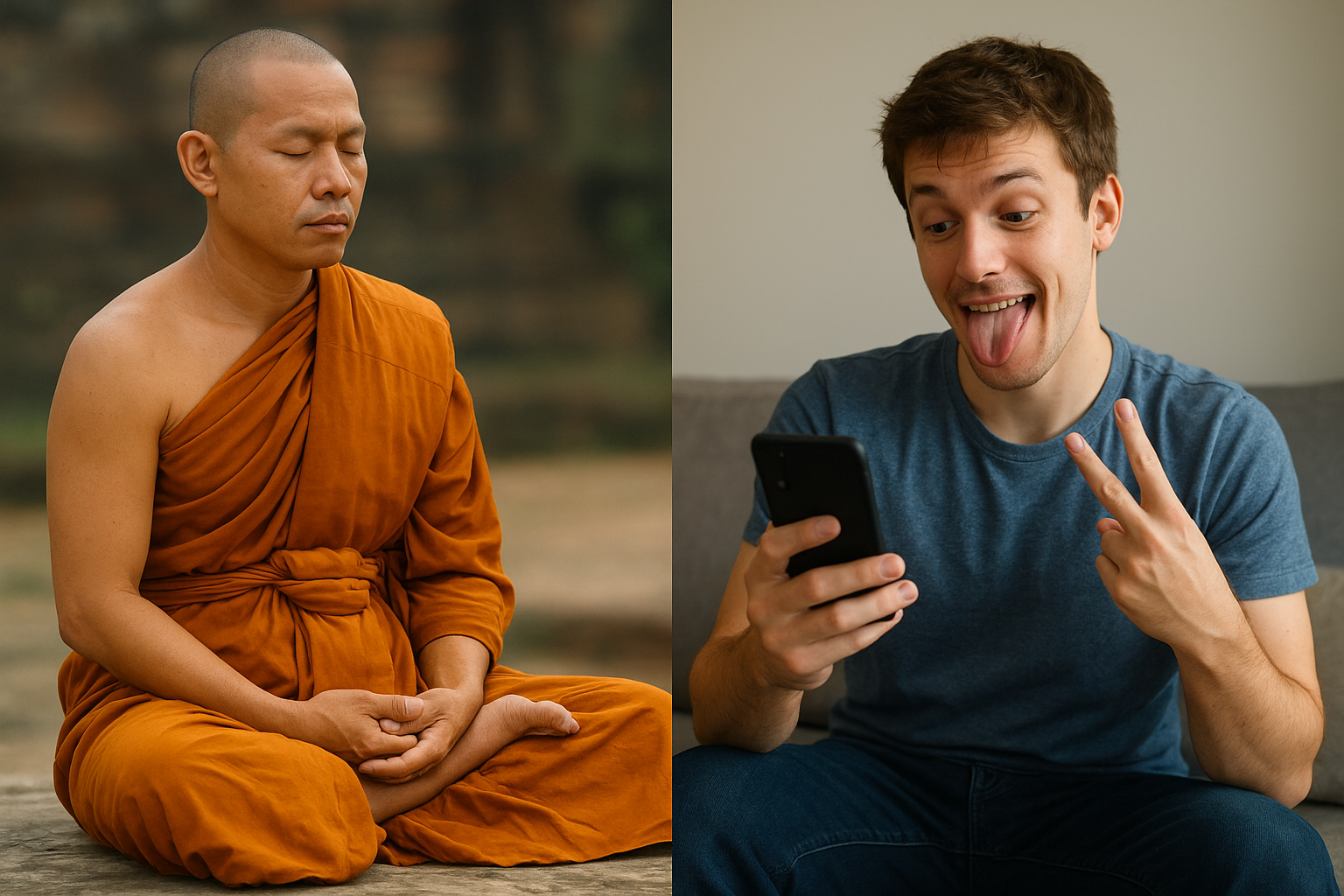
Contemplative practice has long been associated with monastic life, where individuals dedicate their existence to spiritual and mindful pursuits. However, in today’s fast-paced, interconnected world, the face of contemplation is evolving, manifesting itself in unexpected places, even in the world of social media and internet culture.
The Roots of Contemplation
Traditionally, contemplative practices have been rooted in religious and spiritual traditions. Monastic communities, such as the Tibetan Buddhists or Catholic monks, have emphasized meditation, prayer, and reflection as pathways to spiritual enlightenment and mental peace. As noted by Trappist monk Thomas Merton, “Contemplation is the highest expression of man’s intellectual and spiritual life. It is that life itself, fully awake, fully active, fully aware that it is alive.”
Contemplation in the Digital Age
With the advent of technology and the internet, contemplative practices have transcended the monastery walls. People are finding new ways to integrate meditation and mindfulness into their daily lives, leveraging apps like Headspace and Calm, which have made these practices more accessible to the general public. A 2021 study published in JAMA Internal Medicine found that individuals who engaged in app-based mindfulness had reduced stress and increased emotional well-being.
From Monasteries to Memes
The integration of contemplative practice into modern culture can even be seen in the realm of memes and social media. While it may seem counterintuitive, these platforms are providing unique opportunities for individuals to explore mindfulness. Memes, often viewed as humorous and light-hearted, can also convey deeper messages, encouraging reflection and introspection.
“Memes can serve as a form of social commentary, prompting users to think critically about their own behaviors and the world around them,” says Judith Wright, a psychological expert in mindfulness studies (Psychology Today).
The Future of Contemplation
The transformation of contemplative practice from monastic traditions to digital cultures demonstrates its adaptability and enduring relevance. The future of contemplation is likely to be a blend of ancient techniques and modern innovation, catering to an audience that is both technologically savvy and spiritually curious.
As we continue to navigate the complexities of modern life, contemplating our place within it—whether through traditional meditation or scrolling through insightful internet memes—remains a vital part of the human experience.
For those willing to look beyond the screen, the path to mindfulness and reflection is readily available, reminding us all of the timeless value of contemplation in any form.
