Tag: composers

  • The Score of the Soul: The Emotional Weight of New Composers

    The Score of the Soul: The Emotional Weight of New Composers

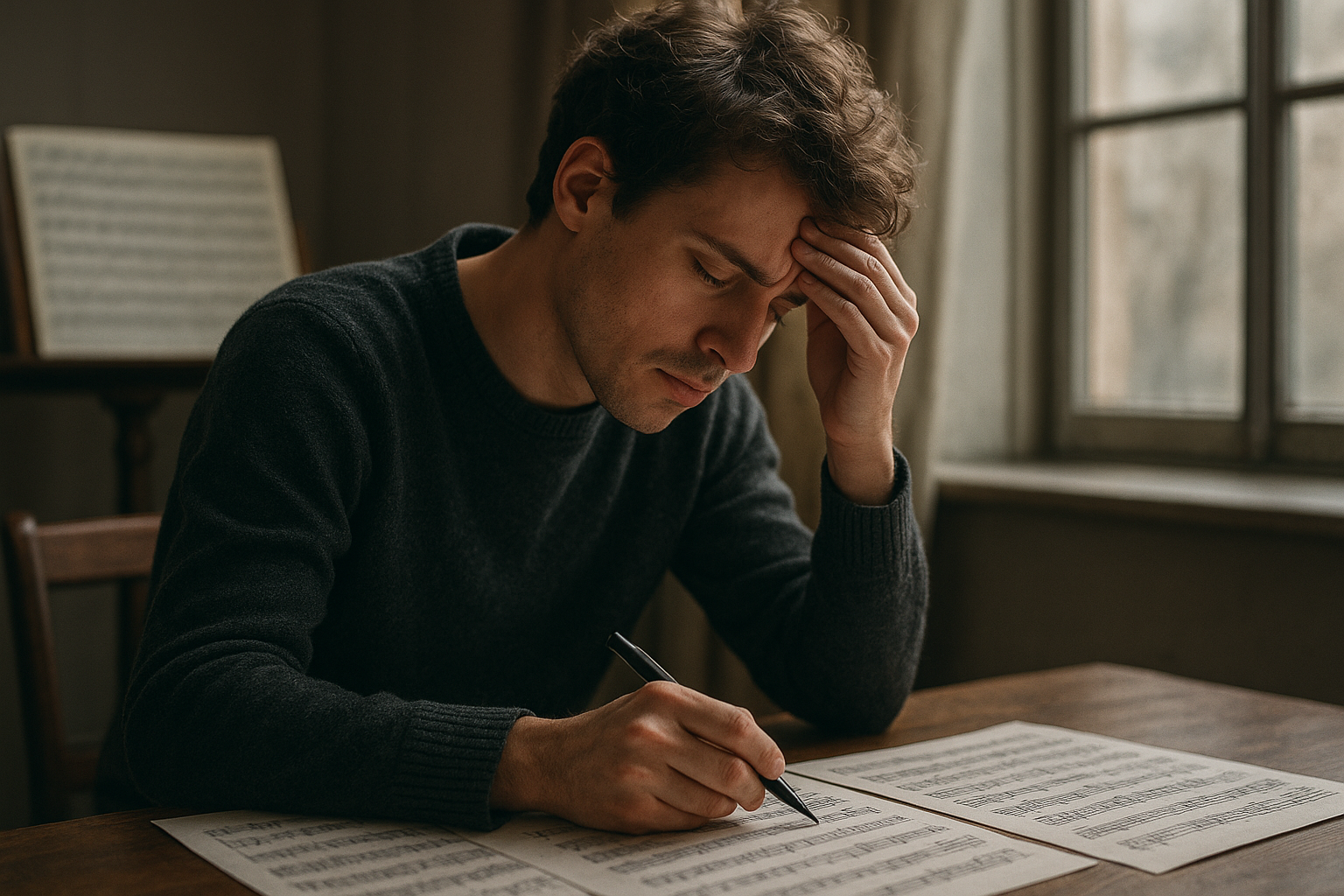
    Music has long been the tongue of the soul, communicating emotions that words often fail to express. As we step further into the 21st century, emerging composers are weaving new tapestries of sound, each thread echoing with the emotional weight of contemporary existence. These modern maestros are not only reshaping the musical landscape but also redefining how we understand the emotional tenor of our times.

    A New Wave of Expression

    The evolution of composition in recent decades has been marked by unprecedented shifts in thematic focus and stylistic innovation. Young composers are drawing from a well of influences, integrating classical traditions with contemporary sensibilities. This blend of old and new forms a rich spectrum of emotional resonance that speaks to today’s diversely connected audiences.

    “Music expresses that which cannot be said and on which it is impossible to be silent.” — Victor Hugo

    Indeed, the ability of music to voice the unvoiced is being harnessed by new composers who are tackling themes ranging from personal identity to global crises. Their works often become a canvas for personal and collective catharsis, reflecting the profound uncertainties and hopes of our age.

    Personal Narratives and Identity

    One of the defining characteristics of today’s music is its intimacy and vulnerability. Composers such as Caroline Shaw and Nico Muhly mine personal experiences to create works that resonate on a deeply personal level, encouraging listeners to forge their own connections.

    • Caroline Shaw: Known for her unique blend of traditional and modern elements, Shaw’s compositions often explore themes of identity and memory. Her Pulitzer Prize-winning work Partita for 8 Voices exemplifies how the voice can carry emotional weight beyond verbal language.
    • Nico Muhly: His compositions are renowned for their emotional complexity, skillfully mingling minimalism with rich textures. Muhly often draws on historical texts and contemporary issues, creating soundscapes that invite introspection.

    These composers are at the vanguard of a movement that uses personal storytelling as a vehicle for universal empathy, allowing music to serve as both a mirror and a map for the soul.

    Embodying Collective Consciousness

    Alongside personal narratives, many new composers are responding to societal challenges, using their music as a form of activism. Works such as Tania León’s Stride—a powerful commentary on struggle and resilience in the face of social injustice—exemplify this trend.

    This collective consciousness, interwoven into scores, is gaining prominence as composers engage with topics like climate change, migration, and digital transformation. Their works strive not only to reflect the world’s current state but also to inspire action and change.

    “I think of music as a river. I have learned to appreciate the energy of that dominant culture stream and to trust my own waterway.” — Tania León

    In their compositions, these artists challenge us to confront our shared realities and explore the emotional undercurrents that drive societal evolution.

    Technological Innovations and New Soundscapes

    The relentless advancement of technology also plays a crucial role in how new composers craft emotive experiences. Sound sampling, digital synthesis, and immersive audio environments are transforming the possibilities of what music can be. They are expanding not just the tonal palette but also the emotional range of musical expression.

    Composers like Anna Meredith and Dan Tepfer exemplify this integration of innovation with emotional depth:

    • Anna Meredith: Her work, such as FIBS, combines acoustic instruments with electronics to produce vividly kaleidoscopic compositions full of energy and emotion.
    • Dan Tepfer: Known for using algorithms in music, Tepfer explores the intersection of human creativity and technology, creating pieces that resonate with contemporary digital realities.

    By harnessing modern technology, these composers expand our understanding of emotional expression in music, transcending traditional boundaries to forge connections in the digital age.

    The Future of Emotional Expression in Music

    The current landscape of music composition is an exciting confluence of tradition, innovation, personal narrative, and collective themes. New composers are uniquely positioned to interpret and influence the emotional currents of our time, providing a sonic backdrop for the 21st-century soul.

    As audiences, we are invited into a deeper dialogue with the music and the world around us. By engaging with the works of these new composers, we not only witness the unfolding story of music but also partake in a journey toward understanding the human condition through sound.

    Ultimately, the score of the soul is one that is constantly being rewritten, with each note carrying the potential to unveil hidden emotional landscapes. In the hands of today’s composers, music continues to be a powerful medium through which we explore, express, and ultimately heal the human experience.

    For more insights into contemporary music and composers, visit NPR’s Deceptive Cadence.
  • Harmonies of Heresy: Contemporary Composers and Sacred Texts

    Harmonies of Heresy: Contemporary Composers and Sacred Texts

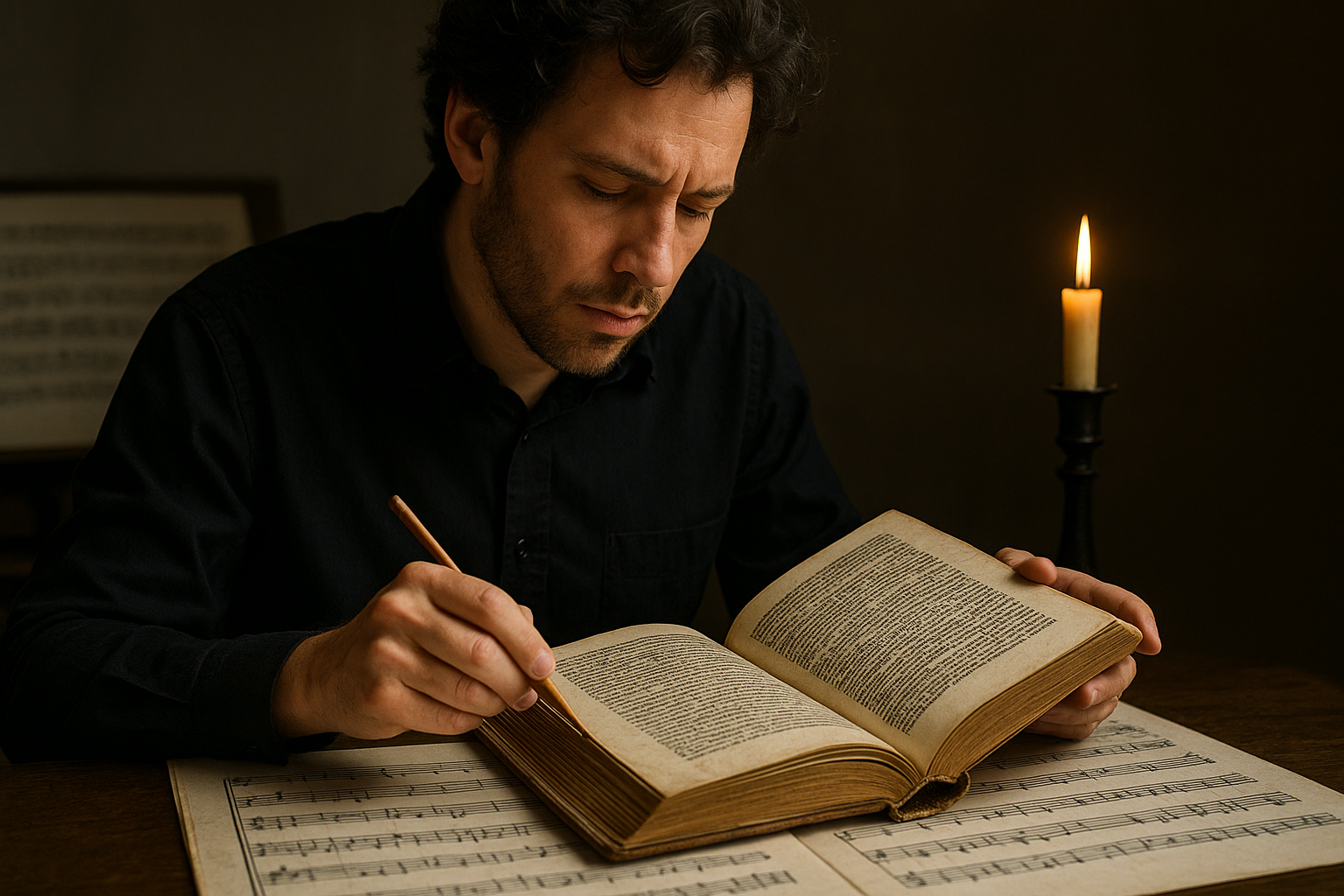
    In our rapidly evolving cultural landscape, music remains a powerful medium through which spirituality and secularism blend and clash. Contemporary composers are increasingly engaging with sacred texts, reimagining them through a modern lens. This practice often walks a fine line between reverence and heresy, creating a unique dialogue between tradition and innovation.

    The Historical Interplay of Music and Sacred Texts

    Music has long been intertwined with spirituality. From Gregorian chants to Bach’s cantatas, religious themes have dominated Western classical music. However, as we progressed into the 20th and 21st centuries, the role of sacred texts in music began to shift, as composers started exploring these texts not just for their spiritual content but also for their linguistic and cultural richness.

    “Music is the shorthand of emotion.” — Leo Tolstoy

    This quote aptly describes the way composers articulate complex emotions, using sacred words to evoke a sense of the divine, the mystical, or sometimes the controversial.

    Contemporary Examples: Bridging the Divine and the Profane

    Several contemporary composers have boldly engaged with sacred texts, producing works that challenge both sacred and secular audiences. Below are some key figures and their contributions:

    • John Tavener

      Tavener, whose works are often permeated with spirituality, draws from a plethora of religious traditions. His compositions like The Protecting Veil reflect the mystical dimensions of Christianity. Tavener once said, “I am totally religious… my music is all about the liturgy of the eternal church” (The Telegraph).

    • Arvo Pärt

      Pärt is known for his minimalistic style and deep Orthodox Christian faith. His renowned work Passio uses the passion text from the Gospel of John, illustrating how sacred texts can be transformed into profound musical experiences.

    • Sofia Gubaidulina

      A Russian composer whose use of sacred texts goes beyond Christian sources, Gubaidulina often delves into the mystical and spiritual. Her work Seven Words, a meditation on the last words of Christ, showcases her ecumenical approach.

    • Laurent Petitgirard

      Petitgirard, in his opera Joseph Merrick: The Elephant Man, touches on themes of humanity and divinity, exploring Biblical narratives through a modern, often unsettling, lens.

    The Creative Tension of Sacred Texts in Modern Music

    The use of sacred texts in music today often generates a creative tension that challenges both the audience and the composers. This dynamic raises important questions:

    • Authenticity vs. Innovation: How do composers remain authentic to the sacred texts while infusing them with contemporary relevance?
    • Reverence vs. Heresy: Is engaging with these texts in secular contexts an act of reverence or a form of heresy?

    Authenticity vs. Innovation

    Composers like Gubaidulina insist on staying true to the spirit of the original texts while employing novel musical techniques. As she expresses, “There is no contradiction between tradition and innovation in my music” (Boosey & Hawkes).

    Reverence vs. Heresy

    Some argue that the secular adaptation of sacred texts dilutes their original spiritual intent. However, as Pärt demonstrates, when done with respect and understanding, it can breathe new life into ancient words, offering fresh perspectives and deeper insights.

    The Role of Technology

    Technological advancements have also played a significant role in how sacred texts are adapted in contemporary compositions. Modern tools allow composers to experiment with soundscapes, fundamentally altering the listening experience.

    Electronic Music and Sacred Texts

    • John Adams: In Harmonium, Adams uses the poetry of Emily Dickinson and John Donne’s sacred texts, pleading for freedom while exploring electronic music’s potential.
    • Karl Jenkins: Known for The Armed Man: A Mass for Peace, Jenkins combines traditional sacred texts with modern musical elements, employing electronic enhancements to create a more immersive experience.

    The Philosophical Underpinnings

    Beyond their artistic endeavors, many composers engage with sacred texts on a philosophical level, using music to explore existential themes. As the late Leonard Bernstein once said, “This will be our reply to violence: to make music more intensely, more beautifully, more devotedly than ever before” (Leonard Bernstein Official Website).

    Composers today use sacred texts to question, to reach out, and to forge connections across cultural and religious divides, embodying Bernstein’s ideal of music as a unifying force.

    Conclusion

    The interplay between contemporary music and sacred texts is complex and multifaceted. It encapsulates a spectrum of human experience, from the deeply spiritual to the radically secular, challenging musicians and audiences alike to reconsider the boundaries of tradition and innovation. Through this creative dialogue, composers continue to enrich the musical landscape, offering us new harmonies that resonate with ancient wisdom and modern sensibilities alike.