Tag: both

  • The Map Is Not the Territory – Mythic truth versus factual accuracy

    The Map Is Not the Territory – Mythic truth versus factual accuracy

    The Map Is Not the Territory: Mythic Truth versus Factual Accuracy

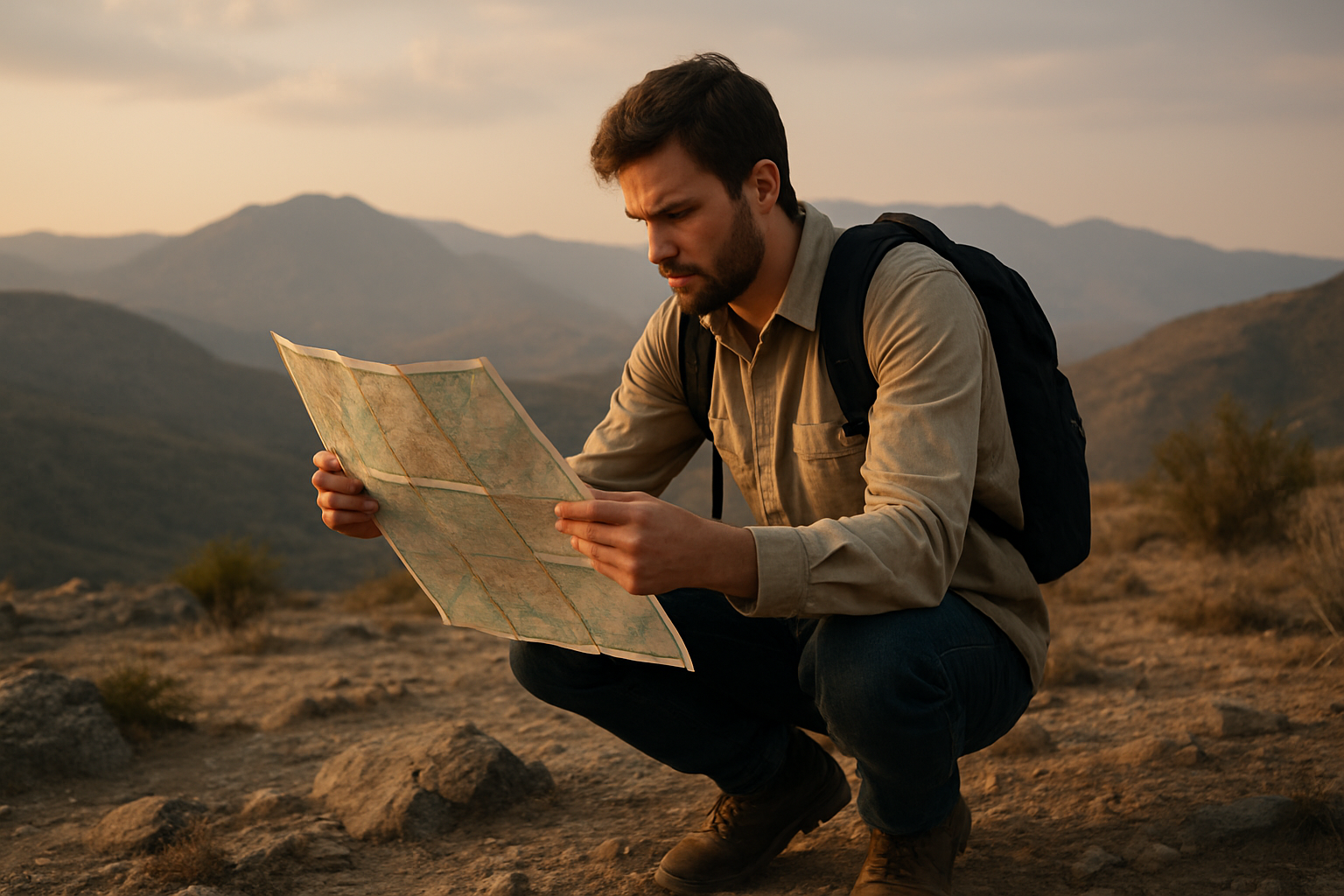
    The phrase “The map is not the territory” rings true in both the realms of geography and philosophy. Originally coined by philosopher Alfred Korzybski, it suggests that our interpretations of reality, like maps, are merely representations and not the reality itself. This concept beckons us to explore the distinction between mythic truth and factual accuracy in our understanding of the world.

    Understanding Mythic Truth

    Mythic truth refers to the notion that certain stories, symbols, or traditions hold significance beyond their factual content. They resonate on a level that connects individuals to larger cultural or spiritual narratives. As Joseph Campbell, famed mythologist, states, “Myths are public dreams, dreams are private myths.” This suggests that myths provide shared societal dreams, offering insights into fundamental human experiences and desires.

    Consider the story of the Tortoise and the Hare. Factually, we know animals don’t race in this manner, yet the story imparts valuable life lessons about perseverance and humility. This is the power of mythic truth—its ability to convey truths about human behavior and society through storytelling.

    Factual Accuracy: The Need for Precision

    On the other hand, factual accuracy emphasizes precise, verifiable information. In science and history, this attention to detail ensures that theories and narratives are reliable reflections of reality. In an age of information overload, the need to distinguish between fact and fiction becomes imperative for informed decision-making and maintaining trust in various societal institutions.

    “The good thing about science is that it’s true whether or not you believe in it.” – Neil deGrasse Tyson

    Tyson’s words highlight the intrinsic value of verified facts in a scientifically driven world. While factual accuracy provides us with clarity and assurance, it’s also imperative to understand that it isn’t the sole way to perceive truth.

    Balancing Myth and Fact

    The challenge lies in striking a balance between these two domains. While facts help ground us in reality, myths offer us rich, qualitative insights into our existence. In personal development, both should be embraced to lead holistic lives.

    Integrating mythic truth with factual accuracy allows us to appreciate both the poetic and practical aspects of existence. As Korzybski’s phrase reminds us, our modeled interpretations, whether mythic or factual, can never capture the full essence of reality. Instead, recognizing the interplay between these elements can lead to a deeper, more nuanced understanding of the world.

    Ultimately, balancing both perspectives enriches our worldview, positioning us to navigate the complexities of life with both wisdom and knowledge.

  • Myth vs. Hard Science – Two ways of knowing, not one enemy

    Myth vs. Hard Science: Two Ways of Knowing, Not One Enemy

    For centuries, humanity has relied on various methods to make sense of the world around us. Among these, myth and science have stood out as two of the most profound and influential ways of understanding reality. While they are often seen as opposing forces, a closer examination reveals that they serve different purposes and can complement each other in unexpected ways.

    Understanding Myth: More than Just Folklore

    The term “myth” is often misused to mean a mere falsehood. However, in its original and more nuanced sense, myth constitutes stories that people tell to explain the world and their experience of it. These stories, while not empirically verifiable, convey truths that cannot be easily measured.

    “Myth is much more important and true than history. History is just journalism and you know how reliable that is.” – Joseph Campbell, The Power of Myth

    Myths serve several functions in society. They offer moral guidance, serve as cautionary tales, or create a shared cultural narrative that binds communities together. An example is the Greek myths, which have provided rich material for understanding human nature, virtue, and vice. Such stories might not provide factual history but offer deep insights into human psychology and ethical dilemmas.

    The Role of Hard Science: The Pursuit of Objectivity

    In contrast to myth, science seeks to understand the world through a rigorous method of hypothesis, experimentation, and analysis. Science looks to eliminate bias and achieve objective truths based on empirical evidence. It is characterized by its replicability and falsifiability. The strength of science lies in its ability to explain phenomena in a way that they can be consistently measured and validated.

    As Carl Sagan famously said,

    “Science is not only compatible with spirituality; it is a profound source of spirituality. When we recognize our place in an immensity of light-years and in the passage of ages, when we grasp the intricacy, beauty, and subtlety of life, then that soaring feeling, that sense of elation and humility combined, is surely spiritual.”

    Science’s strength lies in solving practical problems, from curing diseases to unraveling the mysteries of the cosmos. However, it is not equipped to solve existential questions or provide moral guidance. This is where myth complements science, by filling the spaces that scientific inquiry does not reach.

    Complementary Forces: Myth and Science Together

    • Providing Context: Myths give us a narrative framework within which we can place scientific discoveries. They allow us to relate the cold, hard data of science to the human condition.
    • Sparking Creativity and Inquiry: Mythical stories have served as inspiration for scientific exploration. Think of how many inventions and scientific pursuits have been dreamt up first through the lens of mythology or speculative fiction.
    • Making Science Accessible: Complex scientific concepts can sometimes be best understood through the allegorical wisdom present in myths. They make the distant and abstract feel tangible and imminent.

    Richard Feynman, a noted physicist, famously said,

    “The first principle is that you must not fool yourself—and you are the easiest person to fool. So you have to be very careful about that. After you’ve not fooled yourself, it’s easy not to fool other scientists.”

    This speaks to the honesty and discipline inherent in the scientific process. Yet, it doesn’t negate how myth can enrich our interpretation and understanding of scientific facts.

    The Psychological Link

    From a psychological perspective, both myth and science address fundamental human needs: the need to understand, to predict, and to control or influence our environment. They provide a scaffolding on which we can construct our understanding of the self and of the universe. Psychologists like Carl Jung have explored how myths can offer insight into the collective unconscious, acting as mirrors of the human psyche.

    Jung argued that myths are akin to dreams and express the dreams of a society, and as such, they resonate on a deep psychological level. This helps individuals navigate their inner landscapes as much as science helps them understand the external world.

    The Modern Integration of Myth and Science

    In today’s world, where technological advancements occur at a breathtaking pace, it is crucial to maintain a balance between myth and science. Rather than seeing them as enemies, societies can benefit enormously from appreciating each as a critical component of human knowledge.

    • Education Systems: Incorporating both myth and science education can enhance creativity and critical thinking. For example, storytelling methods can be used to teach complex scientific ideas in a way that is engaging and memorable.
    • Cultural Understanding: By acknowledging both methods of knowing, differing worldviews can be reconciled, promoting a richer, more inclusive dialogue about human progress.
    • Innovation: Many of the world’s greatest innovators have been inspired by myth, from Da Vinci’s sketches of flying machines dreaming of Icarus to modern astronauts inspired by celestial myths.

    Conclusion

    In a world rife with information yet starved of wisdom, both myth and science offer invaluable tools. Instead of competing for supremacy, they should be recognized as parts of a comprehensive approach to discovery and understanding. Each advances human knowledge in unique ways:

    • Myth connects us to our past, cultural heritage, and psychological depths.
    • Science propels us forward, opening new doors to the future.

    By transcending the simplistic dualism of myth versus science, we can embrace a more integrated view that celebrates human curiosity in all its forms.

    In our quest for knowledge, may we never lose sight of either the narrative arcs of myth or the profound discoveries of science. In the words of Neil deGrasse Tyson,

    “We are part of this universe; we are in this universe, but perhaps more important than both of those facts is that the universe is in us.”

    Such a realization captures the essence of both myth and science, offering a fuller picture of our place in the cosmos.

  • Beyond the Temple Gate – Where Dao and Zen Become One

    Beyond the Temple Gate – Where Dao and Zen Become One

    Beyond the Temple Gate: Where Dao and Zen Become One

    As one approaches the serene thresholds of ancient temples nestled amidst bamboo groves and mist-covered mountains, the path often embodies a deeper philosophical convergence. In the silent whispers of these sacred spaces lies the melding of Daoist spontaneity and Zen’s directness—a dance of harmony between two oceans of thought.

    The Intersection of Dao and Zen

    Historically, both Daoism and Zen Buddhism emerged from distinct cultural and philosophical origins. Daoism, with its roots in Chinese thought, emphasizes living in harmony with the Dao, often translated as ‘The Way.’ In contrast, Zen Buddhism, which flourished in Japan, highlights direct experience and the meditation practice of zazen to reach enlightenment.

    Despite their different paths, both traditions converge on the importance of enlightenment, tranquility, and an interconnectedness with nature. According to The Stanford Encyclopedia of Philosophy, Daoism advocates for a life of simplicity, humility, and peace with nature—a sentiment that aligns closely with Zen’s emphasis on the simplicity of mind and heart.

    Practical Synthesis in Modern Practice

    Today, practitioners often find a seamless amalgamation of Dao and Zen principles in daily life. The Daoist affirmation of ‘wu wei’ (effortless action) finds a loving counterpart in Zen’s mindfulness practices. Bringing these principles together can lead to profound insights and a balanced lifestyle.

    “Zen asserts the inherent enlightenment in each moment and invites the practitioner to experience life with fresh eyes,” wrote John Daido Loori in The Zen of Creativity. “This call to presence and the Daoist embrace of natural flow beckon a holistic existence.”

    • Both philosophies encourage followers to embark on a journey of self-awareness and spiritual awakening.
    • The practices offer tools to navigate the chaos of modern existence with grace and patience.
    • They cultivate a sense of belonging in a world that often feels disjointed and disconnected.

    Unity in Diversity

    In understanding and applying the teachings of both Dao and Zen, one can transcend the boundaries of individual schools of thought and forge a personal path of tranquility and wisdom. This synthesis reflects the ancient wisdom of accommodating diversity within unity. To contemplate Zen is to wander the path of Zen, as much as to follow Dao is to remain with the Dao.

    Beyond the temple gates, this convergence becomes a profound journey where Dao’s graceful flow finds vibrant resonance in Zen’s clarity, revealing the unity beneath the surface diversity of life’s myriad challenges.

  • Water Mirror Mind – Seeing Yourself in the Flow

    Water Mirror Mind – Seeing Yourself in the Flow

    Water Mirror Mind: Seeing Yourself in the Flow

    The art of self-reflection often draws parallels to reflective surfaces—mirrors, still lakes, and sometimes the rippling water younger souls would skip stones across. Water embodies reflection both literally and metaphorically, revealing layers of truth that we may overlook in our fast-paced lives.

    “I will arise and go now, and go to Innisfree,
    And a small cabin build there, of clay and wattles made:
    Nine bean-rows will I have there, a hive for the honey-bee,
    And live alone in the bee-loud glade.”
    — William Butler Yeats

    Yeats’ vision of tranquility and reflection in “The Lake Isle of Innisfree” captures the essence of seeing oneself in a watery mirror. It invites a connection with nature and an introspective journey. Literarily and practically, the concept of the “Water Mirror Mind” suggests that by seeing the world in flux, as water is often in motion, we too can start to perceive our role and presence in the greater flow of life.

    The Fluid Nature of Identity

    Consider the idea that our identities are not static. Just as water flows, overcoming obstacles and changing form, so does our understanding of self. It is through life’s challenges—those unexpected hardships, joyful peaks, and quiet valleys—that we sculpt our cognition and self-awareness.

    • Dynamic and Ever-changing: Our personalities adjust to new circumstances.
    • Reflective and Deep: Like a still pond, our reflections can be clear or distorted depending on the ‘winds’ of our environment.
    • Transcendent: Water evokes a sense of spiritual flow, connecting and integrating diverse experiences and identities.

    Discovering Depth Through Meditation

    Meditation and mindfulness practices, akin to gazing into a calm water surface, enable the mind to settle and thoughts to clarify. These practices provide space for self-reflection and personal discovery.

    • Visualizing Flow: Imagining oneself as a part of the water cycle brings an understanding of larger systems and one’s transient role within them.
    • Inviting Stillness: Just as calm water reflects the sky, a quiet mind mirrors back its own depths.
    • Embracing Impermanence: Recognizing that both water and thought patterns transform and shift, this acceptance fosters peace and adaptability.

    As noted by Sharon Salzberg in her book “Real Happiness”, meditation can help individuals “develop a more spacious mind… allowing us to engage with the world from a place of greater inner flexibility and resilience” (Sharon Salzberg).

    Ecological Reflections and Personal Responsibility

    The metaphor of water not only serves as a tool for personal reflection but also brings forward the critical need for ecological awareness and responsibility. Water, vital to all life, is increasingly endangered. Our introspection can guide us to better stewardship and actions that honor both personal and environmental health.

    “Water is the driving force of all nature,” said Leonardo da Vinci.

    This timeless observation propels us to consider how we interact with our natural resources. Becoming environmentally conscious enhances our path of self-reflection—realizing the shared human responsibility for maintaining the flow of life.

    Conclusion: Embracing the Water Mirror Mind

    Adopting the “Water Mirror Mind” opens a pathway to greater self-awareness, understanding, and ecological mindfulness. It encourages recognizing the fluid aspects of identity while grounding them in the present flow.

    Whether through moments of meditative stillness or actively participating in safeguarding our ecosystems, the water mirror provides profound relational wisdom. After all, each ripple we create resonates far beyond our initial sight—a testament to the interconnectivity and delicate balance of all life.

    As we align our actions with the rhythmic cycles of nature, we foster a legacy of watershed moments, reflecting both inner truths and our shared stewardship of this blue planet.

  • Mountains of the Mind

    Mountains of the Mind

    Mountains of the Mind: Unraveling the Psychological Peaks and Valleys

    Mountains have long stood as a potent symbol in human culture. Throughout history, they have been revered as the abodes of gods, the height of human aspiration, and the ultimate challenge for the daring. But apart from their physical majesty, mountains also occupy a significant space in our minds, influencing our psychology in fascinating ways.

    Robert Macfarlane, in his influential book Mountains of the Mind, delves into this intricate relationship between humans and mountains. Macfarlane describes mountains as “the most existential of landscapes,” a sentiment that captures their duality as both literal and metaphorical ascents.

    The Allure of Ascent

    Why are humans so drawn to climb mountains? The reasons are manifold. For some, it is the physical challenge. The satisfaction of reaching a summit after a grueling climb provides a sense of accomplishment and an endorphin rush. For others, it is the sense of isolation and tranquility found far above the noise of everyday life.

    • Physical Challenge: Many mountaineers speak of the sense of achievement that comes from overcoming the physical and mental trials that high-altitude climbing presents.
    • Isolation and Peace: The solitude that mountains offer can lead to profound personal insights and a sense of peace that is elusive in the lowlands.
    • Spiritual Enlightenment: In many cultures, mountains are viewed as sacred places, close to the heavens and offering a direct connection to the divine.

    Mountains have also significantly influenced art, literature, and religion. Romantic poets like Wordsworth and Coleridge were captivated by their sublimity, painting them as landscapes of terror and beauty. Meanwhile, Buddhist monks find solace and enlightenment on their peaks.

    “Never measure the height of a mountain until you have reached the top. Then you will see how low it was.”
    — Dag Hammarskjöld

    The Psychological Landscape

    Mountains represent the psychological landscape within ourselves—the challenges, fears, and triumphs that shape our mental outlook. Carl Jung, the Swiss psychiatrist, interpreted mountains as symbols of the self. To Jung, the ascent was akin to the journey of self-discovery, fraught with perils and revelations.

    This metaphorical journey is not limited to the realm of psychology; it pervades popular culture and personal narratives. The mountain as an obstacle to overcome is a common trope in literature and film, depicting both physical and emotional hurdles.

    • Obstacles: Mountains in narratives often represent the challenges one must overcome to reach personal goals or growth.
    • Self-Discovery: As climbers ascend, they are often also on a journey inward, discovering resilience, courage, and the limits of their endurance.

    Modern Connections

    In today’s digital world, where the physical challenges of nature may seem far removed from everyday life, mountains maintain their mystical allure. Virtual reality experiences and documentaries bring these remote landscapes into urban living rooms, allowing more people to be inspired by their beauty and the inherent metaphor of climbing them.

    Social media, particularly platforms like Instagram, amplify the symbolic power of mountains. Images of climbers, sweeping views, and majestic peaks can be shared globally, reinforcing both the physical challenge and metaphorical significance of these landscapes.

    Conclusion

    Ultimately, mountains represent a paradoxical truth: they are simultaneously a place of isolation and connection, challenge and peace, danger and safety. Their presence in our culture and minds reflects our deepest desires for achievement, understanding, and transcendence.

    The mental mountains we climb shape our experiences and perceptions, compelling us to ask: what lies beyond the next peak? As Macfarlane notes, “To step onto a mountainside is to look upon a landscape that has long fascinated and drawn us, reflecting back both our present states of mind and our innermost aspirations.

    In climbing the mountains of the mind, we uncover parts of ourselves previously hidden, discovering not only our limitations but also our potential for greatness.