Tag: beyond

  • Burnout Beyond Work: When Life Itself Feels Heavy

    Burnout Beyond Work: When Life Itself Feels Heavy


    Burnout Beyond Work: When Life Itself Feels Heavy


    Burnout Beyond Work: When Life Itself Feels Heavy

    In today’s fast-paced world, burnout is becoming increasingly common. While it is often associated with work-related stress, burnout can also manifest in various aspects of life.

    Understanding Burnout Beyond Work

    “Burnout refers to a state of emotional, physical, and mental exhaustion caused by excessive and prolonged stress. It occurs when you feel overwhelmed, emotionally drained, and unable to meet constant demands.”
    – World Health Organization

    Recognizing the Symptoms

    • Feelings of chronic fatigue and lack of energy
    • Increased mental distance from one’s job or activities
    • Reduced efficiency and productivity
    • Feelings of cynicism or negativity towards work or life in general

    Addressing Burnout Beyond Work

    “The antidote to burnout is not self-care, it’s human connection.”
    – Brené Brown, Research Professor at the University of Houston

    Building strong relationships, seeking support from loved ones, and engaging in activities that bring joy and fulfillment can help combat burnout.

    Preventing Burnout Beyond Work

    • Setting boundaries between work and personal life
    • Prioritizing self-care and wellness
    • Maintaining a positive mindset and finding meaning in daily activities


  • Myth and Meaning in the Age of Metrics – Living beyond dashboards

    Myth and Meaning in the Age of Metrics – Living beyond dashboards

    “Not everything that can be counted counts, and not everything that counts can be counted.” ― William Bruce Cameron

    In today’s data-driven world, where metrics and dashboards reign supreme, there is a growing concern about the limitations of quantifying every aspect of our existence. In the quest for optimization, businesses and individuals alike rely heavily on numbers to guide decisions and actions. But as we become more dependent on these metrics, it’s essential to ask: What do we lose when we ignore the myth, meaning, and stories that transcend numbers?

    The Lure of Quantification

    The allure of metrics is undeniable. With the aid of digital dashboards, we can track progress, identify efficiencies, and make data-informed decisions. The business sector, in particular, reveres metrics as the ultimate tools for performance evaluation. Key Performance Indicators (KPIs), return on investment (ROI), and engagement rates have become the new lingua franca.

    However, this obsession with quantification often comes at the cost of ignoring the qualitative aspects that enrich our lives. The mythic dimension of human experience, laden with narratives and symbols, offers depth that can’t be reduced to a mere number.

    The Power of Myth and Meaning

    • Symbols Speak Volumes: Mythological symbols and stories provide a shared framework that transcends cultures and generations. Carl Jung noted the idea of the collective unconscious, which taps into the deeper meanings embedded in our psyche.
    • The Narrative Imperative: Narratives give context and meaning to our actions. As anthropologist Clifford Geertz famously stated, “Man is an animal suspended in webs of significance he himself has spun.”
    • Resilience through Storytelling: Stories have the power to transform adversity into resilience. Unlike metrics that can dehumanize, storytelling humanizes, providing a blueprint for navigating life’s complexities.

    Living Beyond Dashboards

    Embracing myth and meaning doesn’t mean abandoning metrics—rather, it requires integrating quantitative data with qualitative insights. This melding of worlds can produce a more holistic understanding of life’s complexities. For individuals and businesses alike, balancing these realms could mean reimagining what success looks like beyond the numbers.

    As the world becomes increasingly reliant on digital dashboards, we must remind ourselves to look beyond them to the myths and narratives that define our humanity. Living fully means accepting the richness of life that can’t always be captured by metrics. In an age obsessed with numbers, let’s not forget the stories that continue to shape our reality.

  • Beyond the Beat: Exploring Polyrhythms in Music and Movement

    Beyond the Beat: Exploring Polyrhythms in Music and Movement

    Music is a universal language, one that expresses emotions and tells stories without uttering a single word. Within this tapestry, polyrhythms serve as a rich, complex pattern of interweaving beats, enchanting listeners and dancers alike. These intricate rhythms are not merely an auditory experience but a powerful form of movement and expression.

    Understanding Polyrhythms: The Foundation

    At its core, a polyrhythm is the simultaneous combination of two or more contrasting rhythms. Originating from African musical traditions, it involves layers of rhythm not typically found in Western music, which generally relies on straightforward time signatures like 4/4 or 3/4. The magic of polyrhythms lies in their ability to blend these differing time signatures, creating a multi-layered rhythmic structure.

    “Polyrhythms can be like a conversation between different parts of yourself,” says Grammy Award-winning musician Herbie Hancock. (Source: Jazzfuel)

    The Cultural Significance

    Polyrhythms are deeply embedded in many cultures’ musical histories. In West African drumming, polyrhythms are foundational, often underpinning dances and rituals. Similarly, in Afro-Cuban and Latin music, they have played a pivotal role, influencing genres such as salsa and samba. Each culture brings its own flavor and traditions, contributing to the evolution of polyrhythmic music.

    Polyrhythms in Modern Music

    Modern composers and musicians have increasingly embraced polyrhythms, incorporating them into various music genres. Jazz, with its inherent experimental nature, frequently explores polyrhythmic and polymetric patterns. Artists such as John Coltrane and Steve Reich often delve into these complex structures, creating compositions that challenge and inspire.

    Steve Reich, a pioneer of minimal music, emphasizes, “It’s important to be aware of how different musicians feel time differently.” (Source: The Guardian)

    The Dance Connection

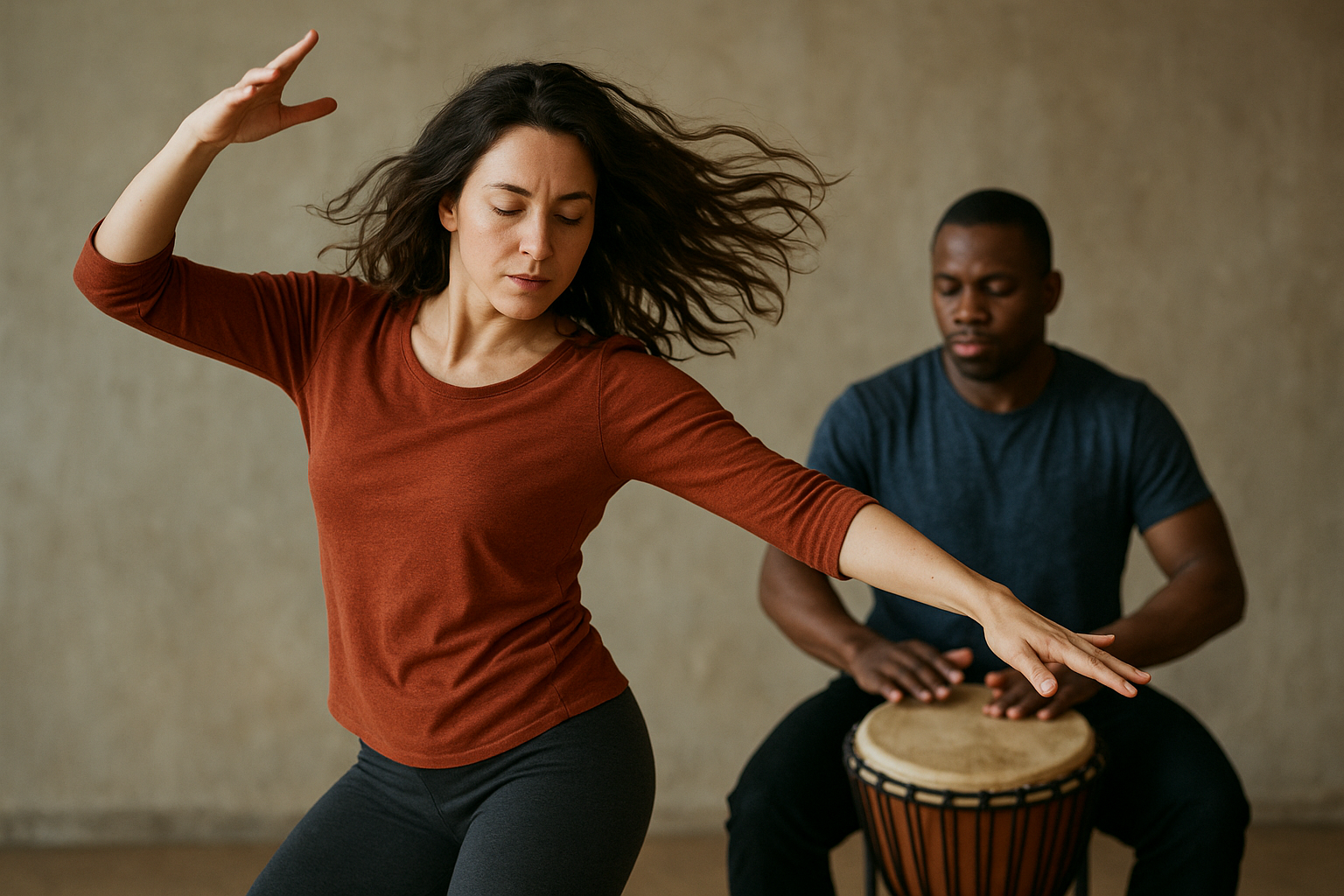
    Polyrhythms are not just heard but also felt. In dance, they challenge performers to recognize and respond to differing beats simultaneously, enriching the expressive potential of movement. Contemporary dance companies are increasingly drawing upon polyrhythmic music to choreograph pieces that captivate audiences and broaden the definition of rhythm in dance.

    A Rhythm of Life

    As musicians and dancers continue to explore beyond traditional Western musical confines, the use of polyrhythms opens up new avenues of creative expression. By daring to go beyond the beat, artists create immersive experiences that resonate with the complexity and diversity of the human spirit.

    For more on the role of polyrhythms in music, visit MusicRadar.

  • Beyond Belief: Non-Dogmatic Approaches to Modern Spirituality

    Beyond Belief: Non-Dogmatic Approaches to Modern Spirituality

    In an era characterized by rapid technological advancement and an ever-expanding horizon of knowledge, traditional modes of religiosity often feel insufficient. Many people today are seeking spiritual fulfillment without the confines of dogmatic beliefs, turning instead to individualized practices that resonate on a deeper, more personal level.

    The Shift Towards Spiritual Independence

    As globalization brings the world’s diverse spiritual traditions closer together, individuals are increasingly inspired to explore paths beyond conventional religious frameworks. This is evident in the growing numbers of people identifying as “spiritual but not religious” (SBNR). A 2017 study by the Pew Research Center highlights this trend, noting that 27% of American adults identified themselves as SBNR, almost doubling from 19% in 2012.

    “The need to believe in something greater than oneself… is one of the deepest yearnings of the human soul,” suggests James Hollis, Jungian psychotherapist and author.

    Core Principles of Non-Dogmatic Spirituality

    Moving beyond traditional beliefs doesn’t imply a rejection of all spiritual ideas but rather an embracing of core, universal principles that align with personal beliefs:

    • Empiricism and Personal Experience: Emphasis is placed on personal spiritual experiences rather than inherited doctrines. Individuals trust their own experiences and intuition as guiding forces.
    • Interconnectedness: Acknowledgment of the interconnected nature of all life often features prominently, influenced by both Eastern philosophies and Western ecological awareness.
    • Mindfulness and Presence: Practices such as meditation, yoga, and mindfulness are favored for their grounding effects, promoting a state of presence that fosters deeper insight.
    • Compassion and Ethics: These are universal anchors, providing moral guidance beyond dogmatic tenets.

    Paths to Personal Spiritual Expression

    The non-dogmatic approach to spirituality paves the way for a myriad of practices that serve the unique preferences of the individual:

    • Mindful Meditation: Popularized by figures like Jon Kabat-Zinn, mindfulness and meditation offer a non-religious route to spiritual exploration, focusing on the cultivation of awareness.
    • Yoga and Physical Expression: This ancient practice has been embraced worldwide as a spiritual discipline that harmonizes body and mind, often transcending its religious roots to become a secular wellbeing tool.
    • Creative Arts: Many find spirituality through creative outlets, harnessing the transcendence inherent in artistic expression—from music and painting to dance and theater.
    • Nature-Based Practices: Engaging with nature as a practice is a common form of modern spirituality, allowing one to attune to the rhythmic cycles and beauty of the earth.
    • Philosophical Inquiry: Engaging with philosophy cultivates a space for questioning, leading to profound insights that enhance one’s understanding of existence and spirituality.

    Challenges and Criticisms

    While non-dogmatic spirituality offers flexibility and inclusivity, it comes with its own set of challenges and criticisms:

    • Lack of Structure: The absence of a coherent framework can be overwhelming for some, leading to superficial practices without depth or consistency.
    • Consumerism in Spirituality: The commercialization of spiritual practices—termed “spiritual bypassing”—can detract from the authenticity of the spiritual quest, as noted by John Welwood, a clinical psychologist.
    • Isolation and Community: Traditional religions often offer a sense of community that non-dogmatic spirituality might lack, potentially leaving individuals isolated.

    Integrating Non-Dogmatic Practices into Daily Life

    Despite these challenges, many have successfully integrated non-dogmatic spiritual practices into their daily lives:

    “Spirituality exists in my daily life through mindfulness practices. I start each day with intention and reflection,” writes Elizabeth Gilbert, bestselling author of Eat, Pray, Love.

    • Daily Routines: Simple rituals such as journaling, setting intentions, or practicing gratitude can cultivate a sustained spiritual awareness.
    • Meditative Practices: Incorporating brief meditative pauses in a busy day helps ground and center oneself amid chaos.
    • Community Engagement: Participating in group activities such as book clubs, meditation groups, or even volunteering can reinforce spiritual connections without a religious framework.

    The Road Ahead

    The future of spirituality is increasingly fluid, with non-dogmatic practices leading the way towards a more inclusive and personalized approach. Technology further enhances these explorations, with apps and online communities providing resources and fellowship across distances.

    In conclusion, today’s spiritual seekers are redefining the boundaries of what it means to be spiritual. By engaging with practices that honor personal intuition and universal truths, they forge connections both to themselves and the wider world. The search for meaning, in its myriad forms, continues—and in this search, the reimagined spiritual paths emerge as hopeful beacons in a rapidly changing society.

  • The Resonance of Risk: Embracing the Unknown in New Music

    The Resonance of Risk: Embracing the Unknown in New Music

    Music, an ancient and universally human art form, has perennially thrived on innovation. The act of composing or performing new music is an exploration into the uncharted territory, and with it comes an intrinsic element of risk. This risk manifests both for the artist, as they challenge traditional norms, and the audience, as they are invited to open their ears to unaccustomed sounds.

    The Unpredictability of New Music

    In new music, unpredictability is the currency of engagement. Unlike classical compositions with firm canonized rules, new music subverts expectations, offering an open-ended dialogue between the creator and the listener. John Cage, one of the most revolutionary composers of the 20th century, famously remarked:

    “I can’t understand why people are frightened of new ideas. I’m frightened of the old ones.”

    – John Cage

    This sentiment underscores the philosophy behind new music as an art form that thrives on uncertainty and exploration. By veering away from well-trodden paths, new music challenges the very conceptions of melody, harmony, and rhythm, inviting creators and listeners alike to question their expectations of what music can, and should, be.

    • Challenging Traditional Norms: Composers employ unconventional methods such as mixed media, electronic elements, and even non-musical sounds to rupture the ordinary flow of music.
    • Audience’s New Role: Listening becomes an active rather than passive experience where the audience participates in constructing the meaning, often resulting in a personal interpretive journey.

    Embracing Failure as a Creative Force

    Risk in new music does not solely reside in the breaking of conventions. It also involves the potential for failure—an aspect that is not only unavoidable but often celebrated as a catalyst for creativity. This notion of embracing failure is echoed by Samuel Beckett in his famous line:

    “Ever tried. Ever failed. No matter. Try again. Fail again. Fail better.”

    – Samuel Beckett

    Failure in the creative process can lead to serendipitous discoveries and innovations that a calculated approach might overlook. Many pioneering works of new music emerged from failed experiments and the willingness to engage with what does not work.

    Technological Advancements: Allies in Risk

    The technological advancements of the modern era have expanded the horizons of musical experimentation, transforming the risky business of creating new music into an ever more dynamic endeavor. With the integration of software and digital platforms, artists can now explore soundscapes previously unimaginable.

    • Innovative Soundscapes: Technologies such as digital synthesis and AI-generated compositions allow for the exploration of new sonic possibilities.
    • Global Collaboration: The internet has enabled collaborations across continents, fusing diverse influences and making new music a truly global phenomenon.
    • Interactive Performance Spaces: Virtual reality and interactive installations provide audiences with immersive experiences that redefine the traditional concert experience.

    The capacity for technology to foster openness can perhaps be best highlighted by the ethos of open-source platforms that allow for communal development and experimentation in music-making.

    The Philosophy of Listening

    The risk in new music extends beyond creation to its consumption. Embracing the unknown can be daunting for audiences accustomed to the familiarity of traditional music. Yet, it is precisely in this leap into the unfamiliar that new music constructs its profound resonance. As stated by philosopher Gilles Deleuze in his exploration of art and philosophy:

    “Art is not chaos, but a composition of chaos.”

    – Gilles Deleuze

    Engaging with new music requires a philosophical openness and a willingness to experience art as a living, breathing entity that embodies ongoing creation. It invites listeners to move beyond passive consumption and participate in the active construction of meaning.

    Conclusion: The Echo of Uncertainty

    New music urges both its creators and audiences to step into the unknown. The very nature of risk in new music echoes an existential understanding of life itself—a tapestry woven with strands of uncertainty and discovery. By embracing risk, both musicians and listeners become participants in an evolving dialogue of sound, silence, and meaning.

    In this shared journey, new music resonates not only as an artistic pursuit but as a poignant exploration of the human condition, challenging us to find beauty beyond the predictable and harmony amidst the chaos. As we immerse ourselves in these unpredictable soundscapes, we learn not only about music but about ourselves, our boundaries, and the infinite possibilities that lie beyond them.

  • Resonance Beyond Silence

    Resonance Beyond Silence

    In a world characterized by endless noise, the concept of silence holds more power than ever before. Yet, silence is not merely the absence of sound. It is a canvas for resonance, a space where the unspoken truths and intrinsic harmonies of life find expression.

    Understanding Silence

    The philosopher Ludwig Wittgenstein once said,

    “Whereof one cannot speak, thereof one must be silent.”

    This suggests silence is not a void, but an opportunity for deeper contemplation and understanding. In fact, the quiet often speaks louder than words, resonating through emotions and thoughts that words fail to capture.

    The Role of Silence in Creativity

    Creative minds throughout history have found inspiration in silence. Composer John Cage famously explored this notion with his piece 4’33”, where performers do not play their instruments. Cage said, “There is no such thing as an empty space or an empty time.” His work invites listeners to experience the ambient sounds around them, allowing silence to give rise to new forms of musicality and awareness.

    • Reflection: Silence offers a pause that enables reflection, leading to breakthroughs and insights.
    • Inspiration: It is in moments of silence that creativity finds its sturdiest roots.
    • Balance: Creativity thrives on the balance between silence and sound, absence and presence.

    The Healing Power of Silence

    Silence is also a potent tool for healing. Meditation practices focus on quieting the mind to achieve mental clarity and emotional stability. Studies have linked periods of silence to reduced stress and enhanced mental health. Dr. Luciano Bernardi’s research indicates, “Silence is more relaxing and beneficial than truly relaxing music.”

    A simple silent walk in nature can foster a deep connection with the surroundings, encouraging a sense of peace and clarity. Such practices highlight that the resonance of silence goes beyond mere tranquility; it is a channel to inner harmony and well-being.

    The Universal Language

    Silence transcends language barriers, offering a universal medium through which people can connect on a deeply human level. In an age dominated by constant communication, learning to embrace silence can lead to more meaningful interactions and a greater appreciation of the spoken word.

    In conclusion, by embracing the resonance beyond silence, we open ourselves to a breadth of experiences that can enhance creativity, foster well-being, and enrich human connections. Silence, then, is not the end, but the beginning of something profoundly resonant.

  • Beyond the Horizon – The Infinite Dao of Discovery

    Beyond the Horizon – The Infinite Dao of Discovery

    Beyond the Horizon: The Infinite Dao of Discovery

    Human history is a testament to our relentless quest for discovery. From the early explorers who braved uncharted waters to today’s scientists and technologists pushing the boundaries of the known universe, exploration is woven into the fabric of our existence. It is this insatiable curiosity that propels our journey beyond the horizon—the infinite Dao of discovery.

    The Essence of Exploration

    The idea of discovery is an intrinsic part of the human condition. Our forebears navigated the vast oceans, guided by instinct and rudimentary tools, not only for survival but for the joy of the unknown. Cultures were enriched and transformed through the exchange of ideas and resources.

    As Carl Sagan eloquently put it, “

    The exploration of the cosmos is a voyage of self-discovery.

    ” Each breakthrough in space exploration or scientific discovery is a reflection of our collective quest to understand our place in the universe. Beyond technological advancement, these journeys command introspection and a greater appreciation of the interconnectivity of all things.

    From the Depths to the Stars

    In recent decades, the focus of exploration has been as much about venturing into the mysterious depths of our planet as it is about reaching into the farthest corners of space. Oceanographers have made groundbreaking discoveries in the dark trenches of our oceans, uncovering ecosystems thriving in conditions previously thought uninhabitable.

    Similarly, the exploration of space, as highlighted by programs such as NASA’s Artemis and the European Space Agency’s ExoMars, is redefining what humanity can achieve. According to NASA, these missions aim to “land the first woman and next man on the Moon” and establish a sustainable human presence, setting the stage for Mars expeditions.

    The Role of Technology

    Technological innovations play a crucial role in our continued exploration. Advances in artificial intelligence and machine learning are revolutionizing fields such as archaeology, astrophysics, and marine biology. By deploying AI, scientists can analyze large datasets swiftly, identifying patterns and anomalies that might elude human researchers.

    Furthermore, the advent of private space enterprises, led by visionaries like Elon Musk and Jeff Bezos, is making space travel more accessible. SpaceX and Blue Origin are not just planning missions but are also developing infrastructure that may one day facilitate humans living and working in space. As Elon Musk stated, “

    I want to die on Mars. Just not on impact.

    ” His quip highlights the profound ambition driving these efforts.

    The Philosophy of the Dao

    The Dao, a concept from ancient Chinese philosophy, can be closely linked to exploration. It refers to the essential principle underlying morality, ethics, and life itself. In this context, the Dao of discovery compels us to reflect on the balance between known and unknown, pushing us towards equilibrium in our understanding of the universe.

    According to Laozi, the legendary founder of Daoism, “

    A journey of a thousand miles begins with a single step.

    ” This timeless wisdom underscores every venture into the unknown, reminding us that even the most complex undertakings begin with simple, deliberate actions.

    Challenges and Ethical Considerations

    However, our journey comes with numerous challenges and ethical dilemmas. Issues such as environmental impact, the preservation of indigenous cultures, and space law implications need careful consideration. As we extend our presence in environments beyond Earth, we must ensure that exploration does not come at the expense of vital ecological and cultural heritage.

    UNESCO emphasizes the importance of “ensuring that the progress of humanity is pursued with responsible stewardship.” Balancing progress with responsibility is the crux of sustainable discovery.

    The Infinite Journey

    Ultimately, the horizon is not a destination but a continuously shifting goalpost in the infinite Dao of discovery. Each breakthrough leads to new questions, new territories, and new horizons. As humans, our legacy will be defined by how we navigate these uncharted waters, with curiosity as our compass and wisdom as our guide.

    In the words of John F. Kennedy, “

    We choose to go to the moon in this decade and do the other things, not because they are easy, but because they are hard.

    ” This spirit of exploration, underlined by ambition and resilience, continues to drive us forward, beyond the horizon, into the infinite realm of what could be.

    As we tread this path, we need to remain mindful of the delicate balance between advancement and stewardship, ensuring that our discoveries bring benefit to all, expanding the realm of possibility for future generations.


  • Lotus of the Void – Awakening to the Unborn Source

    Lotus of the Void – Awakening to the Unborn Source

    Lotus of the Void: Awakening to the Unborn Source

    The mystical journey of spiritual awakening often plunges us into realms of profound profundity, where the ordinary fades to reveal the extraordinary. Amongst the countless metaphors that encapsulate this journey, the Lotus of the Void shines brightly as a symbol of spiritual purity and enlightenment. Its ethereal bloom invites seekers to awaken to the Unborn Source, a transcendent state beyond the manifest universe.

    The Symbolism of the Lotus

    The lotus flower, emerging from murky waters to reveal its pristine petals, has long captivated spiritual traditions. In Buddhism, it represents the purity of body, speech, and mind, unaffected by the impurities of the world. As the lotus rises untainted from the mud, so does the enlightened soul rise above the material plane.

    “Just like a lotus that grows out of the water but does not touch it, the true knowledge elevates a spiritual aspirant beyond the mundane world.”
    Ancient Buddhist Proverb

    Embracing the Void

    In many spiritual teachings, the void is not a place of emptiness but rather an infinite potentiality. Known as the Unborn Source, it is seen as the origin of all creation—a state where dualities merge back into unity. Awakening to this source suggests a return to one’s authentic self, unconditioned by societal constructs and personal ego.

    Within this void, the enlightened encounter a profound silence that speaks louder than the chaos of the world. It is where the lotus, born from nothing yet carrying the wisdom of everything, articulates the true essence of being.

    The Path of Awakening

    • Meditation: Establish a diligent meditation practice focused on quieting the mind and entering the void.
    • Mindfulness: Cultivate awareness of the present moment to gradually dissolve the ego’s grip.
    • Learning: Engage with spiritual texts and teachings that illuminate the path to the Unborn Source.

    The Lotus of the Void remains a guiding symbol for all spiritual seekers. It encourages exploration beyond the known and invites the soul to awaken from the slumber of illusion to the clarity of the Unborn Source.

    As Lao Tzu wisely said, “Knowing others is intelligence; knowing yourself is true wisdom.” Dive into the void, and witness the lotus unfurl its divine bloom.

  • Steps into Emptiness – A Pilgrim’s Journey Beyond Knowing

    Steps into Emptiness: A Pilgrim’s Journey Beyond Knowing

    In the age of relentless information and boundless connectivity, the yearning for emptiness, the allure of the uncharted silence, calls to those seeking to journey beyond the confines of knowing. This pilgrimage is not one of physical destinations, but a transcendental voyage into the essence of the void—where knowledge surrenders to insight and silence speaks volumes.

    The Call of the Unknown

    As John Cage once said, “I have nothing to say and I am saying it and that is poetry.” For the modern pilgrim, this quote epitomizes the essence of stepping into emptiness—not as an absence, but as a canvas for profound revelation. It begins with the invitation to explore what lies beyond the saturated symphony of daily life.

    • Embrace Quietude: Set aside moments each day for silence. This practice cultivates a deeper connection with one’s inner thoughts and emotions.
    • Meditative Stillness: Engage in meditation to foster a state of emptiness that allows for reflection and introspection.
    • Detachment from Information: Periodically disconnect from digital devices to focus on the immediate environment, enhancing presence and awareness.

    Letting Go of Certainties

    To embrace emptiness is to surrender certainty. It is about finding beauty in ambiguity, a concept echoed by Lao Tzu, who wrote, “To the mind that is still, the whole universe surrenders.” This journey invites a letting go of rigid beliefs and doctrines, allowing for genuine discovery and personal growth.

    • Question Assumptions: Challenge conventional wisdom and be open to new paradigms.
    • Seek Simplicity: Simplify life by focusing on what truly matters, shedding unnecessary clutter, both physical and mental.
    • Practice Non-Attachment: Cultivate a practice of non-attachment to outcomes, fostering resilience and adaptability.

    A Journey Unending

    Stepping into emptiness is not a journey with a definitive endpoint. Each step reveals new layers of understanding, as the pilgrimage continues ‘beyond knowing’. In this eternal unfolding, we find peace—not in possession, but in continual exploration.

    The Dalai Lama teaches, “The ultimate source of happiness is within us, not outside. Even the happiest city in the world cannot create something that already abides within.”

    So take that first step—not just on the path less traveled, but into the void where the journey of a lifetime awaits.

  • Resonance Beyond Silence

    Resonance Beyond Silence

    In the beautiful dichotomy of sound and silence, resonance emerges as a mystical bridge connecting the two. But what lies in the realm of resonance beyond silence? This exploration delves into the philosophical, scientific, and spiritual dimensions of this unique connection and the profound implications it holds for human experience.

    The Science of Resonance

    At its core, resonance is a phenomenon that occurs when an object vibrates in response to an external stimulus at a specific frequency. This can lead to amplified vibrations and, when harnessed correctly, miraculous results. From musical instruments to architectural engineering, resonance plays an integral role.

    “Resonance, in physics, is a relatively small, periodic driving force that results in a huge amplitude of oscillation in a mechanical system.”

    Moreover, resonance is not limited to the physical world, influencing psychological and emotional responses—a symphony of unseen interactions, harmonizing the multitude of life experiences even in perceived silence.

    Philosophical Interpretations

    The concept of resonance transcends physical interpretations and enters the realm of philosophy, where it is seen as a metaphor for connection and understanding. In human interactions, silence often speaks louder than words. It is in the unspoken realm that true resonance occurs, deeply influencing relationships and self-awareness.

    Consider the following quote by Khalil Gibran, a renowned Lebanese writer and philosopher:

    “In the silence of our souls, we approach one another too mysteriously to speak, and that which carries us closest to one another is untouched by everything we say.”

    This philosophical stance suggests that silence serves as a resonant space where true connectivity flourishes—beyond the confines of audible interaction.

    Spiritual Dimensions

    In many spiritual traditions, resonance and silence are the foundation stones for personal growth and enlightenment. Practices such as meditation and contemplative prayer leverage silence as a conduit to resonate with higher truths and inner peace.

    For instance, within the context of Zen Buddhism, the utility of silence is paramount. As the Zen proverb goes, “Silence is the ultimate wisdom”. Here, silence creates the mental space necessary for the resonance of enlightenment, where understanding and serenity oscillate within the soul.

    The Silent Music of the Universe

    Across various cultures and disciplines, there is a certain reverence for the idea that the universe itself resonates with a silent music—a cosmic symphony that influences everything. This notion is embodied in concepts like the Music of the Spheres, an ancient philosophical concept that regards the movements of celestial bodies as a form of music, inaudible yet impactful.

    As suggested by Einstein’s insights, this metaphorical symphony reflects deeper cosmic connections that defy simple explanation:

    “The universe is more than a collection of heat and light; it is an orchestra of cosmic symphonies, a timeless resonance fluctuating across the spacetime continuum.”

    Through silent resonance, individuals may feel connected to a greater cosmic order, echoing the eternal vibrance of existence.

    Resonance in Technology

    In the technological realm, innovations continuously evolve to explore resonance beyond the human capacity to hear. For example, advancements in ultrasonic technology utilize sound waves at frequencies beyond human hearing to achieve remarkable feats in medical imaging, cleaning, and even communication between devices.

    Technology’s exploration of resonance beyond silence serves as a powerful testament to human ingenuity and curiosity. It highlights our unyielding desire to tap into realms typically deemed silent, unveiling the infinite potential within these seemingly empty spaces.

    Conclusion: Embracing Silence and Resonance

    The exploration of resonance beyond silence invites humans to reflect on both inner and outer worlds. It brings forth the recognition of profound beauty in quietude while fostering a deeper understanding of the invisible connections that bind the universe.

    In embracing this resonance and its myriad interpretations, from scientific phenomena to spiritual enlightenment, we uncover the hidden symphony of life—a reminder that silence, far from being empty, holds untold wisdom, echoing into eternity.

    The journey through this intricate dance of energies offers an invitation to listen, not just with the ears, but with the heart and soul. Resonance beyond silence becomes not just a study, but a philosophy to be lived, embraced, and cherished.