Tag: back

  • Return to the Dao – The Journey Back to the Beginning

    Return to the Dao – The Journey Back to the Beginning

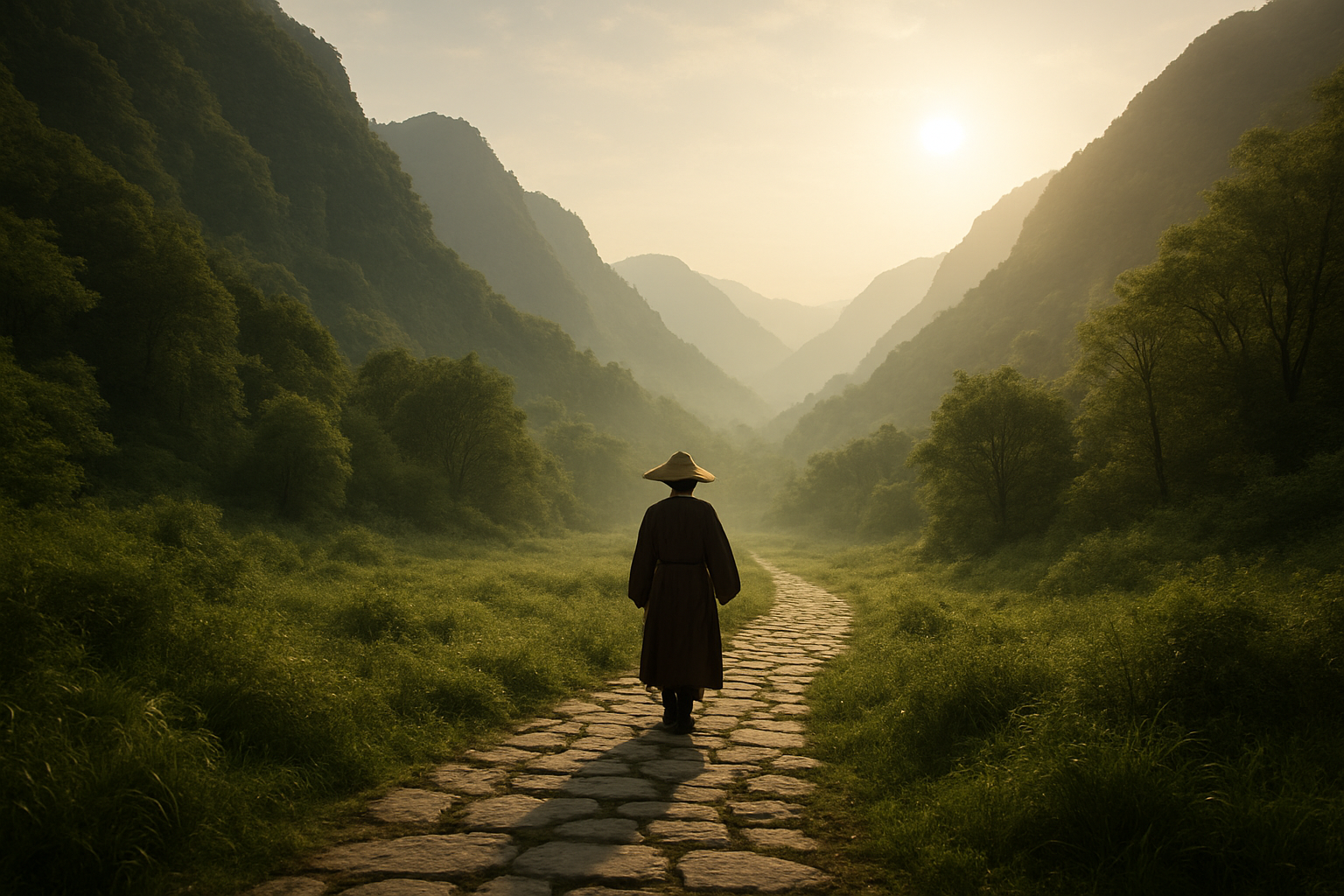
    Return to the Dao: The Journey Back to the Beginning

    In the constantly evolving landscape of modernity, there lives a whisper from ancient traditions urging humanity to pause, reflect, and return to its roots. This whisper, for many, takes the form of the Dao – a path of harmony and equilibrium found within oneself and the universe. The ancient concept of the Dao, originating from China, provides a timeless guide for living a life of balance and peace.

    The Origin and Essence of the Dao

    The Dao, often translated as “The Way,” is a cornerstone of Chinese philosophy and is epitomized in texts like the Dao De Jing by Laozi. As Alan Watts, a prolific interpreter of Eastern philosophy, states, “The Dao is like a well: used but never used up. It is like an eternal void: filled with infinite possibilities.”[1](https://www.goodreads.com/quotes/78177-the-dao-that-can-be-told-is-not-the-eternal-dao) This description captures the unquantifiable essence of the Dao – something that can be sensed and followed but never entirely grasped through the intellect alone.

    The Duality of Yin and Yang

    A pivotal element of Daoism is the concept of yin and yang, symbolizing the interconnectedness of opposites. The natural world is a tapestry of seemingly contradictory forces that, in reality, complement and complete each other. The sun and the moon, day and night, ebb and flow – all illustrate the cosmic balance the Dao strives for.

    “The yin-yang balance is essential in understanding the Dao,” writes Chuang Tzu, “for it is the dynamic of life itself, tying its threads into a pattern that is coherent for both the mind and the body.”[2](https://ctext.org/chuang-tzu)

    Walking the Path: Principles of the Dao

    • Wu Wei (Non-Action): At the heart of Daoist practice lies the principle of Wu Wei, often misinterpreted as “do nothing”. In truth, it encourages spontaneous natural action in perfect harmony with the flow of life. The idea is not to force things against their nature but to follow the natural course of events.
    • Simplicity: A return to the essence. In the turbulent sea of the modern age, the Dao champions simplicity as a path to inner tranquility. By decluttering both material possessions and mental preoccupations, individuals transcend superficial complexities.
    • Compassion: The Dao advocates for a profound sense of compassion, not just among humans but extending to all forms of life. This gentle approach encompasses forgiveness, care, and the intrinsic value of every being.

    The Dao and Modern Life

    In contemporary contexts, the principles of the Dao offer transformative insights. In a world overwhelmed by the drive for success and progress, the Dao suggests a return to balance. This is not to denounce achievement but to balance ambition with wellness and mindfulness. By practicing Wu Wei, individuals can reduce stress and enhance creativity as they allow their actions to flow naturally without undue strain.

    “Nature does not hurry, yet everything is accomplished,” Laozi reminds us. This wisdom emphasizes the power of patience and the importance of aligning our personal tempo with the rhythm of the world.[3](https://www.amazon.com/Tao-Te-Ching-Laozi/dp/1982130198)

    Daoist Practices and Spiritual Journeys

    Embarking on a Daoist journey often involves practices such as meditation, Tai Chi, and Qigong. These disciplines enhance the connection between body and spirit, allowing practitioners to tune into the cosmos’s energy flows. Qigong, for instance, entails deliberate breath and movement aimed at cultivating and balancing life force energy or qi.

    In contrast to more rigid religious practices, Daoism offers a personal spiritual exploration tailored to each individual’s needs. It promotes an understanding of the self that integrates rather than segregates emotions and differences, forging a path toward authentic enlightenment.

    Returning to the Source: A Renaissance of the Ancient Path

    As more individuals seek meaning beyond material prosperity, the Dao presents an opportunity to shift perspective and return to the origin. A profound resonance with nature and the cosmos emerges, creating a harmonious existence that transcends temporal concerns.

    The relevance of the Dao in today’s society is evident in the rising interest in the philosophies of mindfulness, sustainability, and global empathy. By embracing these principles, we can collectively journey back to the beginning, rediscovering a path that promises both personal evolution and collective advancement.

    Conclusion

    The journey back to the Dao is not a retreat to the past but rather a forward step into a fuller understanding of the universe. By weaving the principles of Dao into our daily lives, we open up possibilities for personal tranquility and broader societal harmony.

    In the words of the Daoist sage Chuang Tzu, “Forget the years, forget distinctions. Leap into the boundless and make it your home!”[4](https://www.brainyquote.com/quotes/chuang_tzu_387207) It is an invitation not merely to exist within the world, but to belong unequivocally to the realm of the eternal Dao.

  • The Way of Returning – Tracing the Path Back to Source

    The Way of Returning – Tracing the Path Back to Source

    The Way of Returning – Tracing the Path Back to Source

    The Way of Returning: Tracing the Path Back to Source

    “The journey of a thousand miles begins with one step.” – Lao Tzu

    The concept of returning to one’s source is an ancient idea, explored in various cultures and philosophies around the world. It speaks to a universal longing within the human spirit—a desire to reconnect with our beginnings, whether that’s an ancestral home, a spiritual origin, or simply a return to a state of simplicity and peace. As the modern world grows increasingly complex, the attraction of tracing this path back to our roots becomes ever more compelling.

    The Philosophical Underpinnings

    Throughout history, many philosophies and spiritual traditions have emphasized the importance of returning to the source. In Daoism, the notion of wu wei or non-action implies a flow that aligns with the natural order of the universe, suggesting a return to a more primal, untainted state of being. As Lao Tzu also said, “Knowing others is intelligence; knowing yourself is true wisdom. Mastering others is strength; mastering yourself is true power.”

    In Hindu philosophy, the concept of moksha represents liberation from the cycle of birth and death, signifying a return to the divine source. Similarly, in Buddhism, the attainment of Nirvana implies a return to an original, enlightened state, freed from the attachments and illusions of the world.

    “We are not human beings having a spiritual experience; we are spiritual beings having a human experience.” – Pierre Teilhard de Chardin

    Modern Interpretations

    In today’s fast-paced world, the yearning for a return to source is often manifested in trends like minimalism, ecological awareness, and movements such as The Slow Movement. These modern interpretations reflect a collective desire to strip away the excess and complexity of contemporary life, seeking a more meaningful and authentic existence.

    Minimalism encourages individuals to remove clutter not only from their physical spaces but also from their minds and schedules. By doing so, they aim to live a life driven by purpose, free from the distractions of material possessions and unessential commitments.

    • Minimalism: Removing the unnecessary to focus on what truly matters.
    • Ecological Awareness: Reconnecting with the planet to heal and sustain our natural environment.
    • Mindfulness and Meditation: Practices that bring us closer to our true selves and the present moment.

    The Path to Self-Discovery

    Tracing the path back to source is inherently a journey of self-discovery. It involves peeling back layers of conditioning and societal expectations to reveal our innermost selves. It’s about asking the essential questions: Who am I? What is my purpose? How do I align my life with my deepest values?

    One tool to facilitate this journey is meditation. By quieting the mind, meditation offers a glimpse into the core of our being. As the Indian philosopher Jiddu Krishnamurti stated, “Meditation is not a means to an end. It is both the means and the end.” Through meditation, individuals can experience a profound sense of peace and unity with the universe, aligning their personal energies with the greater cosmic flow.

    Challenges and Rewards

    While the desire to return to source is strong, the path is not without its challenges. The journey can be fraught with doubts, distractions, and the ever-present pull of modern life’s demands. However, those who persevere often find profound rewards: a deepened sense of peace, clarity, and connection to something greater than themselves.

    These newfound insights often translate into a more balanced and fulfilling life. As individuals reconnect with their true selves and their environment, they discover the joy of living in harmony with the world and the people around them.

    Final Reflections

    Returning to source is a deeply personal journey, unique to each individual’s experiences and spiritual understanding. Whether through philosophy, meditation, minimalism, or ecological awareness, the path is as varied as those who embark upon it. Yet, the underlying principle remains the same: the quest for authenticity, simplicity, and unity with the essence of life.

    As we continue to navigate the complexities of modern existence, the stories and teachings of those who have walked the path before us serve as invaluable guides. They remind us that, at the core of our humanity, lies a longing to return to the beginning—a sacred place where we are truly at home.

    In the words of the renowned poet T.S. Eliot, “We shall not cease from exploration, and the end of all our exploring will be to arrive where we started and know the place for the first time.”