Category: MythCoeur

  • The Ecstasy of Error: Embracing Imperfection in Performance

    The Ecstasy of Error: Embracing Imperfection in Performance

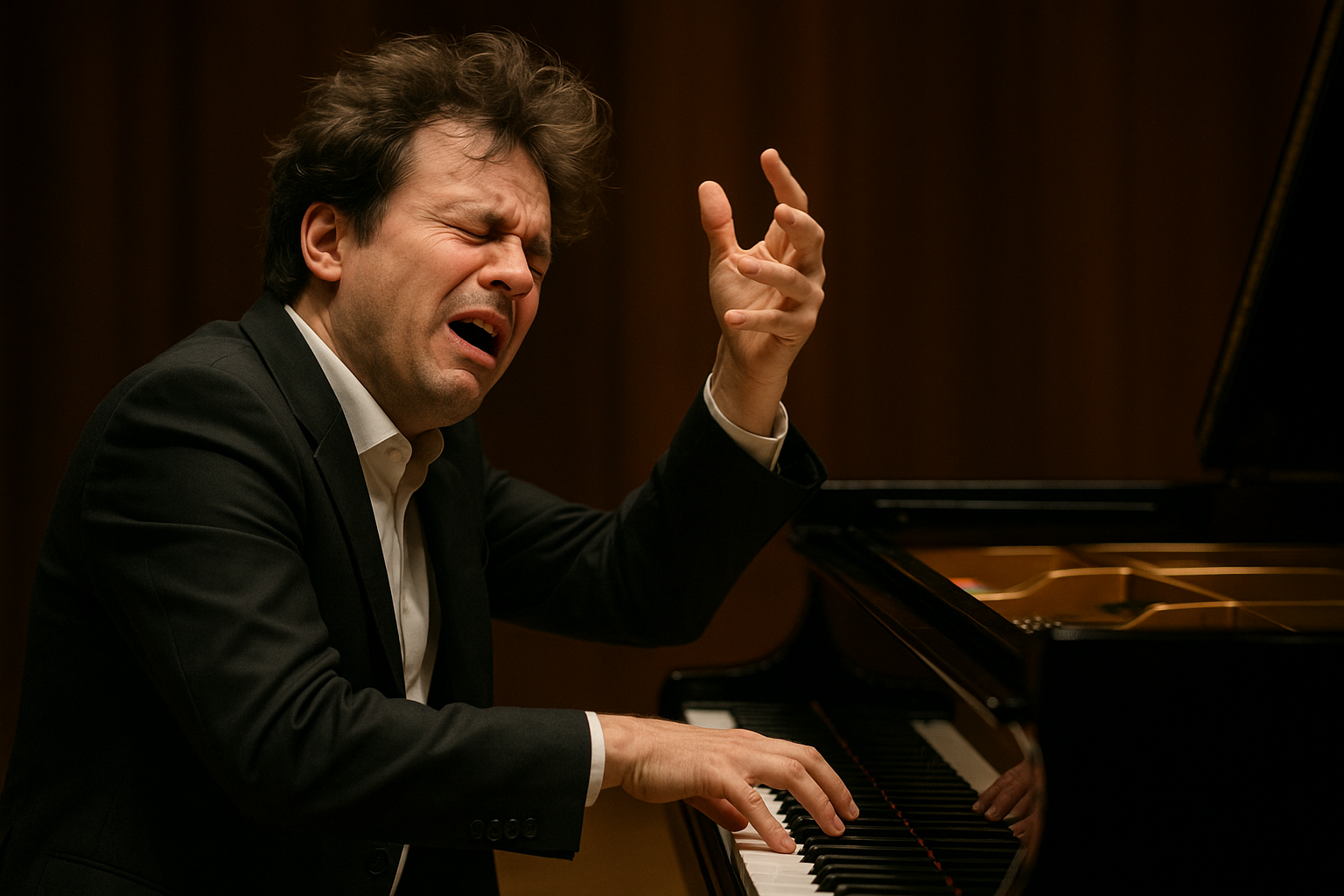
    In the fast-paced world of performance, whether on stage, in sports arenas, or in corporate boardrooms, the pursuit of perfection often takes center stage. Yet, a growing chorus of voices is beginning to recognize the value of imperfection as a critical component of authentic and compelling performances. The ecstasy of error, a concept that celebrates mistakes as learning opportunities and catalysts for creativity, invites performers and audiences alike to redefine success and embrace the unexpected.

    The Beauty of Imperfection

    Throughout history, artists and thinkers have recognized the beauty inherent in imperfection. The Japanese concept of wabi-sabi venerates simplicity and the beauty of things incomplete or imperfect. As author Richard Powell puts it, “Wabi-sabi nurtures all that is authentic by acknowledging three simple realities: nothing lasts, nothing is finished, and nothing is perfect.”

    This philosophy is particularly pertinent in performances where spontaneity and human error inject authenticity and relatable vulnerability. Consider the timeless appeal of live music. Every concert is an opportunity for musicians to reinterpret their own work, perhaps hitting a wrong note or missing a cue, adding a unique, ephemeral quality to each performance. It is these imperfections that often render a performance memorable and genuine.

    The Science Behind the Mistake

    From a psychological standpoint, the fear of making mistakes is deeply ingrained in many of us. However, research suggests that making errors can actually stimulate learning processes. According to a study published in the Journal of Experimental Psychology, mistakes activate brain regions associated with learning and memory, suggesting that error-making is essential for growth and skill acquisition (APA Journal).

    “An error is not a stepping stone to a decision; it is a decision in itself,” states psychologist James Reason, emphasizing the reflective potential of errors.

    The performance arts are replete with examples of how mistakes lead to unexpected creative breakthroughs. Choreographer Crystal Pite advises her dancers to “keep your mistakes as gifts,” transforming potential missteps into new creative avenues.

    Case Studies in Error-Driven Innovation

    • Live Theatre: In the realm of live theatre, actors are trained to adapt to unforeseen circumstances such as forgotten lines or technical malfunctions. These improvisations often enrich performances, enchanting the audience with spontaneous comedy or drama that might be absent in a flawless rendition.
    • Sports: Athletes like Michael Jordan have achieved greatness by learning from their failures. In his own words, “I’ve missed more than 9,000 shots in my career. I’ve lost almost 300 games. 26 times, I’ve been trusted to take the game-winning shot and

  • The Practice of Presence: Bringing Spirituality into Daily Life

    The Practice of Presence: Bringing Spirituality into Daily Life

    In a world dominated by relentless schedules, digital distractions, and ever-growing responsibilities, the quest for serenity and spiritual fulfillment often seems daunting. Yet, amidst this chaos, the ancient wisdom of ‘presence’ offers a beacon of hope. Embracing the practice of presence not only enhances spiritual well-being but also deeply enriches everyday life.

    Understanding Presence

    The concept of presence is rooted in mindfulness and revolves around the intentional focus on the current moment. As described by renowned mindfulness teacher Thich Nhat Hanh, “The present moment is the only time over which we have dominion.” This idea emphasizes the importance of living in the now, rather than being trapped in the regrets of the past or the worries of the future.

    Spirituality and Daily Life: A Harmonious Blend

    Bringing spirituality into daily life through presence involves more than abstract concepts—it requires practical application. Here, we explore various strategies to weave spirituality seamlessly into the fabric of everyday living:

    • Mindful Breathing: Taking a few moments each day for conscious breathing can ground your thoughts and sharpen your focus. Simple breathing exercises foster tranquility and can be practiced virtually anywhere—from a quiet room to a bustling train.
    • Gratitude Journaling: Journaling about things you’re grateful for not only enhances positivity but also accentuates the spiritual dimensions of thankfulness. This practice nurtures a deep appreciation for life’s blessings.
    • Connection with Nature: Spending time in nature rejuvenates the soul and strengthens the bond with the universe. Even brief interactions with nature, such as a walk in the park or tending to a garden, can be spiritually uplifting.
    • Meditation Practice: Daily meditation sessions invite serenity and self-reflection, guiding one into a state of deeper awareness and spiritual connectivity.
    • Acts of Kindness: Engaging in selfless acts fosters an environment where spiritual virtues can flourish. Simple acts, such as helping a neighbor or volunteering, can enhance personal and communal well-being.

    Testimonials: The Transformation Through Presence

    “Before embracing mindfulness, I always felt overwhelmed by a sense of urgency. Practicing presence allowed me to pause and cherish each moment, transforming my perspective on life,” shares Lisa Stevens, a mindfulness practitioner from Oregon.

    Such testimonials reflect the profound impact the practice of presence can have. By cultivating a mindset centered around the present, individuals report enhanced emotional health, greater clarity, and heightened spiritual awareness.

    Challenges and Overcoming Them

    Integrating spirituality into daily routines through presence is not without its challenges. Common obstacles include:

    • Time Constraints: Modern life is fast-paced, leaving little room for introspection. However, even brief moments of purposeful presence can significantly affect well-being.
    • Cognitive Overload: Constantly inundated with information, the mind tends to wander. Regular meditation and mindfulness exercises can help reclaim focus.

    Overcoming these challenges requires dedication and a willingness to adapt. Setting realistic goals, using mobile apps for guided meditations, and joining mindfulness groups can provide support and motivation.

    The Global Shift Towards Mindfulness

    The practice of presence is not confined to individual experiences; it resonates on a global scale. More organizations are incorporating mindfulness into their cultures, recognizing its potential to improve both employee well-being and productivity. Companies such as Google and Aetna have introduced mindfulness programs, highlighting a paradigm shift towards a more spiritually aware workplace.

    According to The Huffington Post, “Numerous studies show that meditation can combat stress, enhance emotional health, and improve focus.” Such empirical evidence further champions the integration of presence into daily routines, both personally and organizationally.

    Conclusion: A Call to Embrace the Now

    Incorporating presence into daily life unlocks a pathway to spiritual awakening and holistic well-being. It encourages individuals to break free from the confines of past regrets and future anxieties, embracing each moment for its potential joy and wisdom. As Thich Nhat Hanh reminds us, “The present moment is filled with joy and happiness. If you are attentive, you will see it.”

    Thus, why wait? Begin the journey today towards a more present and spiritually enriching life. Promise yourself a mindful walk, a quiet moment of breathing, or a journal entry for gratitude. Acknowledge that spirituality doesn’t require seclusion in remote monasteries; it thrives here and now, waiting to be discovered in your daily routine.

  • The Witness of Light: Photography and Existential Inquiry

    The Witness of Light: Photography and Existential Inquiry

    Photography, since its inception in the early 19th century, has been more than a mere technological innovation. It has served as a profound medium for existential inquiry—a vehicle which allows humanity to ponder purpose, identity, and the passage of time. This article delves into the relationship between photography and existentialism, exploring how the act of capturing light reflects our deeper quest for meaning.

    The Origin of Photography’s Philosophical Underpinnings

    When Joseph Nicéphore Niépce first captured a permanent image in 1826 using a camera obscura and a pewter plate coated with bitumen, he likely did not foresee the philosophical implications his invention would herald. Photography introduced a new way of seeing, providing a seemingly objective reality fixed on film or glass plates. This shift inspired both wonder and contemplation. As French painter and early photographer Louis Daguerre remarked, the camera offered “a miraculous occurrence, a testimony of the visible in our absence.”

    The Camera’s Role as an Existential Tool

    In the hands of an artist or a thinker, a camera becomes much more than a tool for visual documentation. It transforms into an interrogator, asking profound questions about our existence. Existentialists, who emphasize the role of individual experience in the search for truth, find in photography an ally. As photographer and philosopher Susan Sontag noted in her seminal work, On Photography, “Photographs furnish evidence. Something we hear about, but doubt, seems proven when we’re shown a photograph of it. In one of its aspects, the photograph is thus a mildly totalitarian version of reality, an attempt to understand and control it.”

    Capturing the Fleeting Moment

    One of photography’s most existential qualities is its ability to capture a fleeting moment, preserving it forever. Yet, this preservation paradoxically highlights the impermanence of life. The photograph becomes a symbol of the inevitability of time’s passage. French photographer Henri Cartier-Bresson’s concept of the “decisive moment” suggests that amidst the chaos of life, there exists a fraction of time that holds the essence of its subject, rich with emotion and meaning.

    “To photograph: it is to put on the same line of sight the head, the eye and the heart.”

    — Henri Cartier-Bresson

    Exploring Identity Through the Lens

    Photography also serves as an inquiry into identity, both personal and collective. Portraiture, in particular, invites questions about the self and the gaze, as famously explored by photographer Cindy Sherman. Sherman’s self-portraits challenge viewers by depicting a mutable identity, thus questioning the nature of self-perception. In doing so, she illustrates photographer Roland Barthes’ thinking in Camera Lucida, where he claimed every photograph contains three elements—what the photographer intended, what the subject experienced, and what the viewer perceives.

    “I wanted to create something that acts like a mirror—the viewer gets back only what they put into it.”

    — Cindy Sherman

    The Intersection of Reality and Creation

    At its core, photography juxtaposes reality and creation, bridging the gap between what is seen and what is perceived. Like existentialism, which often questions the objective nature of reality, photography challenges perceptions through its subjective lens. Each photograph is shaped by the artist and their choices of framing, lighting, and content. Renowned photographer Ansel Adams viewed the photographic process not as the capture of reality but as an expressive interpretation. According to Adams, “You don’t take a photograph, you make it.”

    Photography and Mortality

    Perhaps the most profound existential aspect of photography is its confrontation with mortality. As Sontag wrote, “All photographs are memento mori. To take a photograph is to participate in another person’s (or thing’s) mortality, vulnerability, mutability.” By freezing time, photographs serve as reminders of life’s temporality and fragility.

    The late American photographer Robert Mapplethorpe often addressed themes of mortality and sexuality in his work. His black-and-white portraits starkly highlight life’s beauty and its fragility, emphasizing the transient nature of existence. To engage with Mapplethorpe’s work is to engage in a meditation on life and death.

    Conclusion: A Continuous Dialogue

    Photography, in its essence, is a deeply philosophical art form. It engages both creators and viewers in a dialogue about existence, perception, and time. As technology evolves and photography becomes even more democratized, its role as an instrument for existential inquiry only grows. Cameras are no longer just mechanical devices but integral parts of our personal exploration and human expression.

    As contemporary photographers continue to push boundaries and philosophies, the world looks on, both as witness and participant in the intricate dance between light and life, seeking meaning through each captured image, each flash of light.

    In essence, photography, much like life itself, is about capturing the transient moments that define us. Each click of the shutter invites us to pause, reflect, and understand our place in the ever-evolving tapestry of existence.

  • The Meditative Drone: Sustained Sound as a Pathway Inward

    The Meditative Drone: Sustained Sound as a Pathway Inward

    In the ever-expanding universe of mindfulness and meditation practices, the use of sound as a meditative focus has seen a resurgence, particularly through the emergence of drone music. This genre, characterized by its sustained and immersive soundscapes, offers a unique gateway to deeper states of consciousness and well-being.

    The Origin of Drone Music

    Drone music, defined by its minimalistic approach with few, if any, beats or melody, traces its roots back to various cultural and spiritual traditions. From the monotonous chants of Tibetan monks to the didgeridoo of the Indigenous Australians, drone sounds have been employed as a conduit for meditation and spiritual connection for millennia.

    The modern iteration of drone music evolved in the mid-20th century, with composers like La Monte Young and his Dream House, creating environments in which sound and listener are interconnected. As Young famously stated, “One of the main things my work is about is establishing a relationship with sound.” [source]

    The Science Behind the Sound

    Sound has a profound impact on the human brain. According to a study by the National Center for Biotechnology Information, certain sound frequencies can alter brainwave activity, promoting states similar to those achieved in meditation. Drone music, with its sustained and repetitive nature, is particularly powerful in this regard. It fosters a hypnotic state that can lead to a reduction in stress and anxiety.

    “Slow repetition or sustained sound is known to have a deep impact on mind states,” says Dr. Julie Bernstein, a neurologist specializing in music therapy. “It allows the brain to enter a relaxed state of flow, similar to what’s experienced during yoga or deep meditation.”

    Practical Benefits of Meditative Drones

    The benefits of incorporating drone music into a meditation practice are manifold:

    • Enhanced Concentration: The minimalistic nature of drone sounds can help focus the mind, minimizing the distractions that often disrupt meditation.
    • Emotional Release: The sustained tones can facilitate emotional processing and release, offering a safe space to experience and move through feelings that may otherwise remain repressed.
    • Connection to the Present: By engaging the auditory senses fully, drone music helps anchor practitioners in the present moment, a key aspect of mindfulness.

    These benefits are not just anecdotal. Research from the Oxford Journals has demonstrated that a steady auditory stimulus can significantly improve mental health outcomes for those undertaking regular meditation practices.

    Integrating Drone Music into Your Practice

    For those new to meditation or the use of drone music, beginning with guided sessions can provide structure and support. Many online platforms now offer recorded sessions specifically designed to harness the power of sustained sound.

    To get started:

    • Choose a setting free from distractions, where you feel comfortable and safe.
    • Select a drone music track. Platforms like Spotify and YouTube offer extensive libraries to explore.
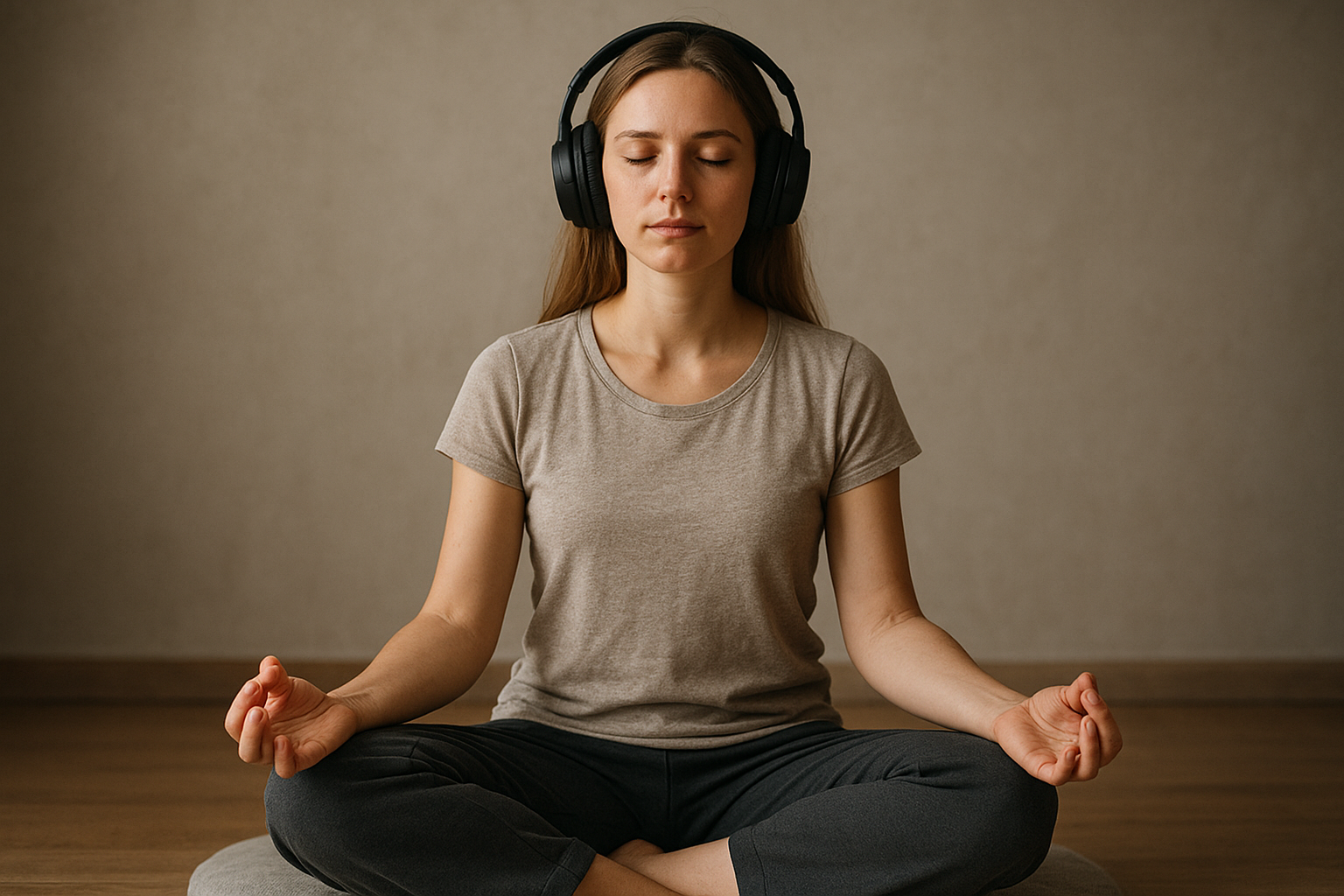
    • Use headphones to immerse yourself fully in the experience if external noise is a distraction.
    • Focus on your breath or the sound itself, allowing thoughts to ebb and flow without attachment.

    Beyond the Sound

    While drone music can stand alone as a powerful tool for meditation, it also complements other mindfulness practices. Pairing drone music with activities like yoga, tai chi, or even creative arts can deepen engagement and enrich the practice.

    “It’s about creating a sound environment that supports mindfulness,” explains sound artist Anna Roberts. “The goal is not just listening, but truly experiencing.”

    As more people search for ways to navigate the complexities of modern life, the simple yet profound presence of drone music offers a timeless pathway inward. By fostering focus and embracing the present, it continues a legacy of sound as a healer, guide, and connection to something larger than ourselves.

  • Revisiting the Relic: Modern Artists Engaging with Old Masters

    Revisiting the Relic: Modern Artists Engaging with Old Masters

    In the dynamic world of contemporary art, there is a resonant reverberation of the past that artists cannot ignore. The dialogue between modern creators and the Old Masters serves as a bridge between centuries, where traditional techniques meet avant-garde experimentation. This conversation across time not only enriches the modern artist’s palette but also breathes new life into historical works.

    Reinterpretation and Innovation

    Modern artists are increasingly drawn to the works of legendary figures such as Leonardo da Vinci, Rembrandt, and Caravaggio. They see these masterpieces not just as relics of art history, but as living sources of inspiration. As noted by art critic Jonathan Jones in The Guardian, “The way today’s artists engage with the past is often unsettling, surprising, and transformative.”

    • Appropriation: Some artists adopt elements from classic artworks, embedding them into new contexts to create unexpected juxtapositions. British artist Tracey Emin, for instance, integrates drawings reminiscent of Egon Schiele into her work to evoke raw emotion.
    • Subversion: By reimagining revered pieces through a contemporary lens, artists challenge the viewer’s perceptions. For example, Kehinde Wiley’s portraits replace noble European figures with young African American men, effectively engaging in a dialogue about race and representation.
    • Homage: Many artists pay tribute to the techniques and styles of the Old Masters while injecting their personal narratives. Artist Jenny Saville is known for her lush, painterly works that echo the grandeur of Renaissance art while exploring modern themes of identity and the body.

    The Impact of Technology

    Today’s artists utilize technology to further explore the intricate tapestries laid down by the Old Masters. Digital art and machine learning open new gateways to understanding and reinterpreting classical works. Art historian Martin Kemp states in an article for The New York Times, “This fusion of art and technology not only expands the creative horizons but also encourages a deeper appreciation of historical art.”

    “In revisiting the past, modern artists are not just mimicking what has been done but are actively building upon it to create something pertinent to our time.”

    Ultimately, the ongoing interplay between modern artists and Old Masters illustrates the timeless nature of art. It exemplifies how creativity transcends boundaries, both temporal and stylistic, and highlights the enduring power of the past to inform and inspire the present.

  • The Untamed Body: Breaking Down Gender and Form in Dance

    The Untamed Body: Breaking Down Gender and Form in Dance

    “To dance is to be out of yourself. Larger, more beautiful, more powerful.” – Agnes De Mille

    Throughout history, dance has served as a powerful medium of expression, pushing against the constraints of societal norms and embodying the fluidity of human identity. At the intersection of movement and identity, contemporary dance is increasingly challenging traditional notions of gender and form, transforming the stage into a canvas where bodies blur boundaries and redefine possibilities.

    The Historical Context of Dance and Gender

    Historically, dance roles were strictly divided along gender lines. Classical ballet, for instance, is rooted in distinct gender portrayals, with clear delineations of male and female roles. Men were traditionally assigned roles that emphasized strength and athletic prowess, while women embodied grace and ethereal beauty. This binary representation can be traced back to the early developments of ballet under the patronage of the aristocracy, where dance reflected the structured gender dynamics of the time.

    With the advent of modern dance in the late 19th and early 20th centuries, pioneers like Isadora Duncan and Martha Graham began to break away from these strictures. Their work introduced new forms and vocabularies that allowed for more personal expression, albeit within the confines of contemporary gender norms. As Martha Graham, often called the “Mother of Modern Dance,” famously stated, “Dance is the hidden language of the soul of the body.”

    Contemporary Shifts: Gender Fluidity in Dance

    In recent years, the conversation around non-binary and gender-fluid identities has gained momentum, fostering a new dialogue in the dance community. Choreographers and dancers are increasingly exploring gender as a spectrum, rather than a binary construct. This shift is reflected in both the thematic content of performances and the physical forms that dancers inhabit on stage.

    • Breaking Binary Boundaries: Contemporary choreographers like Akram Khan and Crystal Pite are known for their innovative approaches that challenge traditional gender roles. They often cast dancers irrespective of gender, focusing on the capability and emotion each artist brings to their work.
    • Embodied Identity: For many dancers, performing across traditional gender lines offers an avenue for authentic self-expression. This is particularly evident in the works of artists such as Trajal Harrell, who blends post-modern dance with elements of Harlem vogue, a dance style born from LGBTQ+ communities.

    The Body as a Site of Exploration

    When we talk about the untamed body in dance, we are referring to the body’s capacity to transcend imposed norms and explore the fluidity of human experience. This exploration is not merely performative but resonates deeply with personal journeys of identity.

    Dance companies like the Ballet Hispánico and the Bill T. Jones/Arnie Zane Company have long promoted inclusivity and diversity in their ranks and repertoire. Their works showcase an array of body types and backgrounds, which not only enhances the richness of the performance but also challenges the audience’s perceptions of dance and identity.

    Global Impact and Future Directions

    The movement towards gender inclusivity in dance is a global phenomenon, with companies and individual performers worldwide embracing the challenge of reimagining traditional forms. The Cloud Gate Dance Theatre of Taiwan is renowned for its fusion of Eastern and Western influences, which often include explorations of gender and identity. In Europe, the Sasha Waltz & Guests company is known for its multidisciplinary works that question normative assumptions about gender.

    The future of dance promises further innovation, with immersive technologies and virtual reality experiences offering new platforms for exploring identity and form. These advancements will likely continue to dissolve traditional boundaries, making dance an even more potent medium for dialogue and transformation.

    Conclusion: The Dance Continues

    “My body is my journal, and my dance is my legacy.” – Silas Riener

    As society continues its journey toward recognizing and embracing the complexities of gender identity, dance remains at the forefront of this revolution. Through the untamed bodies of dancers who defy categorization, the art form not only entertains but enlightens, offering audiences a glimpse into the myriad ways we can inhabit our own identities. Dance, in its continual evolution, stands as a testament to the limitless possibilities of the human form and spirit.

  • The Architecture of Awe: Finding the Sacred in Modern Design

    The Architecture of Awe: Finding the Sacred in Modern Design

    Modern architecture often seems more concerned with functionality and aesthetic appeal than with instilling a sense of the sacred. Yet, as we navigate the bustling streets of our contemporary cities, an unexpected blend of simplicity and grandeur can inspire feelings of awe and transcendence. The sacred, it seems, has not been entirely eclipsed by concrete and glass.

    The Concept of Sacred Space

    The idea of sacred space transcends physical structures, acting as a bridge between the human and the divine. As architect Louis Kahn once said, “A great building must begin with the unmeasurable, must go through measurable means when it is being designed and in the end must be unmeasurable.” (Source) This echoes the notion that architecture can evoke spirituality without needing to be overtly religious.

    Elements That Evoke Sacredness

    • Light and Shadow: The play of light within a structure can create an ethereal atmosphere. Architect Tadao Ando often incorporates natural light in his designs, turning concrete spaces into dynamic encounters with luminosity.
    • Minimalism: By stripping away the superfluous, minimalist design offers clarity and focus, allowing individuals to feel a deeper connection to the present moment. As Ando notes, “We borrow from nature the space upon which we build.” This borrowing invites a perspective of reverence and mindfulness.
    • Scale and Proportion: Vast open spaces can prompt reflection and introspection, fostering a sense of humility and a connection to something larger than oneself.

    Case Studies: Modern Sacred Architecture

    Several architects have masterfully infused modern architecture with a sense of the sacred:

    • The Church of Light: Designed by Tadao Ando in Osaka, Japan, this structure uses a cruciform aperture to create a profound interplay of light and darkness, encouraging contemplation.
    • Ronchamp Chapel: Designed by Le Corbusier in France, this chapel reimagines traditional religious architecture. Its bold forms and unconventional use of space invite spiritual reflection.

    The Impact of Sacred Architecture

    In a world where materialism often overshadows spirituality, sacred architecture offers a refuge—a place where the mundane meets the miraculous. As poet John O’Donohue writes, “The human soul is hungry for beauty; we seek it everywhere—in landscape, music, art, clothing, furniture, gardening, companionship, love, religion, and in ourselves.” (Source)

    Through a sensitive blend of light, space, and form, modern architecture can transcend its earthly confines, offering a sacred encounter. Thus, even amidst the hustle and bustle of modern life, these spaces provide an oasis of tranquility, a testament to the undying human yearning for the divine.

  • The Humble Lens: The Power of Intentional Simplicity in Photography

    The Humble Lens: The Power of Intentional Simplicity in Photography

    In a world swamped with images layered with filters, effects, and digital alterations, a movement is gaining momentum that champions the art of simplicity in photography. This minimalist approach emphasizes raw authenticity, focusing on the purity of the subject rather than elaborate post-processing. While modern technology offers photographers endless possibilities, there is a unique power that exists in intentional simplicity.

    “The best camera is the one that’s with you,” notes Chase Jarvis, a well-known advocate of simple photography. This sentiment underscores the idea that the tools we use are secondary to the moments we capture and the stories we tell.

    The Beauty of Minimalism

    Minimalism in photography is not just about de-cluttering an image—it’s about centering the narrative. By embracing the constraints of simplicity, photographers often find themselves more connected to their subjects, capturing moments that are both sincere and powerful. This method requires a keen eye for the essentials, allowing light, shadow, and composition to play starring roles.

    • Focus on Composition: A straightforward composition can tell a complex story. The rule of thirds, leading lines, and negative space are more apparent when extra elements are stripped away.
    • Emphasis on Natural Light: Natural light offers a range of moods without the need for artificial enhancements. Shooting during the golden hours—early morning and late afternoon—can yield striking results.
    • Connection with Subjects: When less time is spent on technical adjustments, photographers can foster a deeper connection with their subjects, often capturing authentic emotions and expressions.

    The Influence of Purist Photographers

    Some of history’s most revered photographers have long understood the power of simplicity. Ansel Adams, known for his stark landscapes that showed immense detail and depth, once said, “You don’t take a photograph, you make it.” His work demonstrated how limited tools and an artist’s vision could produce iconic art.

    In today’s digital age, modern photographers continue to follow this ethos. Notable minimalist photographer Edward Furlong suggests that simplicity allows the audience to “witness the true essence of a scene without distraction.” His work invites viewers to engage deeper with the subject, allowing each detail to surface organically.

    The Modern Photographer’s Choice

    As this movement towards simplicity gains momentum, photographers are challenged to reconsider their approaches. It’s a call back to the basics, a reminder that the lens we choose—the humble, unadorned lens—often captures the most profound truths. Simplicity in photography is not a step back from creativity; instead, it’s a refined path that brings the photographer closer to their visual storytelling goals.

  • The Score of the Soul: The Emotional Weight of New Composers

    The Score of the Soul: The Emotional Weight of New Composers

    Music has long been the tongue of the soul, communicating emotions that words often fail to express. As we step further into the 21st century, emerging composers are weaving new tapestries of sound, each thread echoing with the emotional weight of contemporary existence. These modern maestros are not only reshaping the musical landscape but also redefining how we understand the emotional tenor of our times.

    A New Wave of Expression

    The evolution of composition in recent decades has been marked by unprecedented shifts in thematic focus and stylistic innovation. Young composers are drawing from a well of influences, integrating classical traditions with contemporary sensibilities. This blend of old and new forms a rich spectrum of emotional resonance that speaks to today’s diversely connected audiences.

    “Music expresses that which cannot be said and on which it is impossible to be silent.” — Victor Hugo

    Indeed, the ability of music to voice the unvoiced is being harnessed by new composers who are tackling themes ranging from personal identity to global crises. Their works often become a canvas for personal and collective catharsis, reflecting the profound uncertainties and hopes of our age.

    Personal Narratives and Identity

    One of the defining characteristics of today’s music is its intimacy and vulnerability. Composers such as Caroline Shaw and Nico Muhly mine personal experiences to create works that resonate on a deeply personal level, encouraging listeners to forge their own connections.

    • Caroline Shaw: Known for her unique blend of traditional and modern elements, Shaw’s compositions often explore themes of identity and memory. Her Pulitzer Prize-winning work Partita for 8 Voices exemplifies how the voice can carry emotional weight beyond verbal language.
    • Nico Muhly: His compositions are renowned for their emotional complexity, skillfully mingling minimalism with rich textures. Muhly often draws on historical texts and contemporary issues, creating soundscapes that invite introspection.

    These composers are at the vanguard of a movement that uses personal storytelling as a vehicle for universal empathy, allowing music to serve as both a mirror and a map for the soul.

    Embodying Collective Consciousness

    Alongside personal narratives, many new composers are responding to societal challenges, using their music as a form of activism. Works such as Tania León’s Stride—a powerful commentary on struggle and resilience in the face of social injustice—exemplify this trend.

    This collective consciousness, interwoven into scores, is gaining prominence as composers engage with topics like climate change, migration, and digital transformation. Their works strive not only to reflect the world’s current state but also to inspire action and change.

    “I think of music as a river. I have learned to appreciate the energy of that dominant culture stream and to trust my own waterway.” — Tania León

    In their compositions, these artists challenge us to confront our shared realities and explore the emotional undercurrents that drive societal evolution.

    Technological Innovations and New Soundscapes

    The relentless advancement of technology also plays a crucial role in how new composers craft emotive experiences. Sound sampling, digital synthesis, and immersive audio environments are transforming the possibilities of what music can be. They are expanding not just the tonal palette but also the emotional range of musical expression.

    Composers like Anna Meredith and Dan Tepfer exemplify this integration of innovation with emotional depth:

    • Anna Meredith: Her work, such as FIBS, combines acoustic instruments with electronics to produce vividly kaleidoscopic compositions full of energy and emotion.
    • Dan Tepfer: Known for using algorithms in music, Tepfer explores the intersection of human creativity and technology, creating pieces that resonate with contemporary digital realities.

    By harnessing modern technology, these composers expand our understanding of emotional expression in music, transcending traditional boundaries to forge connections in the digital age.

    The Future of Emotional Expression in Music

    The current landscape of music composition is an exciting confluence of tradition, innovation, personal narrative, and collective themes. New composers are uniquely positioned to interpret and influence the emotional currents of our time, providing a sonic backdrop for the 21st-century soul.

    As audiences, we are invited into a deeper dialogue with the music and the world around us. By engaging with the works of these new composers, we not only witness the unfolding story of music but also partake in a journey toward understanding the human condition through sound.

    Ultimately, the score of the soul is one that is constantly being rewritten, with each note carrying the potential to unveil hidden emotional landscapes. In the hands of today’s composers, music continues to be a powerful medium through which we explore, express, and ultimately heal the human experience.

    For more insights into contemporary music and composers, visit NPR’s Deceptive Cadence.

  • Beyond the Brushstroke: New Media and Visual Expression

    Beyond the Brushstroke: New Media and Visual Expression

    In the past century, visual art has transcended the constraints of traditional media, such as painting and sculpture, evolving into a multifaceted form that embraces technological advancements. The contemporary arena of visual expression, largely fueled by new media, has surged beyond the brushstroke, offering artists innovative ways to express their creativity and engage audiences.

    The Rise of Digital Art

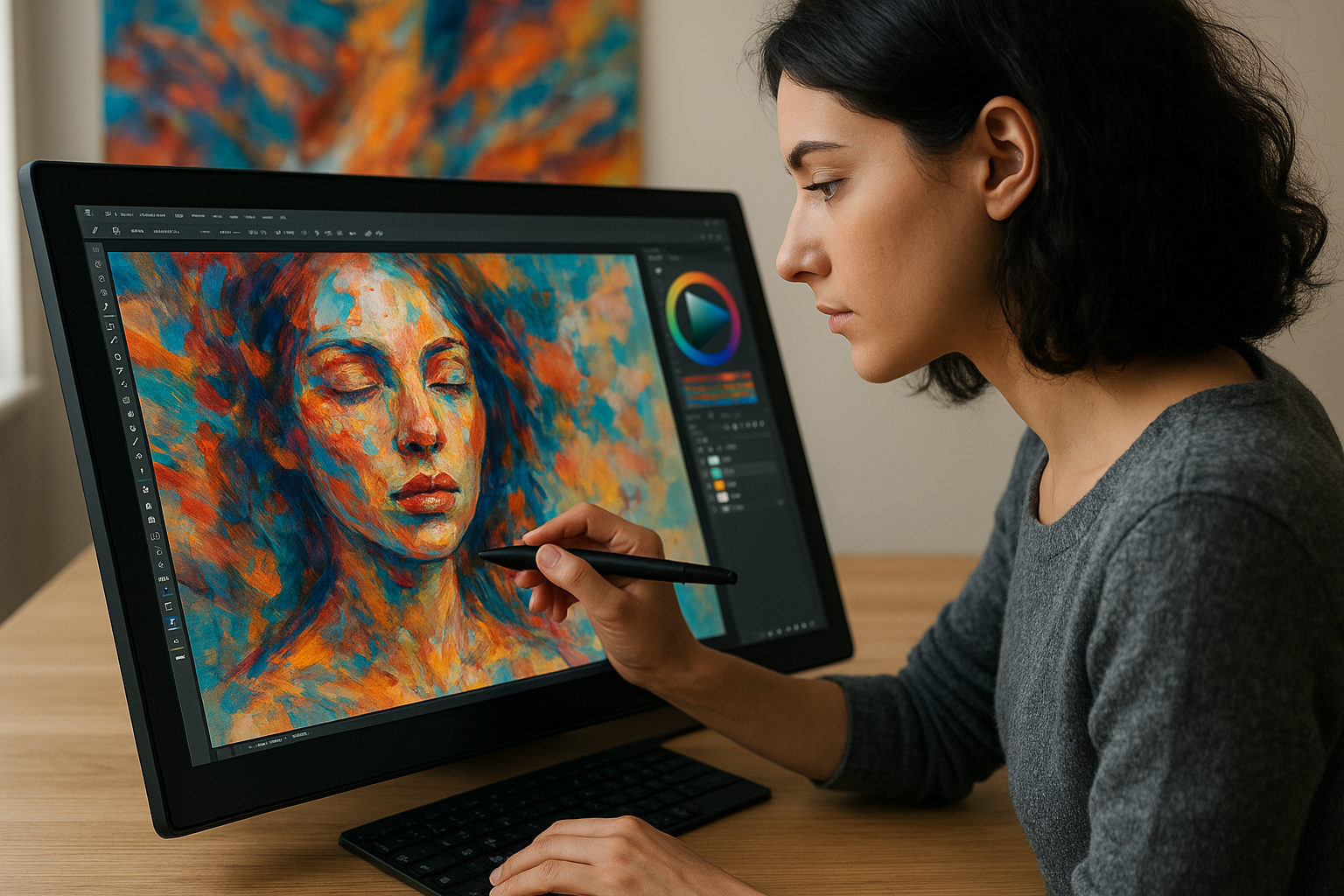
    Digital art is perhaps the most revolutionary development in new media. What began as simple pixel graphics has transformed into a sophisticated realm including digital painting, 3D modeling, and interactive installations. Artists now have access to a plethora of tools that not only mimic physical media but enhance it. Software such as Adobe Photoshop and Blender have become staples for artists aiming to push the boundaries of visual art. As Art Radar Journal notes, “Digital technologies are now providing artists with new ways to produce, distribute, and experience art” (Art Radar Journal).

    Exploring Virtual and Augmented Reality

    Virtual reality (VR) and augmented reality (AR) are no longer futuristic concepts confined to science fiction. Artists are using these technologies to create immersive environments, inviting viewers to step inside the artwork. VR, with its ability to transport users into entirely constructed worlds, allows for an experience that transcends traditional viewing. Artists such as Marina Abramović, who has embraced VR to expand her performances, are at the forefront of this transformation. According to The Guardian, “her VR piece, Rising, is an embodiment of the potential for VR to evoke visceral emotional responses” (The Guardian).

    Simultaneously, AR bridges the gap between the digital and physical worlds, enhancing our perception of the latter. Applications like ARKit and Snapchat filters allow artists to merge digital artworks with real-world environments, creating interactive experiences accessible through smartphones and tablets. The integration of AR in public art projects, such as those by JR in Paris, showcases its potential to transform urban landscapes into evolving galleries.

    Interactive and Generative Art

    Another exciting development in the realm of new media art is interactivity. Unlike traditional art forms that require passive observation, new media often encourages the audience to participate, altering the artwork in real time. This dynamism is seen in the works of Rafael Lozano-Hemmer, who creates intricate installations that depend on audience interaction.

    Generative art, which employs algorithms to create artwork, is another frontier where technology and artistry meet. Emphasizing process over result, artists like Casey Reas, co-creator of the Processing programming language, use code to generate complex, evolving patterns that challenge traditional forms of expression. With each viewer potentially seeing a different iteration, generative art becomes a living entity.

    “The beauty of generative art is that the artist can establish a framework in which the artwork evolves, a concept that invites endless possibilities,” Reas explains in an interview with Wired. (Wired)

    The Influence of Artificial Intelligence

    Artificial intelligence (AI) is another paradigm-shifting force in visual expression. AI art, created with machine learning models that analyze millions of images to create new, often surreal works, challenges preconceived notions about creativity and authorship. The controversial auction of Edmond de Belamy, an AI-produced work that sold for $432,500 at Christie’s, sparked significant debate about the role of AI in art and the definition of an artist.

    AI developments are not mere imitations of human creativity but potentially new forms of intelligence with unique aesthetic signifiers. Projects like DeepDream or GANPaint Studio allow artists to explore abstract and uncanny representations that push the limits of imagination.

    Impact on Society and Culture

    The emergence of new media in visual expression is not just an artistic development; it poses profound questions about our society and culture. As artworks become more ephemeral and digitally-oriented, debates arise about issues of preservation, authorship, and intellectual property. Furthermore, the democratization of art production and distribution, made possible by digital technologies, challenges traditional art institutions and markets, offering increased accessibility but also raising concerns about quality control and valuation.

    Moreover, new media art acts as a mirror reflecting our contemporary anxieties and aspirations. Themes of digital identity, privacy, and the pervasive influence of technology are prevalent in today’s artworks, urging viewers to reflect on the socio-political implications of our increasingly digital lives.

    Conclusion: The Future of Visual Expression

    The evolution of visual expression through new media is an ongoing journey, marked by innovation and exploration. As technology continues to advance, the possibilities for artists to delve into unknown territories of creativity are limitless. This era, characterized by a fusion of digital technologies and artistic visions, heralds a new chapter in the history of art.

    While it embraces the digital, the heart of visual expression remains the same: a quest to convey meaning through visual form. Through new media, artists are discovering unprecedented methods to engage with and challenge their audience, redefining what it means to create and experience visual art in the modern world. Indeed, as we venture further into the digital age, the future of art is not just beyond the brushstroke—it is limitless.