Category: MythCoeur

  • Beyond the Beat: Exploring Polyrhythms in Music and Movement

    Beyond the Beat: Exploring Polyrhythms in Music and Movement

    Music is a universal language, one that expresses emotions and tells stories without uttering a single word. Within this tapestry, polyrhythms serve as a rich, complex pattern of interweaving beats, enchanting listeners and dancers alike. These intricate rhythms are not merely an auditory experience but a powerful form of movement and expression.

    Understanding Polyrhythms: The Foundation

    At its core, a polyrhythm is the simultaneous combination of two or more contrasting rhythms. Originating from African musical traditions, it involves layers of rhythm not typically found in Western music, which generally relies on straightforward time signatures like 4/4 or 3/4. The magic of polyrhythms lies in their ability to blend these differing time signatures, creating a multi-layered rhythmic structure.

    “Polyrhythms can be like a conversation between different parts of yourself,” says Grammy Award-winning musician Herbie Hancock. (Source: Jazzfuel)

    The Cultural Significance

    Polyrhythms are deeply embedded in many cultures’ musical histories. In West African drumming, polyrhythms are foundational, often underpinning dances and rituals. Similarly, in Afro-Cuban and Latin music, they have played a pivotal role, influencing genres such as salsa and samba. Each culture brings its own flavor and traditions, contributing to the evolution of polyrhythmic music.

    Polyrhythms in Modern Music

    Modern composers and musicians have increasingly embraced polyrhythms, incorporating them into various music genres. Jazz, with its inherent experimental nature, frequently explores polyrhythmic and polymetric patterns. Artists such as John Coltrane and Steve Reich often delve into these complex structures, creating compositions that challenge and inspire.

    Steve Reich, a pioneer of minimal music, emphasizes, “It’s important to be aware of how different musicians feel time differently.” (Source: The Guardian)

    The Dance Connection

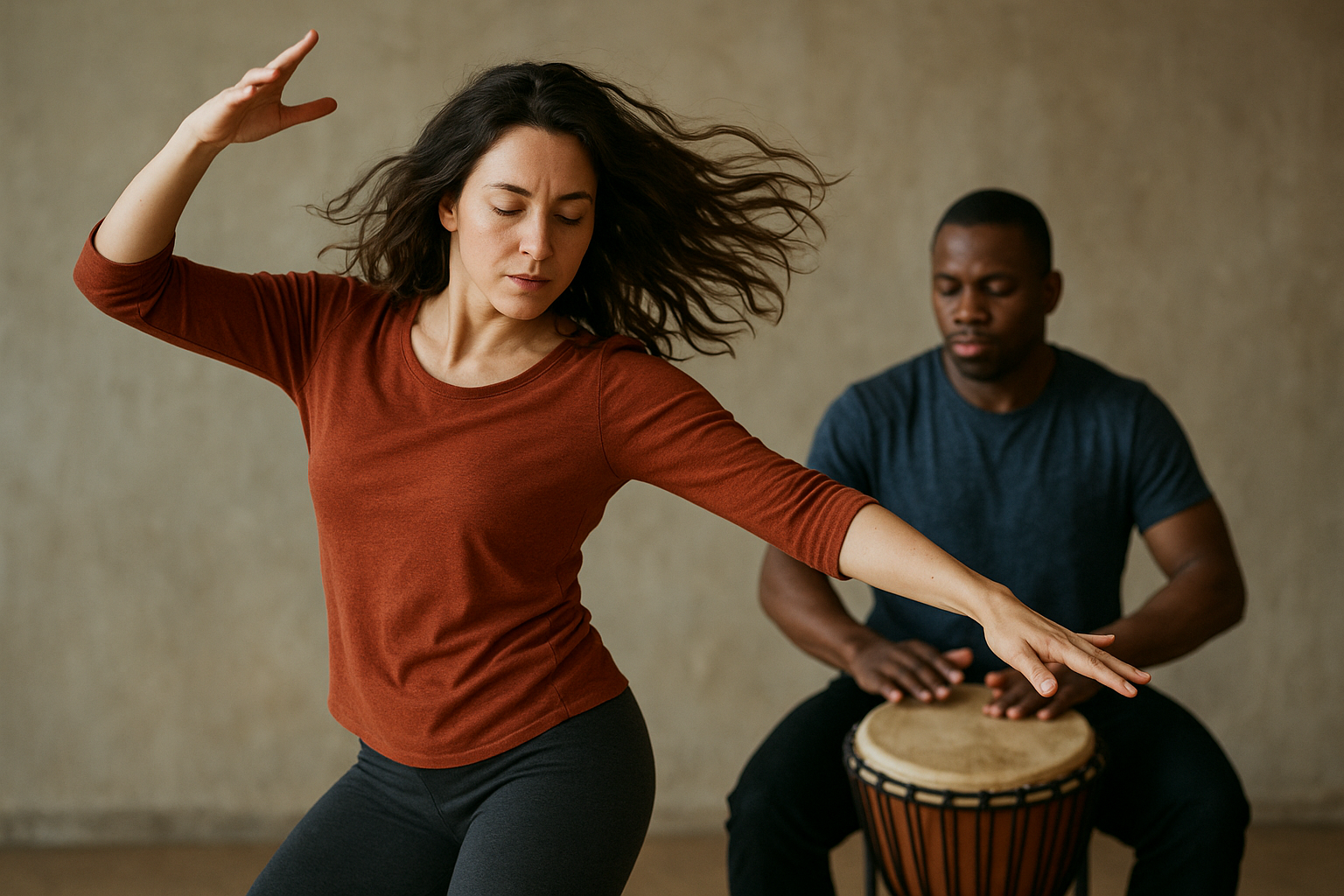
    Polyrhythms are not just heard but also felt. In dance, they challenge performers to recognize and respond to differing beats simultaneously, enriching the expressive potential of movement. Contemporary dance companies are increasingly drawing upon polyrhythmic music to choreograph pieces that captivate audiences and broaden the definition of rhythm in dance.

    A Rhythm of Life

    As musicians and dancers continue to explore beyond traditional Western musical confines, the use of polyrhythms opens up new avenues of creative expression. By daring to go beyond the beat, artists create immersive experiences that resonate with the complexity and diversity of the human spirit.

    For more on the role of polyrhythms in music, visit MusicRadar.

  • The Guru of Google: Modern Teachers and Accessible Wisdom

    The Guru of Google: Modern Teachers and Accessible Wisdom

    In a world where the complexities of life often leave us searching for answers, the figure of the guru has become more relevant than ever. Traditionally, a guru is a spiritual teacher, a master of wisdom, and an inspiring guide on the journey to enlightenment. With the advent of technology, however, the definition—and accessibility—of a guru has evolved dramatically. Enter the “Guru of Google,” a new-age phenomenon where the search engine serves as a portal to modern teachers and accessible wisdom.

    The Role of a Guru in Historical Context

    The word “guru” originates from the Sanskrit language, meaning “dispeller of darkness.” Historically, gurus were revered figures in Indian culture, spiritual leaders who imparted wisdom and guidance to their followers. According to The Bhagavad Gita, an ancient Indian text, a guru “is one who has experienced the deep truths of life and guides others to that same understanding.”

    “The function of the Guru is to show the way.”
    Ram Dass

    Gurus played a significant role in many ancient cultures, acting as the cornerstone for learning and spiritual development. They were often regarded as the ultimate source of knowledge, a bridge between the spiritual and physical worlds.

    The Digital Transformation of Spiritual Guidance

    Today, the landscape of guidance and wisdom is changing. As technology infiltrates every facet of life, even our spiritual paths are not immune to its reach. The internet, particularly Google, has emerged as a non-traditional yet powerful tool for dispensing wisdom.

    Researching a spiritual question today might start with a simple Google search. According to a Pew Research study, 74% of Americans who identify themselves as religious also use the internet daily. This suggests a growing intersection between spiritual pursuits and digital resources.

    The Modern Guru: Teachers in the Digital Age

    The modern guru is not limited to spiritual leaders but extends to thought leaders, best-selling authors, podcast hosts, and even YouTube creators. Here are a few examples of how modern teachers are reaching audiences through digital platforms:

    • Sadhguru: An Indian yogi and author, Sadhguru uses platforms like YouTube and Twitter to reach millions with his teachings on meditation, yoga, and spirituality.
    • Eckhart Tolle: The author of “The Power of Now” has turned his insightful teachings on mindfulness and presence into webinars and online courses available to a global audience.
    • Brené Brown: Known for her research on vulnerability and courage, Brown uses podcasts and online lectures to spread her impactful message.

    These modern teachers harness platforms like YouTube, podcasts, blogs, and social media to disseminate their teachings, arguably fulfilling the traditional role of a guru but through digital means.

    The Search Engine as a Spiritual Tool

    The act of typing a question into Google’s search bar can be likened to asking a modern oracle. The click of a button brings a cornucopia of information—from renowned philosophers to niche spiritual bloggers offering unique takes on similar topics.

    Consider the following ways Google acts as a guide:

    • Accessibility: Information from diverse cultures and beliefs is readily available, allowing for a more comprehensive understanding of global spirituality.
    • Personalization: Google algorithms personalize search results based on past behavior, tailoring the findings to what the seeker might be most inclined to explore further.
    • Interactivity: With forums, discussion groups, and direct messaging, seekers can engage with communities and leaders for a more interactive learning experience.

    The Transformative Power of Digital Wisdom

    “Information is not knowledge. The only source of knowledge is experience. You need experience to gain wisdom.”
    Albert Einstein

    While the abundance of information accessible via Google is advantageous, it also presents the challenge of distinguishing genuine wisdom from mere information. One must sift through the digital noise to find sources that resonate authentically, prompting reflection and personal growth rather than mere consumption.

    The digital age has not diminished the value of traditional wisdom but has provided a new avenue for its transmission. People can now engage with profound teachings from across the world without the need for physical pilgrimage.

    Challenges and Considerations

    Despite the benefits, there are inherent challenges in seeking wisdom through the digital realm. The depth of knowledge can vary significantly between sources, and the absence of a personal connection with modern virtual “gurus” can lead to superficial engagement. It’s crucial for seekers to approach the vast resources with discernment:

    • Critical Thinking: Evaluating the credibility of sources is imperative to ensure that the wisdom gleaned is reliable and meaningful.
    • Community Involvement: Engaging with like-minded individuals through online communities can offer support and a deeper, more grounded exploration.
    • Balanced Consumption: Supplementing digital exploration with traditional practices such as meditation or yoga can lead to a well-rounded spiritual journey.

    Concluding Thoughts

    The “Guru of Google” represents a paradigm shift in how wisdom is accessed and imparted. While rooted in ancient traditions, the essence of the guru has been redefined for the digital age, offering an unprecedented gateway to knowledge for those who seek it. Whether one relies on podcasts or prayer, what remains critical is the consistent pursuit of truth and understanding. In a world brimming with information, the real guru, perhaps, lies in the heart of the seeker, aware and discerning amidst the vast digital landscape.

    As we continue to navigate the intricate paths of technology and spirituality, let us honor the wisdom of the past while embracing the possibilities of the future—a future where the transformative power of accessible wisdom is just a click away.
  • The Paradox of Permanence: Capturing the Fleeting in Still Images

    The Paradox of Permanence: Capturing the Fleeting in Still Images

    Photography is often described as the art of capturing a moment in time. Yet, there lies an inherent paradox in the medium: the more we strive to preserve the transient, the more its ephemeral nature eludes us. This dichotomy between permanence and transience gives photography its profound depth and magnetic allure.

    “Photography takes an instant out of time, altering life by holding it still.” – Dorothea Lange

    This quote by renowned photographer Dorothea Lange encapsulates the delicate dance between the fleeting and the fixed. The very act of taking a photograph is an attempt to crystallize a moment that has already begun to slip away.

    Photography: A Testament to Time

    Photography, unlike other art forms, holds the unique ability to freeze time. Each photograph is a testament to a single fraction of a second, a glimpse into the past that can evoke memories and emotions long after the moment has passed. This act of preservation is both powerful and poignant, as it immortalizes the impermanent.

    • Historical Significance: Photographs often serve as historical documents, preserving the cultural and social milieu of an era.
    • Emotional Resonance: They capture emotions and expressions that might otherwise be forgotten or overlooked.

    The Fleeting vs. The Forever

    The paradox of permanence in photography goes beyond just capturing life; it interrogates our perception of reality and memory. Every image is inherently constructed, influenced by the photographer’s intent, angles, and the captured subject’s positioning. David Hockney once noted, “All painting is drawing, and all drawing is putting down lines around ideas.”

    In a digital age where images can be endlessly altered and reproduced, the lines between reality and representation blur further, challenging the notion of absolute permanence.

    • Digital Manipulation: With advancements in technology, photographs can be edited to such an extent that they may no longer truthfully represent the original moment.
    • Ephemeral Sharing: Social media platforms have transformed personal photography into a quick exchange of fleeting snippets rather than enduring keepsakes.

    The paradox, then, invites us to reflect on what we wish to capture and why. Does the photograph exist simply to recollect, or does it tell a story that endures beyond memory? Photography continues to intrigue with its dual power to both preserve and let slip away, embodying a delicate balance of the momentary and the eternal.

    Whether through the lens of nostalgia or artistry, the world of still images remains a domain where time stands still—even if just for the blink of a shutter.

  • The Breath of the Moment: Mindfulness in Contemporary Performance

    The Breath of the Moment: Mindfulness in Contemporary Performance

    As we navigate through the complex tapestry of modern life, with its incessant demands and distractions, mindfulness has emerged not just as a trend but as an essential practice in various fields. This is particularly true in the realm of contemporary performance, where the intersection of mindfulness and art offers both practitioners and audiences a profound reconnection with the present moment.

    The Role of Mindfulness in Performance

    Mindfulness, characterized by paying attention in a particular way: on purpose, in the present moment, and non-judgmentally, as Jon Kabat-Zinn, founder of the Mindfulness-Based Stress Reduction program at the University of Massachusetts Medical Center, eloquently describes it, has permeated the world of performance art. Performers often deal with stressors such as stage fright, audience judgment, and the pressure to meet high expectations. Mindfulness provides a toolkit to navigate these challenges effectively.

    Enhancing Creativity and Presence

    Mindfulness encourages performers to remain present, fostering a deeper connection with their art. Dancer and choreographer Forsythe has famously stated, “When a dancer is truly mindful, the space opens up for creative spontaneity.” This spontaneity is critical in contemporary performance, where authenticity and originality are highly valued.

    • Improved Focus: Mindfulness practices as simple as breath control and meditation can greatly enhance a performer’s focus, allowing them to fully immerse themselves in their craft.
    • Emotional Regulation: By mindfully acknowledging emotions without judgment, performers can harness their emotional experiences to enrich their expressivity rather than impede their performance.
    • Body Awareness: Performers often describe mindfulness as a way to develop a profound body awareness, improving physicality in movement-based performances.

    The Audience Experience

    Mindfulness is not just transformative for performers but equally enriching for audiences. A mindful audience member engages more deeply with the performance, noticing subtleties and more fully experiencing the art form. In the words of musician Leonard Bernstein, “To achieve great things, two things are needed: a plan, and not quite enough time.” In this ephemeral nature of performances, mindfulness enhances the ephemerality by deepening appreciation.

    Case Studies in Mindful Performance

    Immersive Theater

    One of the most striking examples of mindfulness in contemporary performance is found in immersive theater. Productions such as Sleep No More by Punchdrunk immerse audiences in an environment where they must actively participate, requiring intense focus and presence. Audiences are compelled to engage mindfully to follow the narrative, which changes based on their movements within the performance space.

    Music and Mindfulness

    The musical sphere has not been untouched by the effects of mindfulness. Artists like Yo-Yo Ma, in an interview with the NPR, shared insights on mindfulness practices and how they enhance the ability to deliver emotionally compelling performances. Musicians utilize mindfulness to stay in tune not only with their music but with the collective experience shared with their audience.

    Challenges and Considerations

    While the integration of mindfulness in contemporary performance has significant benefits, challenges remain. Critics argue that the increasing commodification of mindfulness, branded and packaged as a quick fix, risks diluting its depth and potential. The key lies in ensuring that mindfulness practices are adapted thoughtfully, maintaining their integrity and not detracting from the authenticity of the performance itself.

    Moreover, there is ongoing dialogue about accessibility and inclusion in mindful practices within performance art. Ensuring that tools and strategies are accessible to a diverse range of performers is crucial. As audiences grow more diverse, performances that mindfully reflect various cultural and social realities have the potential to resonate more deeply.

    Conclusion

    The integration of mindfulness into contemporary performance marks a significant shift in how art is created and consumed. As performers and audiences alike embrace mindfulness, the essence of being ‘in the moment’ transforms art into a powerful, shared experience. As Kabat-Zinn aptly notes, “The best way to capture moments is to pay attention. This is how we cultivate mindfulness.” In the realm of performance, this cultivation fosters not only better art but a more profoundly engaged audience.

    In a world that often pulls towards multitasking and distraction, the presence afforded by mindful engagement in performance art offers both artists and audiences a rare and precious gift: the chance to fully embody the now. As the breath of the moment expands, so too does the appreciation for the art that so vividly occupies that space.

  • The Palette of Protest: Art as a Catalyst for Change

    The Palette of Protest: Art as a Catalyst for Change

    Art has long been a silent yet potent force capable of transforming society. At its heart, art is an expression of the human condition, reflecting the times in which it is created and often serving as a vehicle for social commentary. From the politically charged satirical sketches of Francisco Goya to the defiant murals of Diego Rivera, art has been employed as a tool for protest, challenging the status quo and advocating for change.

    The Historical Context of Art as Protest

    Throughout history, artists have wielded their creative might to criticize authority and highlight injustices. One of the earliest examples of this is found in the French Revolution, where artists like Jacques-Louis David depicted scenes that fanned the flames of rebellion. His paintings, such as The Death of Marat, became powerful symbols of the revolutionary spirit.

    Fast forward to the 20th century, and we see the outbreak of cultural movements such as Dadaism and Surrealism, both of which emerged as reactions against the absurdity and brutality of war. The Tate notes that Dadaists sought to “ridicule the meaninglessness of the modern world,” a sentiment echoed today in many forms of protest art.

    Modern Art Movements and Social Change

    In more recent times, art movements like Street Art and Graffiti have gained prominence as mediums of protest. Street artists such as Banksy have become household names, their works shedding light on societal issues ranging from consumerism to political oppression. Art, when placed in public domains, becomes accessible to all, thus amplifying its reach and impact.

    “Art is not a mirror to hold up to society, but a hammer with which to shape it.” – Bertolt Brecht

    The quote above aptly describes the role of art in protest. It is not merely reflective; it is transformative. The Museum of Modern Art states that protest art “seeks to provoke, inspire, instill a feeling, bring light to a situation, and most importantly, invoke change.”

    Key Examples of Protest Art in Action

    • The Vietnam War and Counterculture: The 1960s and 1970s were fertile ground for protest art, as artists highlighted the horrors of the Vietnam War and other social injustices. Artists like Peter Saul employed vibrant, grotesque imagery to criticize the war and American culture.
    • Black Lives Matter Movement: In response to racial injustice, the Black Lives Matter movement has inspired a surge of evocative art worldwide. From murals of George Floyd to digital art shared on social media, the visual language of protest has helped unify voices and draw attention to systemic racism.
    • Environmental Activism: Artists are at the forefront of the battle against climate change, using their art to warn of impending ecological disasters. For instance, Olafur Eliasson‘s exhibitions challenge viewers to consider their relationship with nature and climate.

    The Digital Age: New Frontiers for Protest Art

    With the advent of digital technology, the landscape of protest art has dramatically shifted. The proliferation of the internet and social media platforms has democratized the creation and dissemination of art. Artists no longer depend solely on traditional media; instead, they can reach global audiences instantaneously.

    Platforms like Instagram have become virtual galleries for modern protest art. During the peak of the COVID-19 pandemic, artworks reflecting social isolation, government responses, and public resilience proliferated online, illustrating how digital art can galvanize collective experiences and sentiments.

    The Future of Art in Protest

    As we look toward the future, the role of art in activism seems poised to grow. The convergence of technology and art forms like AI-based design or virtual reality experiences will likely create new paradigms for engaging with protest art. Artists will continue to push boundaries, experimenting with new mediums to convey their messages.

    Artsy states that “art has a unique ability to translate the turmoil and tension of a political age into something transformative.” This power makes art not only a reflection of society but also a crucial catalyst for the change needed to move forward.

    Conclusion

    In conclusion, the palette of protest remains a profound testament to art’s enduring power to shape societal norms and inspire change. From its roots in early civilization to the current digital age, protest art has provided a voice to the voiceless and a platform for visual dialogue. As society continues to grapple with myriad challenges, art will remain a stalwart companion and a beacon of hope, illuminating paths for progress and justice.

    The stories captured on canvases, walls, and digital screens remind us of our shared humanity and the relentless pursuit of a better tomorrow. The artistry of protest, therefore, is not just about what is wrong with the world—it is also about imagining and building a world that is right.

  • The Quest for Kinship: Community and Connection in Modern Spirituality

    The Quest for Kinship: Community and Connection in Modern Spirituality

    In an age defined by digital interactions and individualism, the quest for kinship through community and connection in modern spirituality is thriving. From the rise of online spiritual communities to the resurgence of ancient practices, individuals are seeking solace and meaning through shared spiritual journeys. This exploration of community not only enhances personal growth but also fosters a sense of belonging and interconnectedness in a fragmented world.

    The Digital Congregation

    The digital revolution has notably transformed how people experience spirituality. Social media platforms and online forums have become gathering spaces for spiritual seekers around the globe. These virtual communities allow individuals to explore a multitude of spiritual practices, ranging from mindfulness meditation to Pagan rituals, without geographic constraints.

    “For many, these online communities provide a sanctuary to express beliefs, share experiences, and feel part of something larger than themselves,” notes Kathryn Lofton, a scholar of religious studies.

    Online spirituality groups offer the flexibility of connecting on one’s own terms. Whether through guided meditations on YouTube or live-streamed church services on Facebook, individuals can choose their level of engagement—from passive consumption to active participation.

    Revival of Ancient Practices

    Despite (or perhaps because of) the digital fervor, many are also turning back to ancient spiritual practices to seek meaningful connections. Practices like yoga, tai chi, and Indigenous ceremonies are witnessing a resurgence as people look to cultivate mindfulness and harmony with the earth.

    • Yoga and Meditation: Once primarily found in Eastern traditions, yoga and meditation have permeated Western frameworks as methods to manage stress and cultivate inner peace. These practices are not just individual exercises but are increasingly seen as communal activities that create bonds through shared physical and mental discipline.
    • Indigenous Practices: Reclaimed by Native communities and embraced by others, Indigenous rituals often emphasize community and interconnectedness with nature, promoting a holistic sense of belonging.
    • Pagan and Neopagan Rituals: The celebration of sabbats, or seasonal festivals, offers opportunities for community gatherings where participants engage in shared rituals that honor the cycles of nature and human life.

    “People are seeking authenticity and connection, and these practices offer both a sense of longstanding tradition and a communal way to engage with the mysteries of life,” says Anthony Howard, in an article on modern spirituality for The Guardian.

    The Role of Spiritual Leaders

    Spiritual leaders, both traditional and contemporary, play pivotal roles in fostering community and connection. Whether religious figures, yoga instructors, or online spiritual mentors, these leaders guide individuals through spiritual practices and help forge a collective identity among adherents.

    Spiritual leaders also act as connectors, facilitating relationships within their communities. They create safe spaces for individuals to share personal stories, seek guidance, and collaborate on service projects or community events, all of which reinforce communal ties.

    Challenges and Opportunities

    Despite the many benefits of spiritual communities, they also face challenges. The increasingly commodified nature of spirituality, where teachings and practices are often sold as products, can sometimes hinder genuine connections. The line between community and market often blurs, leading some to question the authenticity of certain spiritual experiences.

    Moreover, the global pandemic shifted many traditional spiritual gatherings online, making it difficult for some to form deep, lasting bonds without face-to-face interaction initially. However, this shift has also offered an opportunity to reach and include those who might have previously felt isolated or unwelcome in traditional settings.

    Building Lasting Connections

    Lasting connections in spiritual communities are fostered through shared values and collective purpose. Whether engaging in community service or coming together to celebrate spiritual milestones, these actions form the glue that binds members together. By participating in these shared experiences, individuals reinforce their community’s core principles and strengthen interpersonal bonds.

    In conclusion, the quest for kinship within modern spirituality is a multifaceted journey shaped by digital innovation, traditional revival, and the enduring human desire for connection. As individuals navigate their spiritual paths, the communities they form, both virtual and physical, are vital touchstones for shared growth and understanding.

    Whether seeking community to deepen personal beliefs or simply to find belonging in a constantly shifting world, modern spirituality offers myriad opportunities for meaningful connections. In a world where loneliness and isolation are ever-present threats, spiritual communities offer a beacon of hope and unity—illuminating the path to true kinship.

  • The Authenticity Filter: Truth and Post-Truth in Photography

    The Authenticity Filter: Truth and Post-Truth in Photography

    In an era where visual content inundates our digital spaces, photography stands at the crossroads of truth and manipulation. The authenticity of a photograph, once considered a faithful depiction of reality, is increasingly under scrutiny in the post-truth age. As technology evolves, so too do the tools that alter our perceptions of reality, casting doubt on the integrity of the photographic image.

    The Historical Lens

    Photography has long been revered for its ability to capture a moment in time, rendering the complex textures of life into still images. From the harrowing portraits of the Great Depression by Dorothea Lange to the indelible landscapes photographed by Ansel Adams, the camera was once considered a trustworthy witness.

    “Photography takes an instant out of time, altering life by holding it still.” – Dorothea Lange

    The Digital Revolution

    The advent of digital technology has equipped photographers with sophisticated tools to enhance and manipulate images, leading to a new era of photography where the lines between reality and fiction blur. Digital editing software like Adobe Photoshop enables users to transform ordinary pictures into extraordinary fabrications, paving the way for innumerable creative possibilities, yet simultaneously raising ethical questions about authenticity.

    The digital manipulation of images can range from simple color corrections to complete overhauls that create entirely new compositions. This leads to the pertinent question: when does alteration become deception?

    Photographic Authenticity in the Post-Truth Era

    In today’s post-truth society, where emotions and personal beliefs often overshadow objective facts, photography’s role as a purveyor of truth is increasingly complicated. Social media platforms amplify this issue, as images can be easily shared without context, sometimes being stripped of their original meaning. As noted by Errol Morris, a renowned filmmaker and author, “The problem with photographs is that they are so easily manipulated.”

    Errol Morris’ work delves into the complexities of photography and truth-seeking, and emphasizes the personal responsibility of photographers to uphold honesty in their art.

    Conclusion: Striking a Balance

    While the post-truth era challenges the concept of authenticity in photography, it also presents an opportunity to explore the medium’s inherent subjectivity. Photographers may need to establish a tacit agreement with their audience, clearly delineating between reality, artistic interpretation, and outright manipulation.

    As photography continues to evolve, it is imperative to consider how these images are created, shared, and perceived—ultimately striving to preserve the nucleus of truth that makes a photograph compelling.

  • The Echo Chamber: Tradition’s Influence on Contemporary Music

    The Echo Chamber: Tradition’s Influence on Contemporary Music

    The Echo Chamber: Tradition’s Influence on Contemporary Music

    In the ever-evolving landscape of contemporary music, the past resonates with a powerful presence. The echo chamber of tradition shapes the soundscape of modern compositions, infusing them with echoes of familiar motifs and structures. Whether it’s through the deliberate integration of classical elements or the adaptation of historical genres, today’s artists accredit much of their innovation to musical legacies long established.

    Revival of Classical Elements

    Recent years have seen a noticeable resurgence in the integration of classical music techniques within contemporary compositions. The likes of Max Richter and Olafur Arnalds exemplify this trend, as they infuse modern electronic music with orchestral elements that harken back to the 18th and 19th centuries.

    “I want people who might not necessarily engage with classical music to understand that it’s this beautiful, living language,” said Max Richter in an interview with NPR.

    Richter’s work, such as his recomposition of Vivaldi’s “The Four Seasons,” highlights an inclination towards preserving the essence of classical music while enveloping it in a contemporary context. This not only preserves traditional elements but also introduces them to new audiences.

    Adapting Historical Genres

    Another poignant method through which tradition permeates modern music is the adaptation of historical genres. Genres such as jazz and blues have not only persisted but have also transformed, influencing a myriad of modern music styles from pop to indie.

    • Jazz: Once a cornerstone of musical evolution, today’s jazz influences artists like Norah Jones and Kamasi Washington, both of whom blend classic jazz elements with modern-day narratives.
    • Blues: The soulful sounds of blues underpin much of the storytelling found in contemporary music genres, most notably in works by artists like Adele and Jack White.

    The Future Resonates with the Past

    Modern musicians, rather than eschewing the old, continue to draw from the well of tradition to craft innovative sounds that are both fresh and familiar. As the industry evolves, the fusion of traditional and contemporary elements seems set to expand, reaffirming that the echoes of the past will continue to reverberate through the music of the future.

    In essence, the tradition acts as both an anchor and a springboard in the creation of contemporary music, ensuring that while we move forward, we are perpetually reminded of the rich tapestry of our musical heritage.

  • Spiritual Geographies: Mapping the Inner World Through Art

    Spiritual Geographies: Mapping the Inner World Through Art

    The human spirit has always sought connection to the vast unknown, exploring uncharted territories not just in the physical realm but within the boundless landscapes of the mind and soul. This journey towards self-discovery and understanding is often reflected in what can be termed “spiritual geographies.” Artists, in particular, have long been navigators of these inner worlds, mapping their explorations through various forms of art.

    The Concept of Spiritual Geographies

    Spiritual geographies pertain to the symbolic representations of the inner self depicted through art. These artistic endeavors serve as a bridge connecting the tangible world with the intangible dimensions of human experience. Art throughout history has not only mapped the physical world but also ventured into intricate and ephemeral landscapes of emotions, spirituality, and consciousness.

    As philosopher Maurice Merleau-Ponty suggests, “Art provides a privileged access to the basic structures of lived experience.” This perspective highlights the role of artists as cartographers of the soul, delving into the depths of personal and collective consciousness.

    Historical Perspectives

    • Ancient and Indigenous Art: Many Indigenous cultures have utilized art as a tool for exploring spiritual geographies. The dreamtime paintings of Aboriginal Australians, for example, serve as a narrative map of existence, linking past, present, and future within a spiritual framework.
    • Renaissance and Enlightenment: During the Renaissance, artists like Hieronymus Bosch illustrated the inner struggles between good and evil, heaven and hell, casting light on the spiritual landscapes of the time. Enlightenment artists, too, began exploring more secular spirituality, focusing on the individual’s inner world.

    Modern and Contemporary Explorations

    In the 20th and 21st centuries, the exploration of spiritual geographies has taken on new dimensions, as artists fuse traditional methods with modern technology to navigate deeper into uncharted territories of the self. From abstract expressionism to contemporary digital installations, artists continue to explore and depict spiritual geographies that resonate with our rapidly changing world.

    Key Contemporary Voices

    • Mark Rothko: Through his color field paintings, Rothko sought to evoke emotional responses and spiritual reflection, inviting the viewer to engage with his artwork on a deeply personal and interior level.
    • James Turrell: With his exploration of light and space, Turrell creates experiences that immerse the observer in the spiritual and meditative facets of human perception.
    • Yayoi Kusama: Known for her immersive infinity rooms, Kusama’s work reflects her own battles with mental illness, offering insights into her inner emotional and spiritual landscapes.

    “There’s a mystery in life, and that mystery resides in the inevitable loss of all we hold close,” states Yayoi Kusama, whose art tries to confront and encapsulate the infinite within the finite.

    The Role of Technology

    With technological advancements, new tools and platforms have emerged, allowing artists to delve further into mapping spiritual geographies. Virtual reality, augmented reality, and digital installations offer new ways to visualize and interact with these abstract geographies. Artists like Marina Abramović have embraced these technologies to explore the limits of consciousness and existence through innovative and immersive experiences.

    In the age of digital art, the blending of visual art, sound, and interactivity provides a multi-sensory experience that can promote a deeper understanding and connection with one’s spiritual self. These technological innovations open up new possibilities for depicting and engaging with the spiritual geographies that define our inner worlds.

    The Significance of Spiritual Geographies in Art

    The significance of spiritual geographies in art lies in their ability to transcend the barriers of language, culture, and time. By offering a means to explore and understand the intricacies of human experience, these artistic maps foster empathy, introspection, and a sense of shared humanity.

    In a world that often emphasizes external achievement and material success, the introspection prompted by spiritual geographies offers a vital counterbalance. It encourages individuals to look inward, to reflect on their personal journeys, and to find meaning within themselves and the universe at large.

    In conclusion, maps of the human spirit, as created by artists throughout history, are indispensable guides on the journey towards self-awareness and spiritual understanding. As we continue to evolve, so does our capacity to navigate and articulate these rich and diverse landscapes of the mind and soul.

  • The Rejection of Rules: Freeing the Spirit in Modern Dance

    Modern dance, birthed in the late 19th and early 20th centuries, emerged as a rebellious departure from the highly structured and technical form of classical ballet. This new form of dance embraced freedom of expression and the fluidity of the human spirit, allowing performers to break free from the rigid constraints of traditional dance forms.

    “Modern dance emphasized creativity in choreography and performance. It was about the movement itself and the emotive potential it carried.”

    At its core, modern dance is characterized by its rejection of the conventional rules that govern ballet. Instead of focusing on preset movements and positions, modern dance invites performers to explore unpredictable and natural movements that are deeply connected to their emotions. This promotes a unique form of storytelling, where dancers wield their bodies as intricate instruments of expression.

    Key Figures in the Modern Dance Movement

    • Isadora Duncan: Often hailed as the “Mother of Modern Dance,” Isadora Duncan pioneered a dance style that emphasized natural movement and spoke to the soul. Her philosophy centered on an organic approach, believing in the “dance of the future” which would be free and natural.
    • Martha Graham: A vital force in modern dance, Martha Graham introduced a technique that involved the contraction and release of muscles. Her work delved deep into human emotions, challenging dancers to reflect profound psychological themes through movement.
    • Merce Cunningham: Known for adopting a more abstract approach to dance, Cunningham viewed dance and music as separate entities. His method often included chance procedures, allowing his dancers and choreographic ideas to evolve unpredictably, further rejecting the principles of traditional dance narratives.

    The modern dance movement encouraged a new wave of artistic expression, prompting dancers to explore a wider range of movements that were not confined to a stage. It incorporated elements from different dance styles, cultures, and every imaginable background. This eclectic mix only served to amplify the rejection of any single set of rules.

    Even today, the legacy of modern dance encourages dancers everywhere to eschew conventional norms and explore their unique movement languages. Through this liberation, dancers are given the freedom to convey stories, emotions, and thoughts in ways that are fresh and unencumbered by the limitations of codified dance forms.

    In summary, modern dance has continually pushed the boundaries of expression through movement, creating a dynamic and ever-evolving art form that thrives on the rejection of traditional constraints. This dance genre not only enables performers to experience freedom but also invites audiences into a world where creativity knows no bounds.