Category: MythCoeur

  • Myth as Operating System – The symbolic code beneath human cognition

    Myth as Operating System – The symbolic code beneath human cognition

    Myth as Operating System: The Symbolic Code Beneath Human Cognition

    In the realm of human consciousness, myths serve as the unseen processors embedded within our cultural psyche. They function much like an operating system, setting the parameters within which societies understand themselves and their place in the universe. Just as an operating system provides the basic instructions for managing hardware and executing tasks, myths encode the fundamental beliefs and archetypes that shape human cognition and behavior.

    The Nature of Myth

    Joseph Campbell, a renowned mythologist, defined myths as “the secret opening through which the inexhaustible energies of the cosmos pour into human cultural manifestation”. (Source). These narratives are not merely stories of ancient times but are deeply embedded patterns that guide human behavior and understanding. Myths are potent precisely because they resonate with the depths of our psyche, speaking to the universal experiences of being human.

    Myths and Archetypes

    Swiss psychiatrist Carl Jung introduced the concept of archetypes, fundamental human motifs that reside within the collective unconscious. He posited that these patterns are found across cultures and eras, suggesting a universal symbolic language. Jung wrote, “Myths are first and foremost psychic phenomena that reveal the nature of the soul”. (Source)

    • The Hero: Seen in figures like Gilgamesh, Hercules, and even modern heroes such as Luke Skywalker, representing the journey of self-discovery and triumph over adversity.
    • The Wise Old Man: A figure of wisdom and guidance, often appearing as Merlin or Gandalf.
    • The Shadow: Representing the dark, unseen aspects of our personality that must be acknowledged and integrated for personal growth.

    Myth’s Role in Cognitive Framework

    Myths influence cognitive frameworks by providing a symbolic language through which humans interpret their experiences. Anthropologist Claude Lévi-Strauss argued that myth is a language, orchestrated by symbols to convey meaning and to navigate the human experience. According to Lévi-Strauss, “the purpose of myth is to provide a logical model capable of overcoming contradictions”. (Source)

    “It would not be true to say that myth serves to explain the world, but rather it is used to overcome certain contradictions that cannot be resolved through ordinary human actions and thought.”

    Operating Systems of the Mind

    In software, an operating system manages resources and provides services to applications that run on a computer. Similarly, in cultures around the world, myths provide the metaphorical framework needed for individuals to process their life experiences. They offer a way to navigate and make sense of existence, as seen in:

    • World Creation Myths: These myths address fundamental questions of origin and existence, offering a schema within which science and faith can coexist.
    • Mythical Morality Tales: Stories like the Pandora’s Box or the tales of the Buddha offer ethical guidelines, presenting a moral landscape that guides personal and collective behavior.
    • End-of-World Narratives: Myths about apocalypses, like Ragnarök or the Christian Apocalypse, prepare societies to face the inevitability of change and transformation.

    Application in Modern Society

    While contemporary society often views myths as quaint or outdated narratives, their impact remains unmistakably potent. Advertisers and filmmakers, knowingly or unknowingly, utilize mythic structures to craft compelling narratives that touch audiences deeply. For instance, the hero’s journey — a classic narrative template — is the backbone of many modern blockbusters. As mythologist Michael Vannoy Adams notes, “Myth is not what happened in the past. Myth is what happens all the time” (Source), suggesting that myth continues its evolutionary role in contemporary culture.

    The Interplay between Myth and Technology

    In our digital age, it is fascinating to explore how technology itself perpetuates new myths. The myth of the computer as an all-knowing oracle has parallels with ancient deities of wisdom. Furthermore, digital narratives echo mythic structures, reflecting our enduring quest for understanding and mastery over the world. The internet, a vast network of knowledge, can be likened to a modern-day Akashic Record—a mythological compendium of infinite wisdom.

    Conclusion

    Myths provide the symbolic maps needed to navigate the complexities of human consciousness and cultural identity. As operating systems of the psyche, they organize our perceptions of reality and imbue life with meaning. Despite advancements in science and technology, myths remain central to our understanding of the world and ourselves, continually evolving and adapting to meet the needs of each new era.

    By recognizing the mythic frameworks that underlie our cognition, we gain insight not only into ancient narratives but also into the codes that continue to shape our lives. As we explore the intersection of myth, cognition, and culture, we become better equipped to understand the past and present fabric of human experience.

  • AI Without Myth – Why artificial intelligence feels hollow

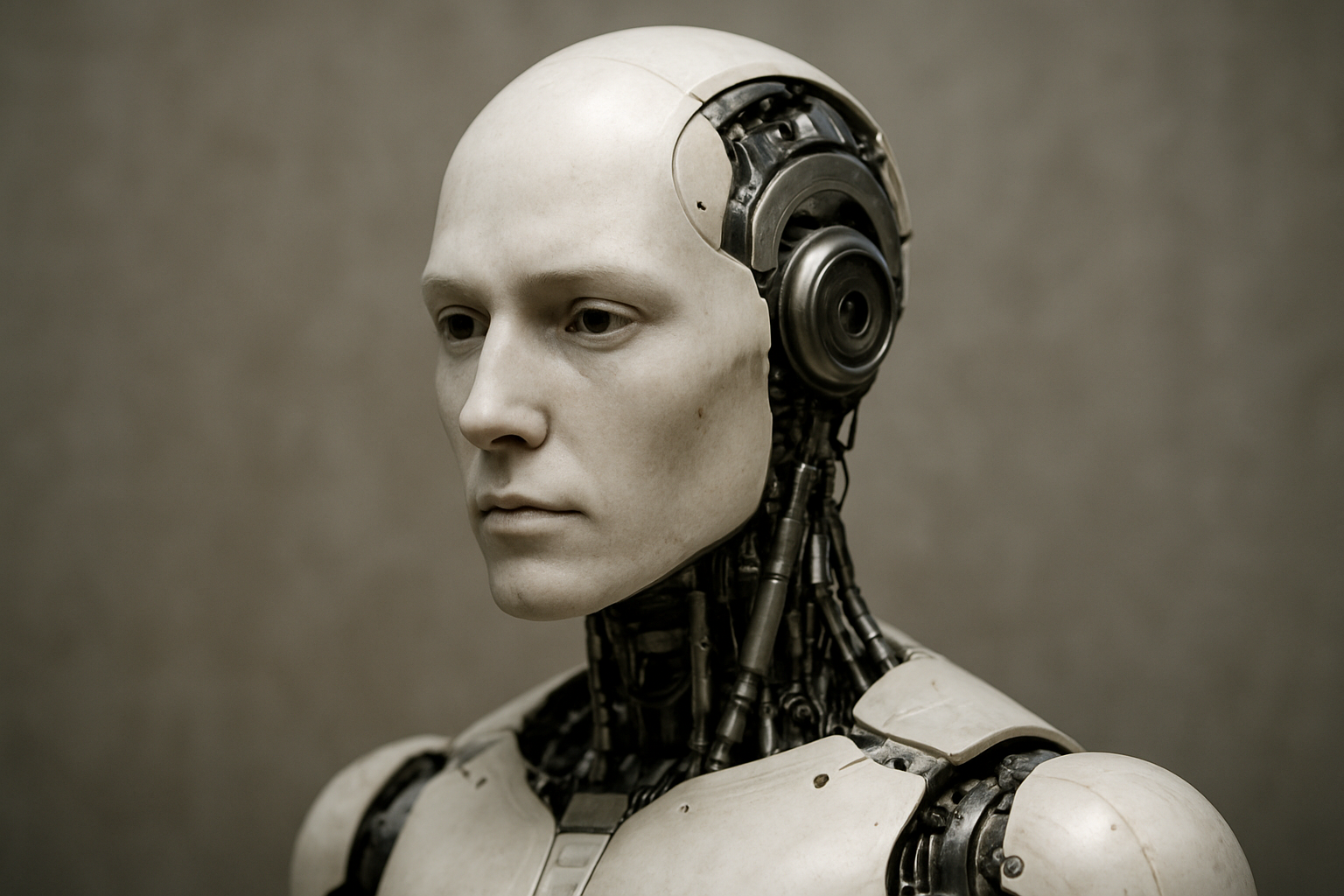
    AI Without Myth – Why artificial intelligence feels hollow

    In recent years, artificial intelligence (AI) has been hailed as a groundbreaking technological frontier. However, as the hype around AI continues to grow, a counter-narrative is emerging—one that suggests AI, for all its capabilities, feels hollow or devoid of real substance. Why is this sentiment gaining traction, and how might it reflect broader technological and societal dynamics?

    The Hype vs. Reality

    AI is often presented as a magical solution to numerous problems, from improving healthcare to automating mundane tasks. Yet, the effects of AI in reality often fall short of these grand promises. AI’s functional prowess is generally limited to data-driven prediction and pattern recognition, and even the most advanced models, such as GPT-3 or ChatGPT by OpenAI, simulate understanding without actual comprehension.

    • Overpromised Capabilities: The narrative surrounding AI is sometimes oversold. Companies and sensationalist media depictions contribute to a perception that AI can surpass human abilities in areas like creativity and emotional intelligence, which is far from true.
    • Functional Limitations: AI technologies excel in narrow, well-defined tasks but struggle with broader, more abstract forms of reasoning. Current AI lacks true understanding, operating by drawing upon statistical correlations rather than sentient thought.

    AI’s Dependence on Data

    The core of AI functionality lies in data. Algorithms learn from vast datasets, drawing inferences applicable within the confines of their training. However, this data-centric approach introduces several limitations:

    • Data Quality Issues: For AI to provide valuable insights, it requires high-quality, unbiased datasets. Unfortunately, datasets can be incomplete, outdated, or biased, leading to flawed AI outcomes. As highlighted by Dr. Ijeoma E. Eze, “AI systems replicate and, in some cases, enhance the biases present in their training data.”
    • Lack of Original Thought: AI does not generate new ideas. It synthesizes input data, recognizing patterns to mimic human-like outputs. Thus, its engagement with the world remains derivative, lacking the originality that characterizes human intelligence.

    The Illusion of Understanding

    AI’s ability to generate human-like responses provides an illusion of understanding. When an AI responds coherently, it gives the impression of possessing comprehension. Renowned cognitive scientist Herbert A. Simon famously noted, “What computer is to thinking, a subroutine is to consciousness: a program without a self that simulates thought superficially but lacks depth.”

    “AI simulates understanding through complex algorithms but does not possess genuine understanding or consciousness.” – Herbert A. Simon

    This discrepancy between appearance and reality contributes to the perception of AI as hollow. Its outputs can be exceptionally fluent and contextually appropriate, yet lack the experiential sincerity of human cognition.

    The Human Element — Emotion, Morality, and Context

    AI lacks emotional intelligence, a component of thought that is deeply embedded in human interaction. While it can mimic sentiment through analysis and pattern recognition, it remains inherently devoid of emotions.

    • Emotion: Human understanding is enriched by emotional context, empathy, and personal experiences, aspects absent in AI.
    • Morality: Ethical decision-making requires more than cold logic; it demands contextual sensitivity and societal values, debunking the image of AI as an infallible arbiter.

    Many experts echo the sentiment that AI’s limits as an “empathic entity” are particularly striking in fields that require a fine-tuned understanding of human nuances, such as mental health support.

    “Machines can only superficially replicate empathy; real empathy connects fundamentally with the unique human condition.” – Dr. Rosalind Picard, MIT Media Lab

    Skepticism and The Quest for Authentic Intelligence

    As skepticism grows, so does the quest for genuinely intelligent machines. To move beyond surface-level gimmicks, AI needs evolution toward mental faculties closer in spirit to human intelligence. This quest revolves around creating machines capable of:

    • Adaptability: Emulating human-like learning and adaptability, allowing AI to operate beyond rigid programming limitations.
    • General Intelligence: Achieving Artificial General Intelligence (AGI), where AI can perform any intellectual task that a human being can.

    However, achieving such milestones requires tremendous advances in current machine learning practices, ethical guidelines, and a fundamental understanding of consciousness.

    Bridging the Gap

    For AI to transcend its current limitations and shed its “hollow” reputation, it must become more than a tool—it must embody elements of authentic intelligence. Therefore, industries and researchers are urged to:

    • Encourage Interdisciplinary Research: Bridging AI with fields like neuroscience, psychology, and sociology to inform more robust, adaptable AI systems.
    • Invest in Ethical Guidelines: Establishing strong ethical guidelines to ensure that AI growth aligns with humanistic values and minimizes risks.
    • Focus on True Collaboration: Enhancing partnerships between AI and human intelligence, emphasizing systems that augment human capabilities rather than replace them.

    The future of AI holds the promise of innovation, discovery, and immense global impact. However, the path forward must be navigated with care, recognizing that the technology, despite advancements, cannot yet replace or replicate the profound complexities of human intelligence and experience.

  • Before Data, There Was Meaning – What algorithms cannot inherit

    Before Data, There Was Meaning – What algorithms cannot inherit

    From the rise of artificial intelligence to the ubiquitous data-driven narratives that dominate our technological landscape, it often seems that algorithms are the new arbiters of reality. Yet, behind the bloom of data and the sophistication of machine learning models, there lies an essential human dimension that machines still struggle to grasp: meaning. In a world where data tries to dictate meaning, it’s crucial to ask: What can’t algorithms inherit from us?

    The Primacy of Human Context

    Human understanding is deeply rooted in context and experience. While algorithms excel at pattern recognition and prediction based on vast datasets, they often miss the nuances that only context can provide. Philosopher Hubert Dreyfus, in his critique of artificial intelligence, famously argues that human intelligence and skills are fundamentally tied to our embodied experiences and social contexts—a concept he elaborated in Being-in-the-World: A Commentary on Heidegger’s Being and Time, Division I. As Dreyfus puts it, “Only a being with the sort of body and social upbringing we have could have the kinds of expertise we have.” [Source]

    The Complexity of Language

    Natural language processing applications have made impressive advances, yet the task of deriving meaning from language remains inherently complex. Language is not just a string of words or sentences but a rich tapestry woven with culture, intention, and emotion. Linguist Noam Chomsky highlighted the challenges of computational understanding in his numerous works, emphasizing the intricacies of syntax and semantics that go beyond algorithmic computation. Chomsky once noted, “The infinite use of finite means—language remains a defining species characteristic.” [Source]

    Understanding Subtlety and Emotion

    Emotions are a profound aspect of human life that shape our interpretations and decisions. While sentiment analysis and affective computing are emerging fields aiming to bridge this gap, they often fail to capture the subtleties of human emotions. As Rosalind Picard, a pioneer in affective computing, states, “It’s not that computers are emotional; it’s that they can help people be emotionally insightful.” [Source]

    The Ethical Dimensions

    Algorithms, by their nature, lack ethical reasoning. They follow instructions, learn from data, and predict outcomes, but do not possess a moral compass. This limitation is particularly apparent in complex ethical scenarios where human values play critical roles. As the field of AI ethics explores these limitations, a popular stance holds that ethical reasoning involves “imagination and seeing all sides,” which are outside current machine capabilities. [Source]

    “While machines can simulate human behavior, they cannot replace human judgment, which is often guided by wisdom, empathy, and insight,” remarks ethicist Shannon Vallor. [Source]

    The Role of Creativity

    Creativity stands as one of the ultimate tests of any claim about machine intelligence. While algorithms can produce art, music, and even poetry, they do so by recombining existing data based on set parameters. True creativity, as seen in human works, often involves breaking boundaries, defying logic, and crossing conventional expectations in a way that machines can only mimic, not originate.

    MIT’s renowned professor, Marvin Minsky, illustrated this in his exploration of AI, stating, “You can’t learn to be creative just by recording data—it requires breaking the mold.” [Source]

    Concluding Thoughts

    As we drive forward in this digital age, it’s important to remember that while data can inform insights and algorithms can enhance efficiencies, the authentic leap from data to meaning, from calculation to comprehension, is a distinctly human trait. As we embrace technology’s potential, nurturing the irreplaceable aspects of human intelligence—our context, emotions, ethics, and creativity—is not just beneficial, but essential.

    In doing so, we can ensure that as we rely on the growing tide of algorithms, we do not lose sight of the deeply human elements that imbue our data with true meaning.

  • Myth vs. Hard Science – Two ways of knowing, not one enemy

    Myth vs. Hard Science: Two Ways of Knowing, Not One Enemy

    For centuries, humanity has relied on various methods to make sense of the world around us. Among these, myth and science have stood out as two of the most profound and influential ways of understanding reality. While they are often seen as opposing forces, a closer examination reveals that they serve different purposes and can complement each other in unexpected ways.

    Understanding Myth: More than Just Folklore

    The term “myth” is often misused to mean a mere falsehood. However, in its original and more nuanced sense, myth constitutes stories that people tell to explain the world and their experience of it. These stories, while not empirically verifiable, convey truths that cannot be easily measured.

    “Myth is much more important and true than history. History is just journalism and you know how reliable that is.” – Joseph Campbell, The Power of Myth

    Myths serve several functions in society. They offer moral guidance, serve as cautionary tales, or create a shared cultural narrative that binds communities together. An example is the Greek myths, which have provided rich material for understanding human nature, virtue, and vice. Such stories might not provide factual history but offer deep insights into human psychology and ethical dilemmas.

    The Role of Hard Science: The Pursuit of Objectivity

    In contrast to myth, science seeks to understand the world through a rigorous method of hypothesis, experimentation, and analysis. Science looks to eliminate bias and achieve objective truths based on empirical evidence. It is characterized by its replicability and falsifiability. The strength of science lies in its ability to explain phenomena in a way that they can be consistently measured and validated.

    As Carl Sagan famously said,

    “Science is not only compatible with spirituality; it is a profound source of spirituality. When we recognize our place in an immensity of light-years and in the passage of ages, when we grasp the intricacy, beauty, and subtlety of life, then that soaring feeling, that sense of elation and humility combined, is surely spiritual.”

    Science’s strength lies in solving practical problems, from curing diseases to unraveling the mysteries of the cosmos. However, it is not equipped to solve existential questions or provide moral guidance. This is where myth complements science, by filling the spaces that scientific inquiry does not reach.

    Complementary Forces: Myth and Science Together

    • Providing Context: Myths give us a narrative framework within which we can place scientific discoveries. They allow us to relate the cold, hard data of science to the human condition.
    • Sparking Creativity and Inquiry: Mythical stories have served as inspiration for scientific exploration. Think of how many inventions and scientific pursuits have been dreamt up first through the lens of mythology or speculative fiction.
    • Making Science Accessible: Complex scientific concepts can sometimes be best understood through the allegorical wisdom present in myths. They make the distant and abstract feel tangible and imminent.

    Richard Feynman, a noted physicist, famously said,

    “The first principle is that you must not fool yourself—and you are the easiest person to fool. So you have to be very careful about that. After you’ve not fooled yourself, it’s easy not to fool other scientists.”

    This speaks to the honesty and discipline inherent in the scientific process. Yet, it doesn’t negate how myth can enrich our interpretation and understanding of scientific facts.

    The Psychological Link

    From a psychological perspective, both myth and science address fundamental human needs: the need to understand, to predict, and to control or influence our environment. They provide a scaffolding on which we can construct our understanding of the self and of the universe. Psychologists like Carl Jung have explored how myths can offer insight into the collective unconscious, acting as mirrors of the human psyche.

    Jung argued that myths are akin to dreams and express the dreams of a society, and as such, they resonate on a deep psychological level. This helps individuals navigate their inner landscapes as much as science helps them understand the external world.

    The Modern Integration of Myth and Science

    In today’s world, where technological advancements occur at a breathtaking pace, it is crucial to maintain a balance between myth and science. Rather than seeing them as enemies, societies can benefit enormously from appreciating each as a critical component of human knowledge.

    • Education Systems: Incorporating both myth and science education can enhance creativity and critical thinking. For example, storytelling methods can be used to teach complex scientific ideas in a way that is engaging and memorable.
    • Cultural Understanding: By acknowledging both methods of knowing, differing worldviews can be reconciled, promoting a richer, more inclusive dialogue about human progress.
    • Innovation: Many of the world’s greatest innovators have been inspired by myth, from Da Vinci’s sketches of flying machines dreaming of Icarus to modern astronauts inspired by celestial myths.

    Conclusion

    In a world rife with information yet starved of wisdom, both myth and science offer invaluable tools. Instead of competing for supremacy, they should be recognized as parts of a comprehensive approach to discovery and understanding. Each advances human knowledge in unique ways:

    • Myth connects us to our past, cultural heritage, and psychological depths.
    • Science propels us forward, opening new doors to the future.

    By transcending the simplistic dualism of myth versus science, we can embrace a more integrated view that celebrates human curiosity in all its forms.

    In our quest for knowledge, may we never lose sight of either the narrative arcs of myth or the profound discoveries of science. In the words of Neil deGrasse Tyson,

    “We are part of this universe; we are in this universe, but perhaps more important than both of those facts is that the universe is in us.”

    Such a realization captures the essence of both myth and science, offering a fuller picture of our place in the cosmos.

  • The Lie of Pure Objectivity – Why myth never pretended to be neutral

    The Lie of Pure Objectivity – Why myth never pretended to be neutral

    In the modern world, where data reigns supreme, the idea of pure objectivity is often considered the holy grail of understanding. Whether in science, journalism, or everyday decision-making, objectivity is hailed as the path to truth. Yet, this pursuit of pure objectivity is a myth itself, for objectivity does not exist in a vacuum; it is laced with subjectivity and bias, often disguised as neutrality.

    The Origins of Objectivity

    Objectivity, as we understand it today, emerged in the 19th century alongside the development of professional journalism and scientific inquiry. According to Wikipedia, journalistic objectivity is founded upon the principles of fairness, neutrality, and the absence of bias. However, many argue that true objectivity is unattainable because all information is inevitably filtered through personal, cultural, and historical lenses.

    Renowned media scholar Jay Rosen highlights this point, stating:

    “Objectivity is a trust mechanism erected by journalists to align with the anxious expectations of an audience that wants to know if the game is clean.”

    This quote emphasizes how objectivity is often more about appeasing the audience than genuinely presenting unbiased information.

    The Myth of Neutrality

    Myths have existed throughout history, serving as vehicles of cultural expression. They never claimed objectivity; instead, they are imbued with the values, beliefs, and experiences of the cultures that created them. As scholar Northrop Frye wrote, myths provide a narrative structure to the human experience, often blending fact with fiction to convey deeper truths.

    The divine tales of ancient Greeks, the epic poems of Norse sagas, and the intricate stories of Indigenous cultures are all examples of myths that embrace subjectivity to express cultural truths. These narratives acknowledge their biases and perspectives, offering wisdom rather than factual accuracy.

    The Infiltration of Bias

    • Confirmation Bias: Individuals tend to favor information that confirms their pre-existing beliefs. In media and science, this bias can skew the objectivity, as researchers and journalists may subconsciously select information that corroborates their views.
    • Cultural Bias: Every culture interprets the world through its unique framework of beliefs and practices. What is deemed objective in one culture may not hold the same status in another.
    • Linguistic Bias: The language used to convey information can subtly influence audience perception, even when attempts to remain neutral are made. The words chosen to describe an event or phenomenon can carry connotations that impact objectivity.

    Embracing Subjectivity for Greater Truth

    Instead of striving for an impossible ideal, embracing subjectivity may lead to a richer understanding of the world. Acknowledging biases can enhance transparency and foster a more critical evaluation of information. Scholars like Thomas Nagel argue that diverse perspectives contribute to a fuller picture, stating:

    “The pursuit of objectivity is both impossible and undesirable, for it is through the subjective that we access and appreciate the objective world.”

    In journalism, for example, recognizing the subjectivity of storytelling can allow for more nuanced reporting. Advocacy journalism, which openly acknowledges its biases, often provides deeper insights into complex social issues, challenging the status quo and sparking dialogue.

    The Path Forward

    As we advance further into the age of information, the lie of pure objectivity becomes clearer. Like myths of old, our narratives today are intertwined with subjectivity. By valuing transparency and acknowledging our biases, we can move beyond the confines of supposed neutrality and achieve a more comprehensive understanding of the world.

    Thus, the myth of objectivity transforms into an opportunity to embrace multicultural, multifaceted perspectives. This approach not only enriches our intellectual landscape but also fosters empathy and tolerance, connecting us across the diverse tapestry of human experience.

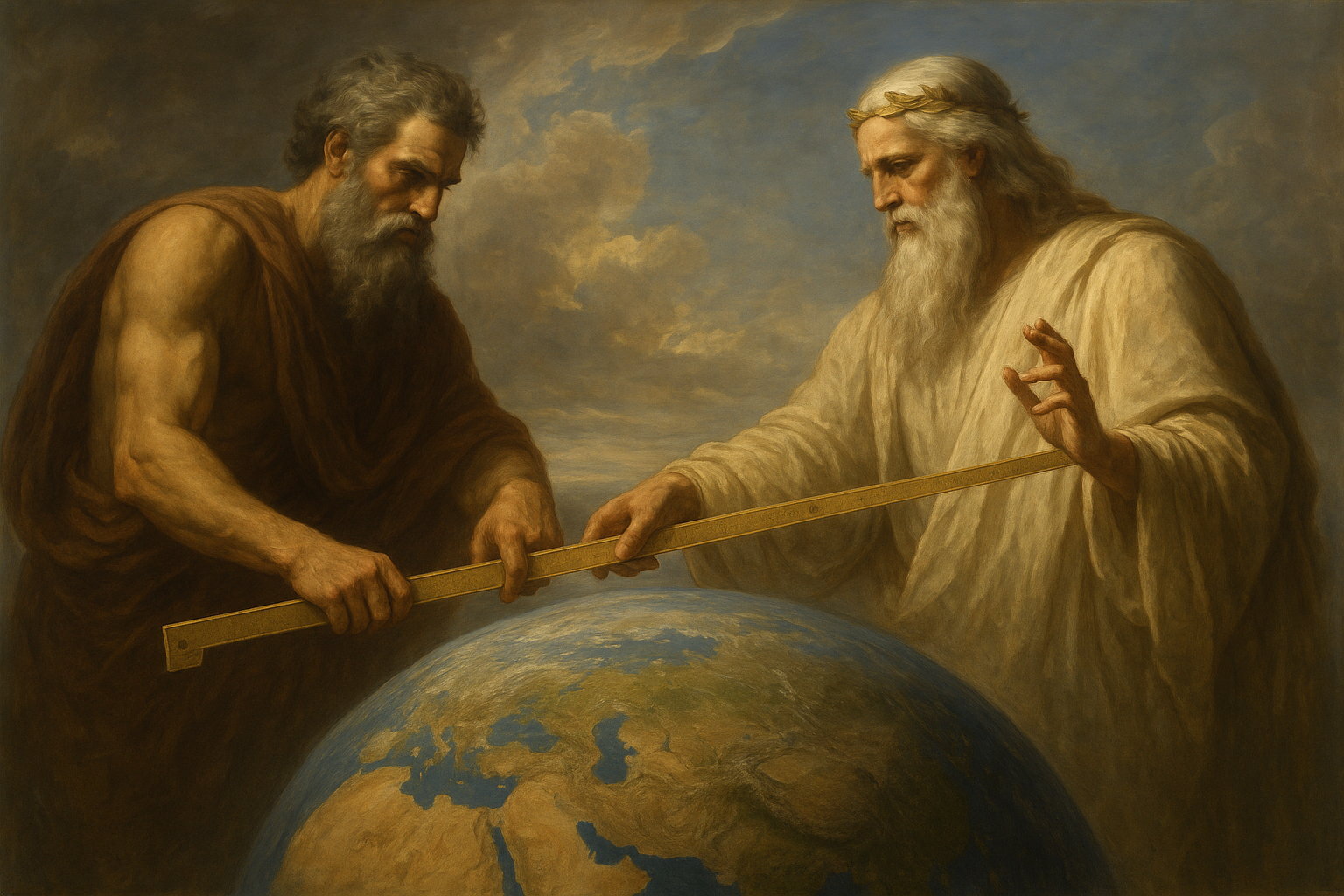
  • When Gods Measured the World – Myth as the first form of science

    When Gods Measured the World – Myth as the first form of science

    When Gods Measured the World: Myth as the First Form of Science

    Throughout history, myths have served as the cornerstone of human civilization, offering explanations for natural phenomena long before the advent of modern science. These stories not only provided comfort and understanding to ancient societies but also laid the groundwork for scientific inquiry as we know it today.

    The Role of Myth in Ancient Societies

    Myths were powerful tools used by ancient cultures to make sense of their environment, human behavior, and the cosmos. The ancient Greeks, for example, attributed natural occurrences to the whims of their pantheon of gods. Thunderstorms were seen as Zeus wielding his mighty thunderbolt, while the changing seasons were explained through the story of Demeter and her daughter Persephone.

    “The universe is full of magical things patiently waiting for our wits to grow sharper.” – Eden Phillpotts

    This quote encapsulates how myths were perceived: as magical narratives awaiting deeper understanding. These narratives laid the theoretical foundations for what would eventually evolve into scientific exploration.

    From Myths to Measurements

    The transition from myth to science was gradual and multifaceted. Many ancient myths contained observational truths that would later be validated by scientific discovery. For instance, the ancient Egyptians’ myth of the Sun God Ra traveling across the sky each day is an early recognition of solar patterns, which would later form the basis of astronomy and timekeeping.

    • Babylonian Astronomy: The Babylonians were amongst the first to record planetary movements, blending mythology with early scientific study. They believed their gods dwelt among the stars, prompting them to meticulously chart celestial bodies.
    • Native American Cosmology: Many Native American tribes used richly metaphorical stories to explain and predict natural events like eclipses and seasonal changes.

    Science as a Successor to Myth

    Some may wonder how myth compares to science in terms of validity and utility. It is crucial to understand that science is, in many respects, a natural successor to myth. While myths relied on narrative coherence and community acceptance, science insists on objective validation and universal applicability.

    According to historian of science, Richard Dawkins, “Science replaces private prejudice with publicly verifiable evidence.” What began as a means of storytelling and cultural transmission would eventually evolve into an empirical method of understanding the universe.

    Cross-cultural Connections and the Scientific Method

    Interestingly, several myths across different cultures suggest a universal quest for knowledge. The Sumerians told of Enki, god of wisdom, who guarded the divine tablet of the Me. Hindus have a similar concept in Saraswati, the goddess of wisdom who resides over knowledge and the arts. These analogous characters point to an intrinsic human desire to understand and measure the world.

    The scientific method, as it developed, was in many ways an organized, goal-oriented continuation of this mythical pursuit of knowledge. It provided a structured way to ask questions, collect data, and draw conclusions—the same processes that myths had informally undertaken centuries before.

    Myth: A Stepping Stone to Enlightenment

    While myths are often relegated to the realm of ancient history, they continue to influence modern culture and inspire contemporary science. Joseph Campbell, a notable scholar of mythology, once remarked, “Myths are public dreams, dreams are private myths.” This perfectly captures how myths and science are intertwined in our continuous effort to chart the unknown.

    Modern-day physicist and cosmologist, Neil deGrasse Tyson, articulates a similar sentiment: “The good thing about science is that it’s true whether or not you believe in it.” Yet, he also acknowledges that myths laid the ground upon which scientific inquiry was built.

    Conclusion

    In revisiting these ancient narratives, we not only gain insight into the development of human understanding but also appreciate the mythological roots of empirical science. Myths were the first form of science, guiding our ancestors’ understanding of the world and inspiring the methods through which we explore it today. In acknowledging this, we learn that the quest for knowledge is as timeless as the stars themselves, eternally linked through stories that measure, explain, and ultimately celebrate the mystery of existence.

  • Myth Against the Machine – Why ancient stories still resist total automation

    Myth Against the Machine – Why ancient stories still resist total automation

    As we stand on the precipice of a digital revolution, where artificial intelligence is becoming an increasingly pervasive force, the timeless richness of ancient myths continues to hold a commanding allure. This is not merely because they anchor us to our past or entertain us with their narratives, but because these stories articulate human truths that machines, however advanced, struggle to replicate.

    “Stories have shapes,” noted the writer Kurt Vonnegut in his classic lecture on the shape of stories, “which can be drawn on graph paper.” Yet, the nuanced emotional resonance that imparts life to these shapes often eludes artificial intelligence.

    • The Role of Emotion and Intuition: Ancient myths are steeped in emotional depth, laden with archetypes that evoke visceral responses and motivate introspective thought. These narratives are crafted with a unique blend of intuition and emotion, elements often absent in data-driven machine outputs.
    • Timelessness in Themes: Myths explore themes that persist across eons—love, betrayal, heroism, and the existential quests of humanity. While a machine may identify and replicate plot patterns, delving into the profound philosophical questions these themes raise requires an understanding of human consciousness and existential musings, realms where AI is yet to venture fully.

    Moreover, myths forge a collective cultural identity. As Joseph Campbell highlighted in “The Power of Myth”, myths “are the body of stories and legends that a people perceive as real, valid, and meaningful.” They link us through shared ideas and communal experiences, aspects that foster a deeper connection than any algorithm can currently compute.

    In a world increasingly dominated by technological advancements, the human craving for authenticity and depth in storytelling becomes more pronounced. The narratives woven by our ancestors are not just tales but are an essential part of the conversations we continue to hold about life, morality, and the human condition.

    While algorithmic advancements have made significant strides—generating text, simulating dialogues, and even composing music—the essence of myth lies in its reflection of human experience and its capacity to evolve with societal changes. It remains an art born from communal experiences, emotional depth, and cultural introspection. The enduring relevance of these ancient stories in resisting total automation emphasizes an important truth: though machines may replicate structure, the sacred essence of storytelling—inherent to human nature—remains elusive to them.

  • Resonance Beyond Silence

    Resonance Beyond Silence

    In a world filled with constant noise, the concept of silence seems elusive. However, beyond the absence of sound, resonance silently reshapes our understanding of the environment and communication.

    The Science of Resonance

    Resonance is a natural phenomenon where systems oscillate with greater amplitude at specific frequencies. This occurs when an external force drives another system to vibrate at its natural frequency. While this concept is prevalent in physics, its implications go much further.

    “Resonance is like a story — sometimes complex, but always with a rhythm that connects parts into a full experience,” says Dr. Jane Halton, a physicist at the University of Earth Studies.

    Resonance affects everything from musical instruments to architectural designs. For example, the body of a guitar amplifies vibrations produced by strings, creating richer and deeper soundscapes. In architecture, structures must be designed to withstand resonant frequencies caused by earthquakes or wind.

    Resonance in Nature

    Beyond man-made objects, resonance is vividly observed in nature. Stars and planets emit vibrations in the form of sound waves, albeit in a vacuum where they are not heard. Research has shown that the Sun’s vibrations, known as helioseismic activity, provide insights into its internal structure.

    Animals, too, harness resonance. Elephants communicate using infrasound, sounds below human hearing that travel great distances. These powerful vibrations resonate through the ground, enabling elephants to “speak” over miles.

    “The resonance of an elephant’s call is an intricate dance between the elements of communication and survival,” notes Zoologist Dr. Kevin Grant.

    Resonance in Human Connections

    Socially, resonance transcends the physical and enters the emotional realm. Human interactions are shaped by empathetic resonance, where emotions and feelings are mirrored among individuals. This phenomenon is crucial in forming connections, understanding intentions, and sharing experiences.

    Art and music particularly embody this emotional resonance. A single piece of music can evoke a spectrum of emotions, resonating with personal memories and shared cultural experiences. This is the essence of what some call the “universal language” of art.

    The Echo of Silence

    While resonance signifies vibrations, silence itself offers its own form of resonance. A pause amidst noise can emphasize a message, a thought, or a sentiment. The deliberate use of silence in conversations allows for reflection and anticipation, enhancing communication depth.

    “Silence is a source of great strength,” states Lao Tzu, as referenced in ancient wisdom texts, highlighting its enduring significance.

    In meditation and mindfulness practices, silence becomes an active space for internal resonance, where thoughts and emotions surface without the clamor of external distractions.

    Technological Impacts on Resonance

    The digital age introduces new dimensions of resonance. Technology allows us to capture and analyze vibrations across unprecedented scales. Researchers develop tools that resonate with frequencies imperceptible to human senses, revealing insights into material properties and environmental changes.

    Consider the use of resonance in medical imaging techniques such as MRI, which utilizes magnetic resonance to create detailed images of the body. These technologies transform silent vibrations into pivotal diagnostic data.

    “Resonance technology is a window into the inaudible aspects of existence,” describes Dr. Alan Hirsch, a technology expert from Future Innovations Lab.

    The Future of Resonance

    The future of resonance lies in its interdisciplinary applications—from environmental monitoring with resonant sensors to advanced communication methods using quantum resonance. Its potential to enhance understanding and innovation across fields is vast.

    Furthermore, as we continue to explore the cosmos, understanding resonant frequencies may unlock new realms of information about the universe’s fabric.

    Conclusion

    Resonance extends beyond the physical into realms of silent influence and profound connectivity. As we continue to explore and innovate, the ability to harness resonance’s power will be pivotal in shaping a future where silence and sound intertwine to reflect and reshape our world.

  • The Enduring Enigma: The Mystery at the Heart of All Creation

    The Enduring Enigma: The Mystery at the Heart of All Creation

    Throughout human history, the quest to understand the origins and mechanisms of our universe has been an enduring enigma that propels scientific and philosophical inquiry. With each breakthrough in technology and theory, we find ourselves peeling back layers of mystery only to reveal more questions about the nature of existence, our cosmos, and consciousness itself.

    The Quest for Cosmic Answers

    For centuries, civilizations have gazed at the stars and pondered their place in the universe. These celestial bodies, once deities and navigational tools, are now subjects of intense scientific scrutiny. As famed astrophysicist Carl Sagan eloquently expressed, “The cosmos is within us. We are made of star-stuff. We are a way for the universe to know itself.”

    The pursuit of understanding our cosmic origins has led to monumental scientific milestones. The Big Bang Theory, a cornerstone of modern cosmology, posits that the universe began as an incredibly hot and dense point approximately 13.8 billion years ago. From this singularity, space and time unfurled, giving rise to the universe we observe today.

    Unraveling Quantum Mysteries

    Moving from the colossal to the minuscule, the realm of quantum mechanics presents its own array of enigmas. Principles such as particle-wave duality, quantum entanglement, and the uncertainty principle challenge conventional notions of reality and causality.

    “If you think you understand quantum mechanics, you don’t really understand quantum mechanics.”

    — Richard P. Feynman
    • Quantum Entanglement: Often referred to as “spooky action at a distance,” quantum entanglement describes how particles can become interconnected in such a way that the state of one instantly influences the state of another, regardless of distance.
    • Uncertainty Principle: Formulated by Werner Heisenberg, this principle asserts that certain pairs of physical properties cannot both be known to arbitrary precision.

    These quantum puzzles point towards a universe far stranger and more interconnected than classical physics ever imagined.

    Consciousness and Creation

    No discussion on the mysteries of creation would be complete without exploring the enigmatic nature of consciousness. How do we, as conscious beings, perceive and interact with the universe? The relationship between the mind and the material world is a profound mystery that continues to baffle scientists and philosophers alike.

    Renowned cosmologist Stephen Hawking suggested that understanding the nature of consciousness is as crucial as understanding the physics of the cosmos. In his words, “I think the universe was spontaneously created out of nothing, according to the laws of science.” Yet, he acknowledges the role of consciousness in interpreting this creation.

    The Future of Understanding

    As technology advances, so does our ability to explore these mysteries. Gravitational wave detectors, particle accelerators, and space telescopes extend our senses into realms previously inaccessible. These instruments promise to refine our models of the universe and the forces that shape it.

    However, each discovery often raises new questions. Are there parallel universes? What is the true nature of dark matter and dark energy, which make up most of the universe’s mass and energy content? And what role does human consciousness play—if any—in the grand cosmic scheme?

    Despite the challenges, the pursuit of these answers remains a testament to human curiosity and resilience. It is a journey driven by a relentless desire to unravel the mysteries that bind us to the stars and each other.

    Conclusion

    The mystery at the heart of all creation remains a captivating enigma. As we expand our knowledge, the simple questions of early stargazers morph into complex inquiries that demand interdisciplinary approaches combining cosmology, physics, philosophy, and cognitive science. Understanding these mysteries may forever alter our perception of existence, challenging us to reconsider not just what it means to be human, but what it means to exist in this vast and mysterious universe.

  • The Geometry of Grace: Order and Meaning in Abstract Art

    The Geometry of Grace: Order and Meaning in Abstract Art

    Abstract art, often seen as a puzzling yet evocative form of artistic expression, thrives on its ability to convey deep emotions and concepts through the geometry of color, form, and line. Its beauty lies in its open-endedness—the capacity to allow individual interpretations while maintaining an intrinsic order within its apparent chaos.

    The Concept of Abstract Art

    Abstract art represents a divergence from traditional representation, seeking instead to capture the essence of ideas and emotions. As Wassily Kandinsky, one of the pioneers of abstract art, once stated, “Color is a power which directly influences the soul.” (Goodreads). This quote encapsulates the philosophy of abstraction: to eliminate the mundane and elevate the invisible.

    Geometry: The Backbone of Abstract Expression

    Geometry plays a pivotal role in abstract art, as precise shapes and patterns bring harmony and balance to the otherwise formless expressions. Consider the works of Piet Mondrian, whose compositions of grids and primary colors have become emblematic of the De Stijl movement. Mondrian’s belief that “the truly modern artist is aware of abstraction in an emotional sense” (pietmondrian.com) highlights the harmony between emotion and order achieved through geometric abstraction.

    Order and Meaning in Chaos

    Through geometric abstraction, artists manipulate fundamental shapes to draw viewers into a realm where chaos and order coexist. This balance is evident in the works of artists like Kazimir Malevich, whose Black Square challenged perceptions by stripping art down to its most elemental form—a single square. As Malevich suggested, abstract art expresses, “the supremacy of pure feeling.” (Tate).

    “The straight line belongs to man, the curved one to God.” — Antoni Gaudí

    This quote by Antoni Gaudí further emphasizes the divine rhythm abstract art can depict through its geometric structures, offering viewers an experience that transcends the visual to touch the spiritual and emotional.

    The Personal and Universal

    Abstract art’s flexibility allows for personal interpretation, where one can find unique meanings and connections. For some, a series of angular lines may suggest narrative tension, while for others, they might symbolize the structures of modern life or the simplicity hidden within complexity.

    In its pursuit of the essence beneath surface forms, abstract art taps into a universal dialogue between the seen and unseen, the ordered and the chaotic. It invites viewers to explore these realms of emotional and intellectual discovery, forming a bridge between the conscious and the unconscious.

    Through the geometry of grace, abstract art continues to challenge and inspire, proving that within the abstract lies a profound and resonant order waiting to be discovered.