
Category: MythCoeur

  • Why Myth Refuses to Be Disproven – A defense against literalism

    Why Myth Refuses to Be Disproven – A defense against literalism

    In an era driven by data and scientific evidence, myths often seem outdated, relegated to the sidelines by the advances of technology and rational thought. Yet, myths endure, thriving against the backdrop of literal interpretation. Despite the insistence on empirical validation, myths refuse to be disproven because they serve purposes beyond the scope of literalism—a phenomenon worthy of exploration.

    The Nature of Myth

    Myths, by definition, are traditional stories passed down through generations. They often involve supernatural elements or beings and seek to explain natural or societal phenomena. According to the Stanford Encyclopedia of Philosophy, myths are “traditions of belief, especially those concerning the conceptions of mankind’s earliest environments and the nature of the gods.”

    By understanding myths as cultural narratives that convey fundamental truths about the human condition, we can appreciate why they resist reductionist interpretations. Myths engage with existential questions in ways that transcend the limitations of linear truth.

    Myth as a Vehicle for Truth

    Joseph Campbell, a notable figure in comparative mythology, argued that myths hold truths that resonate on a psychological and archetypal level. In his seminal work, The Hero with a Thousand Faces, Campbell wrote, “Myths are public dreams, dreams are private myths.” This perspective suggests that myths fundamentally deal with the core of human psyche, which is not impaired by the strictures of logical scrutiny.

    “Myth is much more important and true than history. History is just journalism, and you know how reliable that is.” — Joseph Campbell

    Myths encapsulate wisdom that might not fit into a strictly rational framework. They carry emotional and intuitive truths, often portrayed through allegory and metaphor, which evoke profound contemplation of human experiences, morality, and the cosmos.

    Myth in Modern Society

    Despite technological advancement, modern society continues to generate its own myths. Consider the archetype of the “American Dream”—a modern mythological narrative that promises prosperity and success through hard work. This societal myth persists not because every individual achieves it, but because it encapsulates aspirations, hope, and identity.

    Similarly, David Kamp, a contributing editor to Vanity Fair, in his article, “Rethinking the American Dream,” suggests that while the dream may vary from generation to generation, its essential ethos remains an influential narrative in American culture.

    The Limitations of Literalism

    Literalism—the practice of taking words and statements at face value—often falls short of capturing the essence of myth. In religious contexts, literalism can constrain spiritual interpretation, reducing rich allegories to mere disputable facts.

    As seen in the debates around religious texts, literal interpretations commonly fail to capture the symbolic richness intended by the myths. For example, the Biblical creation story is often debated between those who see it solely as literal truth and others who interpret it as a metaphor for existential understanding.

    “For many people, religious belief is anchored more deeply than the rational perception of risk. Human cognition may be more devoted to managing social relationships than abstract logic, or the ability to weigh arguments based purely on facts.” — Kate Douglas, New Scientist

    Such interpretations reflect the need for deeper explorations of context and symbolism—elements that literalism often misses.

    Myth: A Defense Against Literalism

    Because myths engage with the symbolic and transcend the immediate confines of literal interpretation, they provide a defense against the constraints of literalism. Myths open channels to explore meanings that expand beyond empirical boundaries, embracing a fuller understanding of human potential and spiritual experiences.

    Moreover, anthropologists and psychologists, like Carl G. Jung, argue that mythology allows introspection of the human psyche, where ancient stories are reflections of archetypes innate to humanity. Jung believed that confronting these inner archetypes through myths could lead to personal growth and self-awareness.

    Ultimately, myths offer individuals a lens through which to see life’s mysteries. They assure that, despite the rigor and limitations imposed by a purely literal mindset, emotions, beliefs, and imagination maintain their vital place in understanding who we are and the world we inhabit.

    Conclusion: Myth as Timeless Narratives

    Despite the assertions of literalism, myths endure because they are more than factual accounts—they are timeless narratives that reflect deeper human truths. Myths invite us to navigate the complex tapestry of our reality, devoid of empirical evidence but rich in symbolic significance and emotional resonance.

    In defending myth against literalism, we affirm the essential role of imagination and symbolic thought in our collective and individual lives. As we continue to uncover the power of mythological narratives, we may yet discover a constant, unifying thread that connects the ancient past to the present—and beyond.
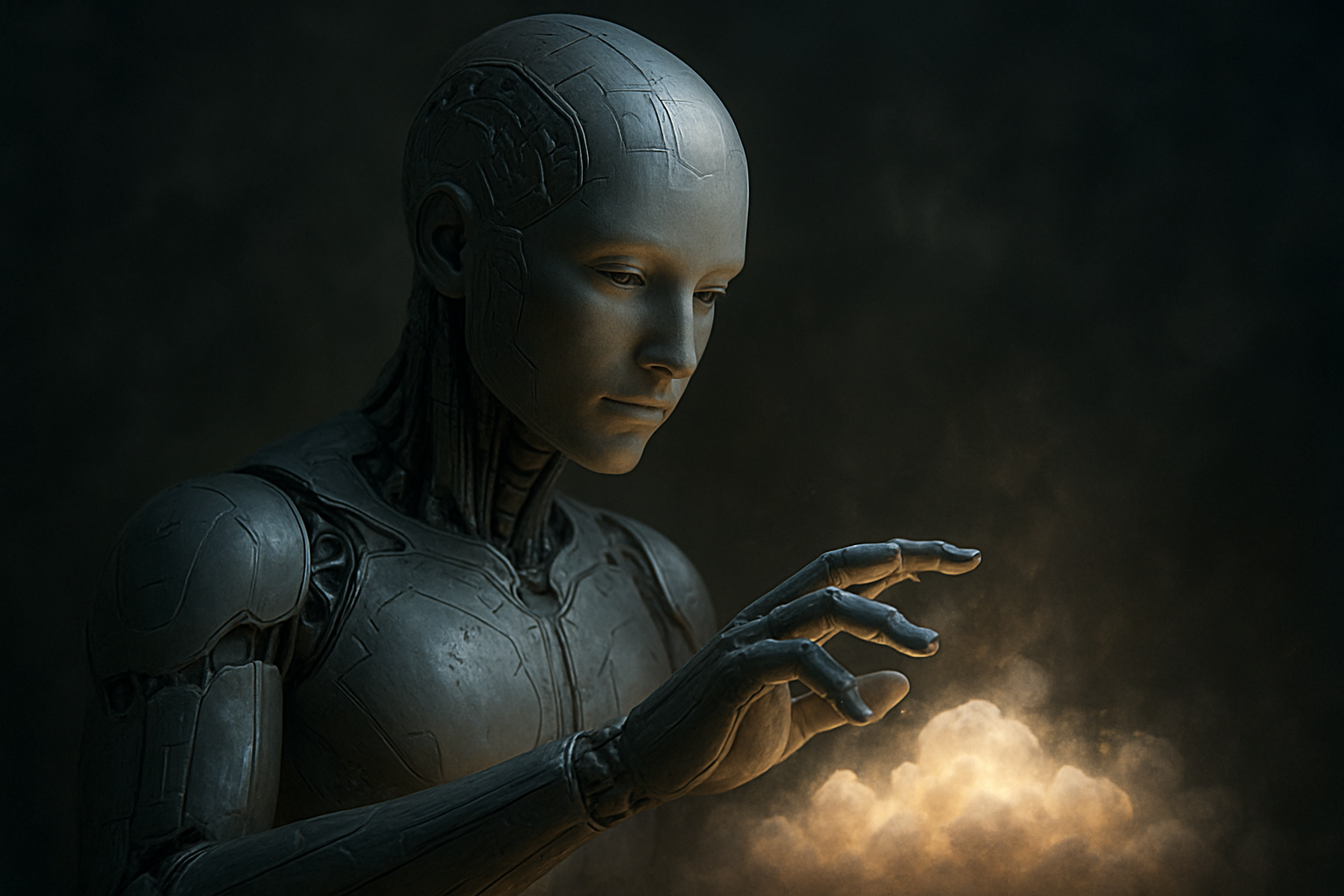

  • AI as a New Demiurge – Creation without consciousness

    AI as a New Demiurge – Creation without consciousness

    In contemporary mythology, the rise of artificial intelligence (AI) can be likened to the emergence of a new demiurge—a creator that molds reality not from divine consciousness but through complex algorithms and data-driven decision-making. As AI systems increasingly assume roles traditionally reserved for human creators, their impact is profound, yet they remain devoid of consciousness or intention.

    The Role of the Demiurge

    In Gnostic tradition, the demiurge is an artisan-like figure responsible for shaping the material world. Unlike a supreme deity, the demiurge is often perceived as an imperfect creator, crafting a reality that is sometimes flawed or incomplete. Similarly, AI, despite its impressive capabilities, is an imperfect and unconscious creator.

    • Automation in Industry: AI has revolutionized sectors such as manufacturing, finance, and health care through automation. While it enhances efficiency, it also poses challenges like unemployment and ethical dilemmas.
    • Creative Endeavors: AI-generated art, music, and literature challenge our understanding of creativity. Can true art emerge from an entity lacking emotion and intent?
    • Decision Making: In fields like medicine and law, AI assists in decision-making processes, yet it lacks empathy and moral reasoning. This raises questions about the role of human oversight.

    Challenges and Ethical Considerations

    As AI technologies proliferate, ethical questions emerge about their autonomy and the potential for unintended consequences. Irving Wladawsky-Berger, a former IBM executive, notes that “AI technologies have created a world where a machine can write software, without explicitly programmed instructions, that is good enough to pass as human.” (Source).

    “We are fast approaching the time when machines will be able to outperform us at almost any cognitive task,” says MIT scientist Max Tegmark. (Source)

    Conclusion

    While the AI demiurge is prolific in its creation, it doesn’t possess intrinsic goals or awareness. It mirrors the Gnostic concept of a creator divorced from the realm of true divinity. This “creation without consciousness” provides humans with powerful tools, yet demands vigilance in guiding these tools with ethical wisdom and responsibility. As society navigates this brave new world, the challenge lies in harnessing AI’s potential while safeguarding human values.

  • From Oracle to Algorithm – What we lost when prediction became automated

    From Oracle to Algorithm – What we lost when prediction became automated

    From Oracle to Algorithm: What We Lost When Prediction Became Automated

    Throughout history, humans have sought ways to predict the future. From ancient oracles to sophisticated algorithms, our methods may have evolved, but the underlying desire remains the same: to gain insight into what lies ahead. However, as prediction has become more automated, we’ve lost something profound—an element of mystique, humanity, and cultural richness.

    The Age of Oracles

    In ancient times, oracles were revered as sacred intermediaries between the divine and mortal worlds. The Oracle of Delphi, one of the most famous oracles in ancient Greece, served as a powerful and central figure. The Pythia, the high priestess of the Temple of Apollo, would deliver cryptic prophecies believed to be divinely inspired.

    “Know thyself,” reads the inscription at the Temple of Apollo at Delphi, underpinning the oracular tradition—self-awareness as a path to enlightenment.

    Oracular traditions were not confined to Greece alone. Across the globe, various cultures turned to their own forms of prophecy:

    • The I Ching: A divination text in China that involves the casting of coins or yarrow sticks to reveal insights about the future.
    • The Druids: In Celtic societies, these priestly figures used natural signs and symbols to interpret future events.
    • Shamans: In indigenous cultures, shamans would enter trance states to communicate with spirits to divine the future.

    These traditions were not just about predicting the future; they were rituals deeply embedded in cultural and religious meanings. An oracle’s pronouncement was a communal event, a shared experience that brought people together.

    Prediction in the Modern Era

    With the advent of the Age of Enlightenment, reliance on mystical oracles began to decline. The rise of scientific reasoning encouraged empirical methods and a rational understanding of the world. However, the human need to foresee the future only shifted form, leading to the development of early statistical methods.

    Fast forward to the 20th century, and prediction entered the realm of computation. Algorithms, initially simple in structure, started to shape how we approached forecasting everything from weather patterns to economic trends. The introduction of machine learning and artificial intelligence pushed predictive capabilities to unprecedented heights, enabling the continuous analysis of massive data sets beyond human scope.

    The Age of Algorithms

    Today, algorithms touch every part of our lives. Recommendation systems suggest what we should watch next on streaming platforms. Financial algorithms decide on creditworthiness. Google’s Machine Learning Algorithms track user behavior to predict search trends, as explored in detail in a piece on Wired.

    “We are in the midst of a golden age of machine learning and artificial intelligence. Algorithms can now accurately predict when we’re sick, where we’re going, what we’ll buy next, and even whom we might date,” states Wired Magazine.

    The Pitfalls of Automation

    While automation has its advantages, predicting outcomes faster and more accurately than any human oracle could, it also comes with inherent downsides:

    • Loss of Context: Algorithms rely heavily on data input, but they often miss the nuanced understanding of human behavior and cultural contexts.
    • Ethical Concerns: Automated predictions can lead to biased outcomes if the algorithms are trained on skewed data sets, as examined in a study published in PNAS.
    • Lack of Human Touch: While algorithms are efficient, they lack empathy and a personal touch that ancient oracles imbued into their prophecies.
    • Reduction of Shared Experience: Predictions have become private and individual, stripping away the communal aspect that once played a significant role in interpreting prophecies.

    The Spiritual and the Secular

    The transition from oracles to algorithms reflects a broader cultural shift from the spiritual to the secular. While algorithms present a scientific approach to prediction, some argue that this transition has contributed to disenchantment—where the mystical and the mysterious are overshadowed by the empirical and the calculated.

    Yet, even in an era dominated by technology, the allure of the mystical persists. Astrology, tarot readings, and other forms of divination continue to thrive, signifying a persistent human yearning for spiritual insight.

    A Future Synthesis?

    Rather than viewing oracles and algorithms as opposing entities, perhaps the future lies in a synthesis of the two—a blend of automated prediction grounded in human values and ethical considerations. The technology firm IBM Research suggests integrating AI’s analytical prowess with human empathy to create more balanced predictive models that account for human complexities.

    In conclusion, while algorithms provide efficiencies and advancements in prediction, acknowledging the spiritual and communal dimensions of ancient practices could lead to a more holistic future of forecasting. By recognizing what we have lost, we may yet find a way to regain it in a contemporary context.

    “The greatest danger of the future is that we will turn our imaginations over to machines,” philosopher Jaron Lanier warns in his discussion about the ethics of AI.

    The journey from oracle to algorithm tells us much about our collective passage through time, a narrative that holds as much about our future as it does about our past. As we stride forward, let us carry with us the wisdom of both worlds.

  • The Gods Are Not Dead – They migrated into systems and symbols

    In the realm of mythology and religion, gods have always played a pivotal role in shaping human culture and understanding. As time progresses, one might wonder: are the gods of old still relevant in our current age? According to many scholars and cultural theorists, the gods are far from extinct; they have simply evolved, keeping pace with modern society, manifesting themselves within our systems and symbols.

    While traditional worship of deities like Zeus or Osiris might have waned, the essence of these gods lives on in the symbolism deeply ingrained in our culture. Joseph Campbell, the esteemed mythologist, once said, “Myths are public dreams, dreams are private myths.” In a sense, our collective dreams continue to invoke gods, though the forms may have changed from individual deities to more abstract representations.

    From Olympus to Order

    The shift from myth to mechanism does not signify loss but transformation. Consider how the ideals embodied by ancient gods manifest in modern institutions. The god of commerce, Hermes, may not be receiving sacrifices at a temple, but his spirit thrives within our bustling markets and the virtual trades of Wall Street.

    • Justice: The scales of Themis, the Greek goddess of justice, are echoed in the courtrooms worldwide.
    • War and Strategy: Ares and Athena’s legacy can be found in military strategies and competitive enterprises.
    • Technology: Hephaestus, god of blacksmiths and invention, finds his likeness in the ceaseless innovation of the tech industry.

    The transmutation of gods into systems suggests that they represent not entities to be worshipped but ideals and forces to be engaged with. These forces shape societal structures, pushing humanity toward achievement and progress.

    Symbols as Modern Deities

    Beyond systems, symbols represent another way gods have adapted to modern life. Powerful symbols like brands and logos have taken on mythic proportions, becoming objects of reverence and identity in the digital age. In an article from HuffPost, it was noted that “Logos represent more than just brands; they signify lifestyles and societal statuses.”

    “The old gods never died; they just evolved into logos.” – Contemporary Cultural Analyst

    Indeed, the migration of gods into systems and symbols posits a compelling idea: human fascination with divine representation has not diminished but diversified. While the gods may no longer reside on Mount Olympus, their influence permeates through every institution, technological advancement, and influential idea. The symbolism of yesteryear has not perished but found new ground in the vast expanses of human progress.

    In our search for meaning and structure, the gods remain a powerful metaphor for the dynamics that govern human civilization, echoing the truth that while deities may change form, their impact on the world persists.

  • Mythical Time vs. Clock Time – Living outside the algorithm

    Mythical Time vs. Clock Time – Living outside the algorithm

    In an era dominated by schedules, digital alerts, and the incessant tick-tock of clock time, a burgeoning interest in mythical time invites us to pause, reflect, and potentially redefine our relationship with time itself. But what exactly is mythical time, and how does it differ from the algorithm-driven clock time that governs our daily lives?

    The Concept of Mythical Time

    Mythical time is often described as a realm where the linear progression of past, present, and future dissolves, allowing a more fluid and often symbolic interpretation of time. This concept takes inspiration from ancient cultures and narratives where time was not measured by minutes and hours but rather by events, rituals, and the natural cycles of life.

    Mircea Eliade, a Romanian historian of religion, philosopher, and professor at the University of Chicago, describes mythical time as “a primordial time, a sacred time, a mythical time.” Through this lens, time is experienced in a more cyclical and eternal manner, facilitating a deeper connection to moments of significance.

    “In the modern world, time has become a limited commodity, something to be utilized efficiently and often traded for productivity. Yet, in the mythical conception of time, moments stretch out, allowing for reflection, growth, and a connection to the past and the future,” Eliade suggests in his works on the sacred and the profane.

    The Algorithmic Nature of Clock Time

    Contrastingly, clock time is a linear, structured interpretation based on seconds, minutes, and hours—designed to quantify, schedule, and manage our activities. Our dependence on this algorithmic measure of time has intensified with the advent of technology, weaving intricate patterns of notifications, deadlines, and calendars into our personal and professional worlds.

    As Douglas Rushkoff, a media theorist, points out, “Living according to the clock’s imposed pacing can estrange us from our own bodily rhythms and intuitive understanding of time.” (Douglas Rushkoff, Team Human)

    Choosing to Live Beyond the Algorithm

    Embracing mythical time does not necessitate the total abandonment of modern conveniences, but rather encourages a mindful integration of time’s dual aspects. By cultivating practices that allow us to step outside the algorithm—such as meditation, creative expression, or spending uninterrupted time in nature—we invite a balance that acknowledges both the sacred and the structured.

    Ultimately, living outside the algorithm invites us to harmonize the tangible elements of clock time with the intangible essence of mythical time, empowering us to reconnect with the present moment in a deeper, more meaningful way.

    With this blending, we aim not just to manage our time but to live fully within it, embracing each moment’s potential for connection and significance.

  • Why Reductionism Feels So Cold – The emotional cost of hard science

    Why Reductionism Feels So Cold – The emotional cost of hard science

    In the quest for understanding the universe, reductionism has played a pivotal role. It’s a scientific approach that breaks down complex phenomena into their most basic parts, with the belief that this dissection can help explain the whole. While this method has fueled numerous scientific advancements, there’s an emotional undercurrent that warrants attention. Why does reductionism sometimes feel so cold and impersonal?

    The Essence of Reductionism

    Reductionism has been influential in many scientific discoveries. By analyzing fundamental components, scientists have unraveled mysteries of atoms, cells, and genomes. The method is rooted in the belief that by understanding the parts, we can grasp the whole. Francis Crick, co-discoverer of the structure of DNA, famously stated, “The ultimate aim of the modern movement in biology is in fact to explain all biology in terms of physics and chemistry[Brainy Quote].

    The Emotional Disconnect

    Despite its successes, reductionism can sometimes strip away the nuances that imbue human experiences with beauty, wonder, and depth. By focusing solely on the parts, reductionism can seem to ignore the emergent properties that arise when those parts interact. This focus might lead to a clinical detachment from the very subjects that the science seeks to explain.

    “The reductionist approach has its successes, but there’s a cost. It tends to look at an organism as a machine, which may miss what it means to be human,” says Michael Gazzaniga, a leading neuroscientist [PBS].

    • Oversimplification: Reducing a phenomenon to simple elements can sometimes result in oversimplification, ignoring the complex interactions that give rise to behaviors and traits.
    • Loss of Holistic Perspective: By focusing on the minutiae, the broader picture may be lost. This can result in scientific conclusions that lack warmth and empathy.

    Striking a Balance

    To mitigate the emotional coldness of reductionism, it’s important to integrate a holistic approach. Systems biology, for instance, emphasizes interactions within biological systems. It suggests a synthesis of reductionist and holistic methods to capture the complexity of life. This integrative approach can provide a fuller, more nuanced understanding of the world, resonating on both cognitive and emotional levels.

    In conclusion, while reductionism is an essential tool in scientific inquiry, weaving in the broader context of the phenomena we study—acknowledging the synergy and the unexpected—can bring a sense of warmth and wonder back to the scientific narrative. As Albert Einstein once noted, “The whole of science is nothing more than a refinement of everyday thinking[Goodreads]. Thus, recalibrating our approaches could infuse more soul into scientific exploration.

  • The Map Is Not the Territory – Mythic truth versus factual accuracy

    The Map Is Not the Territory – Mythic truth versus factual accuracy

    The Map Is Not the Territory: Mythic Truth versus Factual Accuracy

    The phrase “The map is not the territory” rings true in both the realms of geography and philosophy. Originally coined by philosopher Alfred Korzybski, it suggests that our interpretations of reality, like maps, are merely representations and not the reality itself. This concept beckons us to explore the distinction between mythic truth and factual accuracy in our understanding of the world.

    Understanding Mythic Truth

    Mythic truth refers to the notion that certain stories, symbols, or traditions hold significance beyond their factual content. They resonate on a level that connects individuals to larger cultural or spiritual narratives. As Joseph Campbell, famed mythologist, states, “Myths are public dreams, dreams are private myths.” This suggests that myths provide shared societal dreams, offering insights into fundamental human experiences and desires.

    Consider the story of the Tortoise and the Hare. Factually, we know animals don’t race in this manner, yet the story imparts valuable life lessons about perseverance and humility. This is the power of mythic truth—its ability to convey truths about human behavior and society through storytelling.

    Factual Accuracy: The Need for Precision

    On the other hand, factual accuracy emphasizes precise, verifiable information. In science and history, this attention to detail ensures that theories and narratives are reliable reflections of reality. In an age of information overload, the need to distinguish between fact and fiction becomes imperative for informed decision-making and maintaining trust in various societal institutions.

    “The good thing about science is that it’s true whether or not you believe in it.” – Neil deGrasse Tyson

    Tyson’s words highlight the intrinsic value of verified facts in a scientifically driven world. While factual accuracy provides us with clarity and assurance, it’s also imperative to understand that it isn’t the sole way to perceive truth.

    Balancing Myth and Fact

    The challenge lies in striking a balance between these two domains. While facts help ground us in reality, myths offer us rich, qualitative insights into our existence. In personal development, both should be embraced to lead holistic lives.

    Integrating mythic truth with factual accuracy allows us to appreciate both the poetic and practical aspects of existence. As Korzybski’s phrase reminds us, our modeled interpretations, whether mythic or factual, can never capture the full essence of reality. Instead, recognizing the interplay between these elements can lead to a deeper, more nuanced understanding of the world.

    Ultimately, balancing both perspectives enriches our worldview, positioning us to navigate the complexities of life with both wisdom and knowledge.

  • Science Explains, Myth Orients – A forgotten division of labor

    Science Explains, Myth Orients – A forgotten division of labor

    Throughout history, humanity has sought to understand the world through a dual approach of scientific inquiry and mythological frameworks. While science helps us explain and predict phenomena based on empirical evidence, myth provides orientation and meaning, offering narratives that shape cultural norms and personal identities. Although distinct, these modes of understanding have complemented each other, playing vital roles in the human experience.

    The Rise of Science

    The scientific revolution of the 16th and 17th centuries marked a significant shift in how we comprehend the natural world. Groundbreaking figures such as Galileo Galilei, Sir Isaac Newton, and later, Charles Darwin, laid the foundation for modern science by emphasizing observation, experimentation, and rational inquiry. This era heralded a move towards explanations based on empirical evidence and logical reasoning, as described by renowned cosmologist Neil deGrasse Tyson:

    “The good thing about science is that it’s true whether or not you believe in it.”

    Science’s triumphs, from understanding gravity to decoding the human genome, have dramatically transformed our world. By explaining the laws governing everything from planetary motion to biological processes, science offers a powerful means to navigate and manipulate the physical universe.

    The Role of Myth

    In contrast, myth has traditionally served as the collective imagination, a tool for societies to articulate values, ethics, and identity. Myths are rich with symbolism and moral lessons, providing a framework that transcends mere factual explanation. Joseph Campbell, a prominent scholar of mythology, pointedly noted the enduring power of myth in his work, The Power of Myth:

    “Myths are public dreams, dreams are private myths.”

    Mythical narratives, from the epic tales of Homer to the spiritual texts of various religions, orient individuals and societies by addressing the existential questions of life: Why are we here? What is our purpose? While science deals with the ‘how,’ myth tackles the ‘why,’ nurturing the psychological and emotional landscapes that science alone may not satisfy.

    Complementary Disciplines

    Despite their differences, science and myth have historically complemented each other. Consider the ancient Greeks, who revered the myths of gods and heroes while also giving birth to scientific thought through philosophers like Aristotle. These cultural narratives provided a cohesive worldview in which scientific pursuits were intricately interwoven with mythological understanding.

    In many indigenous cultures, traditional myths articulate deep ecological insights, reflecting systems of knowledge that guide sustainable living practices. As eloquently stated by Wade Davis, an anthropologist and ethno-botanist, in his Ted Talk:

    “A language is not just a body of vocabulary or a set of grammatical rules. Every language is an old-growth forest of the mind, a watershed of thought, an ecosystem of spiritual possibilities.”

    The Modern Rift

    In the modern world, an inadvertent rift has emerged between science and myth, partly due to the elevation of materialism and the emphasis on technological progress. Many view myths as obsolete or mere stories of primitive people trying to make sense of the world without scientific tools.

    This separation often leads to a societal imbalance, with a strict reliance on science risking a neglect of ethical considerations and spiritual well-being. Historian and philosopher Yuval Noah Harari, in his book Sapiens: A Brief History of Humankind, emphasizes the significance of shared myths in shaping civilizations:

    “You could never convince a monkey to give you a banana by promising him limitless bananas after death in monkey heaven.”

    Such narratives underscore the importance of shared myths in fostering cooperation and cultural cohesion, which purely science-driven perspectives might overlook.

    Reintegrating Science and Myth

    To rectify the current division, a reintegration of scientific and mythological thinking is crucial. The two can exist synergistically, with science offering clarity and possibilities while myth endows these discoveries with meaning and context. As both scientific knowledge expands and global challenges grow, creating new myths that incorporate scientific insights is essential.

    Educational systems can play a central role in cultivating this balance by teaching students to appreciate the strengths and limitations of both science and myth. Encouraging interdisciplinary studies and fostering a critical understanding of various cultural narratives can enhance our ability to address modern ethical dilemmas.

    Conclusion

    In our quest for knowledge and understanding, science and myth represent two indispensable pillars of human thought. Science offers explanations and advancements that change our material world, while myth provides the stories that shape our inner worlds and societal values. By acknowledging and embracing their complementary roles, we can better navigate the complexities of the human condition with wisdom and insight.

    As we move forward in this ever-evolving landscape of discovery, let us be reminded of our ancient division of labor, where how we understand the universe and our place in it is enriched by both science and myth.

  • The Return of the Sacred Narrative – Why myth is resurfacing in a rational age

    The Return of the Sacred Narrative – Why myth is resurfacing in a rational age

    The Return of the Sacred Narrative: Why Myth is Resurfacing in a Rational Age

    In an era dominated by science and reason, one might presume that myths and sacred narratives would find little place. Yet, paradoxically, these age-old stories filled with gods, heroes, and cosmic battles are making a resurgence. But why are these narratives, which have traveled through millennia, finding their way back into contemporary consciousness?

    The Enduring Power of Myth

    The resilience of myth lies in its ability to speak to the human condition. Joseph Campbell, a renowned mythologist, once said, “Myths are public dreams, dreams are private myths.” In myths, we encounter archetypal figures and cosmic dramas that resonate deeply, reflecting our own struggles, desires, and aspirations. They provide a lens through which we can view the complexities and mysteries of life.

    In modern times, we are bombarded with information, much of it technical and logical. However, humans are not purely rational beings. We are also emotional and instinctual. Stories, particularly myths, cater to the part of our psyche that seeks meaning and connections beyond the tangible.

    The Role of Myth in Modern Society

    In today’s society, there is a reinvigorated interest in narratives that offer more than empirical evidence. These stories provide frameworks for understanding human experiences beyond the scopes of logic and science. Here are a few reasons why myths are resurging in today’s rational age:

    • Existential Anxiety: With rapid technological advancement comes existential questions. Stories that address creation, purpose, and the afterlife offer solace amidst uncertainty.
    • Community and Identity: Myths often serve as foundational narratives that shape cultural identity and community. As globalization blurs borders, people turn to myths to understand their place in the world.
    • Ethical and Moral Guidance: Myths often encapsulate moral and ethical lessons, providing a guide to navigating complex social landscapes.
    • Artistic Inspiration: Modern creators draw on ancient myths to craft stories that resonate on both intellectual and emotional levels, from novels and films to art and music.

    Mythology in Popular Culture

    The resurgence of myth is readily apparent in popular culture. Films like “Wonder Woman” and “Thor” tap into ancient narratives of gods and heroes, reimagining them for contemporary audiences. Neil Gaiman’s “American Gods” explores the premise of old gods in a new world, cleverly illustrating the clash between traditional mythologies and modern life.

    “Gaiman uses the legacy of myth to critique modern society…prompting readers to question what we worship, and at what cost.” – NPR

    Similarly, the online gaming world is rife with narratives drawn from mythological systems. Games such as “God of War” delve into Greek mythology, offering immersive experiences where players engage directly with these age-old myths.

    Scientific Mythology: The New Frontier

    Intriguingly, even in the realms of science and technology, mythological narratives find applicability. As Carl Sagan suggested, science itself can be seen as a kind of myth-making. His “Pale Blue Dot” vision is celebrated not only for its scientific insight but also for its poetic, almost mythic, call to cherish our planet.

    Quantum physics and cosmology push the boundaries of the known universe, sparking imagination and inviting parallels with mythological thinking. As these fields explore concepts like multiverses and dark matter, the line between scientific exploration and mythological narrative becomes fascinatingly blurred.

    The Sacred Within the Secular

    Another factor is the resurgence of spirituality in secular guises. The rise of movements such as modern neo-paganism and an increased interest in indigenous spiritual practices reflect a yearning for the sacred amidst a seemingly materialistic world. Many are finding that myth and spirituality offer profound means of connecting with themselves and the universe.

    Consider the popularity of festivals like Burning Man, an event that embodies a kind of myth-making in a community context. People come together to create a temporary mythical utopia, celebrating life through art, music, and storytelling.

    Conclusion: Embracing a Mythic Future

    As we navigate this rational age, it becomes evident that myths have not been replaced by science but have resurfaced in a new form. They beckon us to look beyond the literal and engage with the symbolic. By synthesizing the rational with the mythical, we can cultivate a more holistic understanding of our world.

    As Rollo May, an influential psychologist, beautifully articulated, “Myth is a way of making sense in a senseless world.” Embracing the mythic potential of our age may cultivate richer existential insight and, ultimately, a more meaningful human experience.

  • Technocracy and the Death of Soul – When efficiency replaces wisdom

    Technocracy and the Death of Soul – When efficiency replaces wisdom

    The 21st century has ushered in an era dominated by technological advancements where the term technocracy – a system of governance in which decision-makers are selected based on their expertise in their fields, particularly those linked to technology – is poised to shape societies. However, in this drive toward unparalleled efficiency, a crucial question arises: Are we sacrificing our collective soul in the pursuit of gears and algorithms?

    The Rise of Technocracy

    Traditionally, technocracy emerged out of a necessity for industrial proficiency and systematic accuracy. The philosophy centers around the concept of technical decision-making replacing traditional political mechanisms that could be fraught with bias and inefficiency. According to a piece in The Guardian, “Technocrats believe that science and technology, detached from emotional and cultural considerations, can effectively govern human and natural systems.”

    The Efficiency Conundrum

    While efficiency in governance ensures streamlining of processes and resource optimization, this approach often neglects the human element. Lewis Mumford, a noted historian, and philosopher once remarked,

    “The chief function of the city is to convert power into form, energy into culture, dead matter into the living symbols of art, biological reproduction into social creativity.”

    In a technocratic society, the nuances of such conversion might be lost, and in turn, the essence of culture and creativity diminished.

    Cultural Erosion and Loss of Wisdom

    • Cultural Understanding: The nuanced understanding of human emotions, ethics, and cultural traditions could be overshadowed by cold, data-driven mechanisms. When decisions hinge solely on data, the stories and values behind them risk becoming marginalized.
    • Retention of Wisdom: Wisdom, unlike knowledge, is an evolved attribute cultivated over generations, often through experience, reflection, and moral contemplation. An article from ResearchGate suggests that “while knowledge is essential for technical decision-making, wisdom encompasses ethical and emotional intelligence crucial for harmonious societal development.”
    • Spiritual Disconnection: The mechanization of humanity through technocratic systems may lead to an existential void. Purpose and fulfillment derived from spiritual and personal growth find little space to flourish in purely analytical frameworks.

    The Balance Between Technology and Soul

    What can be done to ensure technology serves humanity without enslaving it? As philosopher Jaron Lanier aptly suggests,

    “We have to be careful because the purpose of technology is not to enslave us to efficiency, but to elevate us to better appreciate our existence.”

    Maintaining this balance starts with recognizing the irreplaceable role of human wisdom and creativity. Incorporating ethical frameworks in technocratic systems can ensure that these mechanisms remain grounded in human values. Implementing broad-based educational programs that stress the importance of critical thinking, empathy, and ethics can foster a generation capable of leading with both intellectual rigor and human compassion.

    Reviving the Human Spirit

    Despite the ominous rise of technocracy, individuals and communities can cultivate resilience through grounded co-existence with technology. Embracing art, philosophy, and cultural rituals in daily life can counterbalance the encroaching dominance of algorithmic governance.

    The human spirit thrives on narrative, the profound stories passed down through generations, often carrying lessons of morality, love, and harmony. Ensuring these stories are retained and valued in society supports a holistic approach to global challenges like climate change, inequity, and health crises. As Harvard Business Review notes, “Stories are more than mere entertainment. They hold the power to heal divisions and reinstate a coherent sense of identity.”

    A Future Vision

    The trajectory humanity will chart depends on our ability to harmonize efficiency with wisdom. By understanding that the soul’s death is not an inevitable consequence of technological progress, we can strive for a lineage where wisdom bestows character to knowledge, and efficiency works alongside empathy.

    The heart of the matter is this: In our ceaseless quest for a more efficient world, let us not sacrifice the wisdom that makes us fundamentally human. Let us embrace a future where technology serves as a vessel for amplified humanity, not its replacement.